Generate Flashcards for Algorithms
Make and generate Algorithms flashcards to master coding interviews and computer science subjects efficiently.
Generate Flashcards with AI Free
Generate Flashcards for Algorithms
Turn your notes, PDFs, slides, or lectures into Algorithms flashcards so you can review faster and remember more. Algorithms require precise logical steps and efficiency analysis that are perfect for active recall.
Generate Algorithms Flashcards
Upload notes / paste text
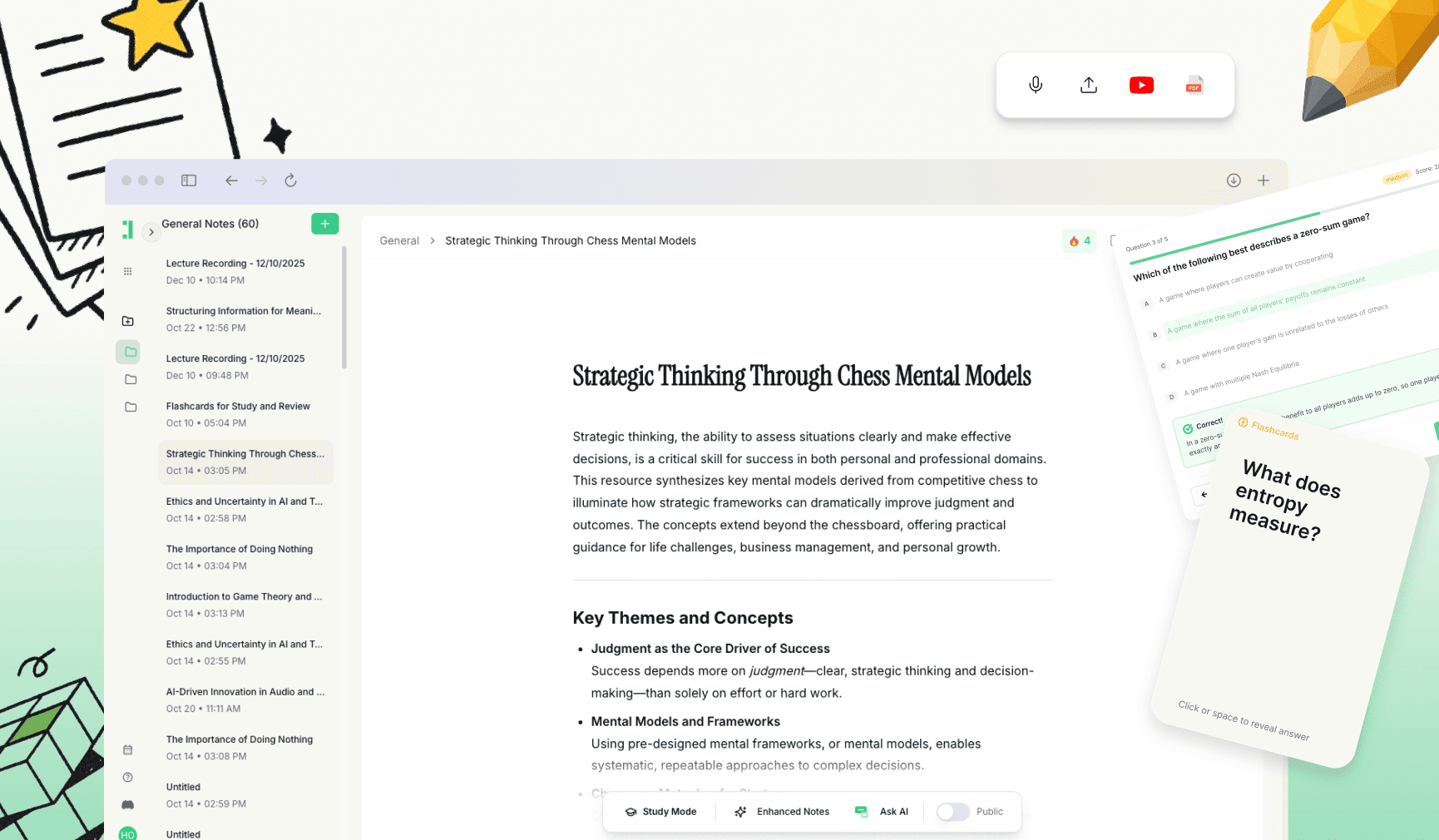
Simply upload your complex algorithm material to Duetoday. Our AI analyzes the logic, generates optimized flashcards, and lets you review or edit them instantly so you can get straight to studying.
What are Algorithms flashcards?
Algorithms flashcards cover the essential building blocks of computer science, including sorting methods, graph traversals, dynamic programming patterns, and time complexity analysis. They break down complex multi-step processes into bite-sized questions that test your understanding of how and why a specific method works.
Instead of passively rereading a textbook chapter on Dijkstra’s or Quicksort, you test yourself on the specific transitions and edge cases. This builds strong mental models and ensures you can recall the right approach during a coding interview or exam. If you already have notes, Duetoday can generate a clean deck in minutes.
Why flashcards work for Algorithms
Algorithms rely on understanding specific sequences, mathematical relationships, and application rules. Flashcards help bridge the gap between reading a concept and being able to implement it under pressure by using active recall and spaced repetition.
Remember Big O time and space complexities without cramming
Separate similar concepts (e.g., Breadth-First Search vs. Depth-First Search)
Learn recursive processes step-by-step through trace prompts
Practice identifying the best algorithm for specific data constraints
What to include in your Algorithms flashcards
Effective algorithm cards follow the one idea per card rule. They should focus on the 'why' and 'how' rather than just asking you to recite code from memory. Using question-based prompts forces your brain to retrieve the logic independently.
Definitions & key terms: What is a stable sort? Define a greedy algorithm.
Processes & steps: What is the first step in a binary search on an array?
Comparisons: How is Merge Sort different from Quicksort in terms of space?
Application: When would you use a Hash Table over a Linked List?
Example prompts: What is the worst-case time complexity of Quickhull?, State the recurrence relation for Merge Sort., What property must a graph have for Kruskal's algorithm?
How to study Algorithms with flashcards (a simple system)
Studying algorithms requires a two-pass approach. First, you build a solid deck that covers the theory; then, you move into rounds of active testing to solidify the logic in your long-term memory.
Review sessions should be quick and frequent. If you struggle with a specific graph algorithm, those cards should appear more often until the steps become second nature. This prevents the 'forgetting curve' from wiping out your progress between study sessions.
Make a deck from your lecture notes or textbook chapters.
Do one quick round to find weak spots in your logic or complexity analysis.
Review weak cards daily for a few days to fix the 'leaky' memory.
Mix in harder application cards involving pseudo-code or edge cases.
Do a final mixed review before your technical interviews or finals.
Generate Algorithms flashcards automatically in Duetoday
Making cards manually for algorithms is slow, messy, and inconsistent. Copying Big O notation or drawing tree diagrams onto physical cards takes time away from actual learning. Duetoday streamlines this by turning your study materials into structured flashcards instantly.
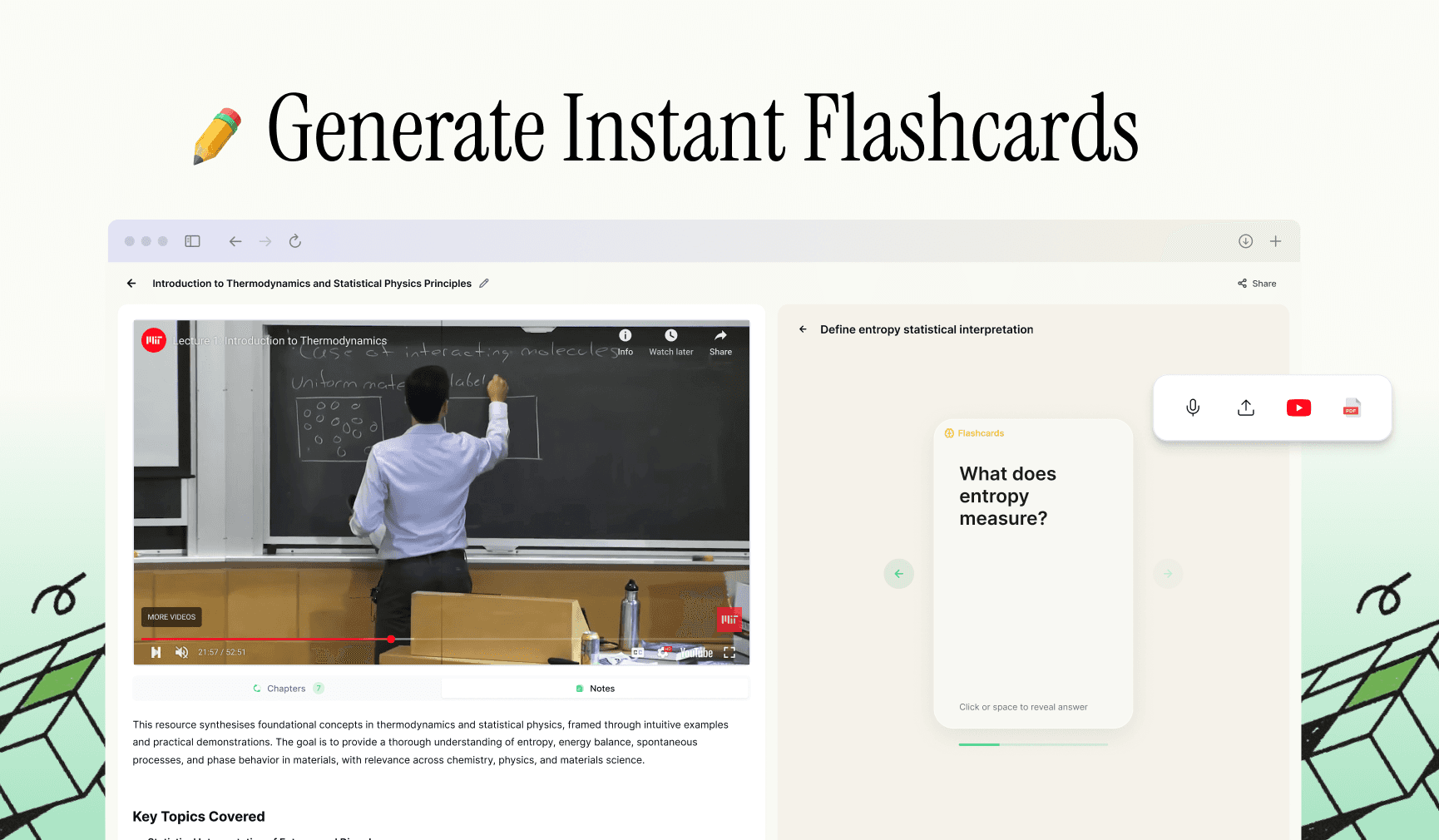
Simply upload your PDFs, slides, or coding transcripts. Our AI identifies the most critical algorithmic patterns and creates a study-ready deck. You can then edit the cards to add your own insights or start studying immediately with our built-in tools.
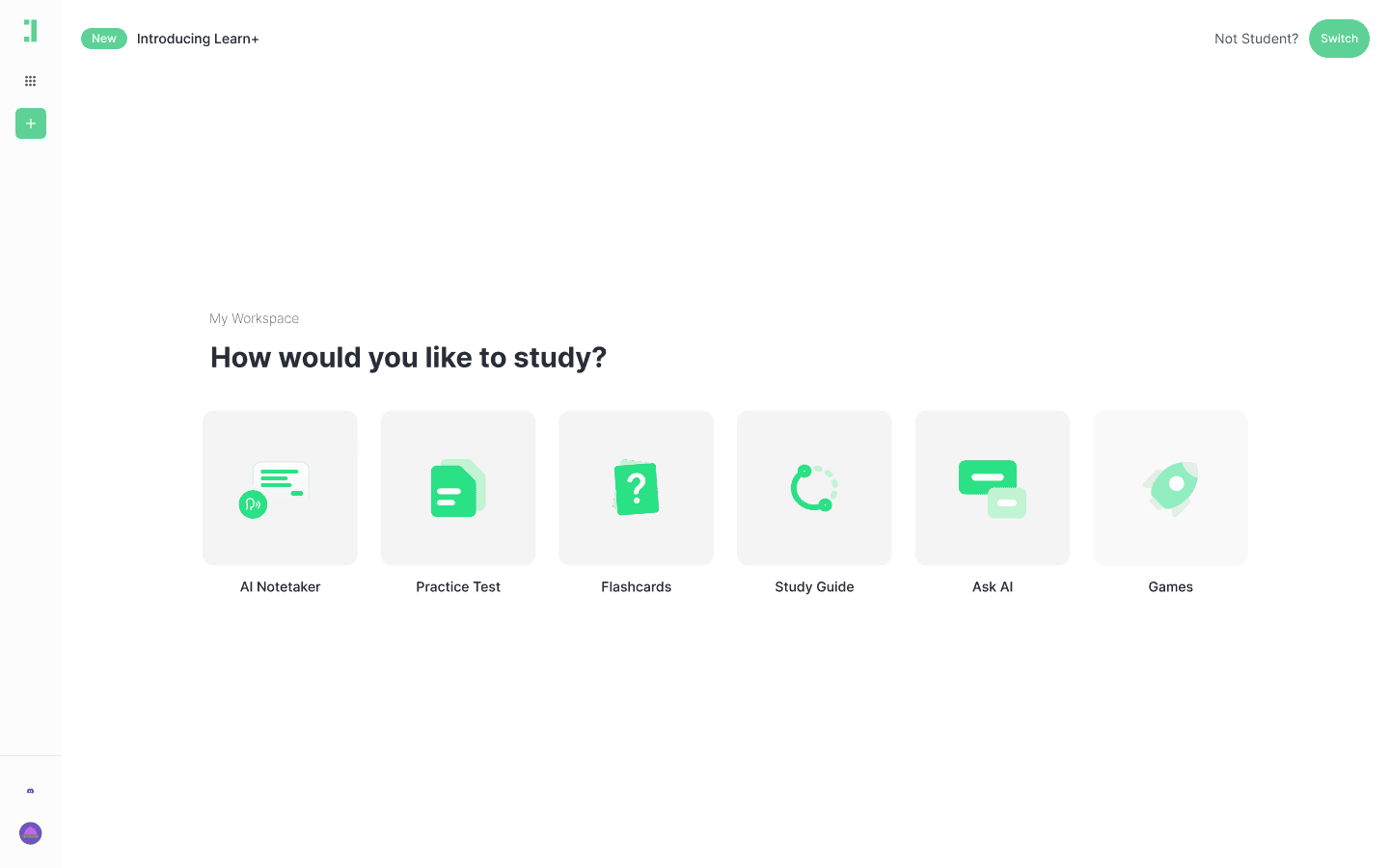
Upload or paste your Algorithms material
Click Generate Flashcards
Review, edit, and start studying
Generate Algorithms Flashcards in Duetoday
Start with your notes and get a deck you can actually use today.
Common Algorithms flashcard mistakes
Most students make cards that are too wordy or focus on the wrong details. If a card contains an entire 50-line function, you aren't testing recall; you're just reading code.
Cards are too long: Split complex algorithms into separate cards for 'Base Case' and 'Recursive Step'.
Only memorizing names: Ensure you add explain why prompts for time complexity.
Confusing similar patterns: Use comparison cards for things like Prim's vs. Kruskal's.
No review schedule: Algorithms require constant refreshers to stay sharp for live coding.
Ready to generate your Algorithms flashcards?
Stop rereading your textbooks. Upload your notes, generate a deck, and start mastering your algorithms with active recall today.
Start Generating Flashcards
Works with notes, PDFs, slides, and transcripts.
FAQ
How many flashcards do I need for Algorithms? For a standard course, 50-100 cards covering main categories like sorting, searching, graphs, and Big O notation is usually sufficient.
What’s the best format for Algorithms flashcards? Question and answer format is best. Focus on 'What is the complexity?', 'What's the next step?', or 'Identify this pattern' prompts.
How often should I review Algorithms flashcards? Review them daily when first learning a new concept, then transition to 2-3 times a week to maintain recall for interviews.
Should I make cards from a textbook or code? Use both. Textbook notes provide the theory and complexity, while code helps you remember the critical implementation steps.
How do I stop forgetting Algorithms after a few days? Spaced repetition is key. Reviewing the logic behind an algorithm via flashcards ensures you don't just memorize it, but understand it.
What if my flashcards feel too easy? If cards feel easy, try adding cards that ask for 'best-case' vs 'worst-case' scenarios or hardware-specific constraints.
Can I generate Algorithms flashcards from a PDF automatically? Yes, Duetoday can scan your textbook or lecture PDFs and extract key algorithms into individual cards.
Are digital flashcards better than paper for Algorithms? Digital cards are superior because they allowed for easier editing of pseudo-code and automated spaced repetition scheduling.
How long does it take to make a full Algorithms deck? Manually it takes hours, but with Duetoday's AI generation, you can have a full deck ready in under a minute.
Can Duetoday generate and organize my flashcards for me? Yes, Duetoday categorizes your content automatically, making it easy to study specific topics like dynamic programming or trees.

Duetoday is an AI-powered learning OS that turns your study materials into personalised, bite-sized study guides, cheat sheets, and active learning flows.