Generate Flashcards for African History
Generate or make African History flashcards to master empires, colonization, and modern movements with this study guide.
Generate Flashcards with AI Free
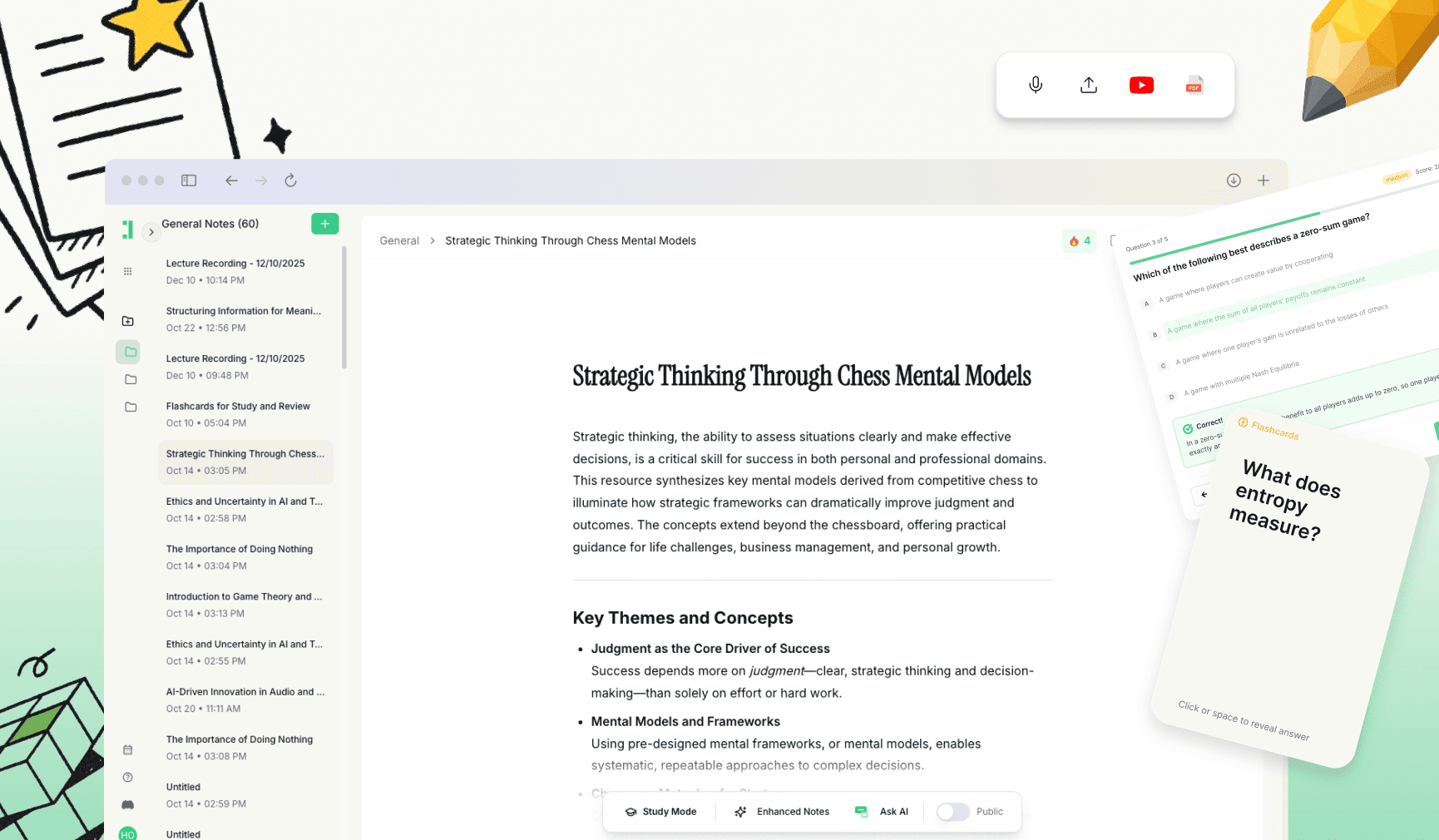
What are African History flashcards?
African History flashcards are a specialized study tool designed to help you master the vast timeline of the continent, from early civilizations like the Kingdom of Kush and the Mali Empire to the complexities of the colonial era and modern independence movements. These flashcards break down dense historical narratives into bite-sized queries covering key figures, pivotal dates, and socio-political shifts.
Instead of passively rereading long chapters on the Trans-Saharan trade or the Scramble for Africa, flashcards force you to engage in active recall. By testing yourself on specific events and their consequences, you build a much stronger mental map of how Africa’s diverse regions and cultures have evolved over millennia. If you already have lecture notes or textbook chapters, Duetoday can generate a clean deck in minutes so you can stop highlighting and start learning.
Why flashcards work for African History
African History requires a balance of memorizing specific details—like the names of leaders and dates of treaties—and understanding broad thematic relationships across different regions. Flashcards are perfectly suited for this because they allow you to isolate variables and strengthen your memory through repetition.
Remember key dynasties and empires without late-night cramming.
Separate similar concepts, such as the different administrative styles of British vs. French colonial rule.
Learn historical processes step-by-step, such as the stages of decolonization in West Africa.
Practice identifying the causes and effects of major migrations like the Bantu expansion.
What to include in your African History flashcards
To maximize your study efficiency, your flashcards should follow the one idea per card rule. Avoid cluttering a single card with too much information; instead, use question-based prompts that trigger specific memories. We recommend focusing on four main categories of cards:
Definitions & Key Terms: What was the Great Zimbabwe? or Define Pan-Africanism.
Processes & Steps: What were the steps leading to the 1884 Berlin Conference?
Comparisons: How did the Ghana Empire differ from the Songhai Empire in trade?
Application: What was the impact of the Salt-Gold trade on Sudanese kingdoms?
Example prompts include: Who was Mansa Musa?, Explain the significance of the Battle of Adwa, and What triggered the Mau Mau Uprising?
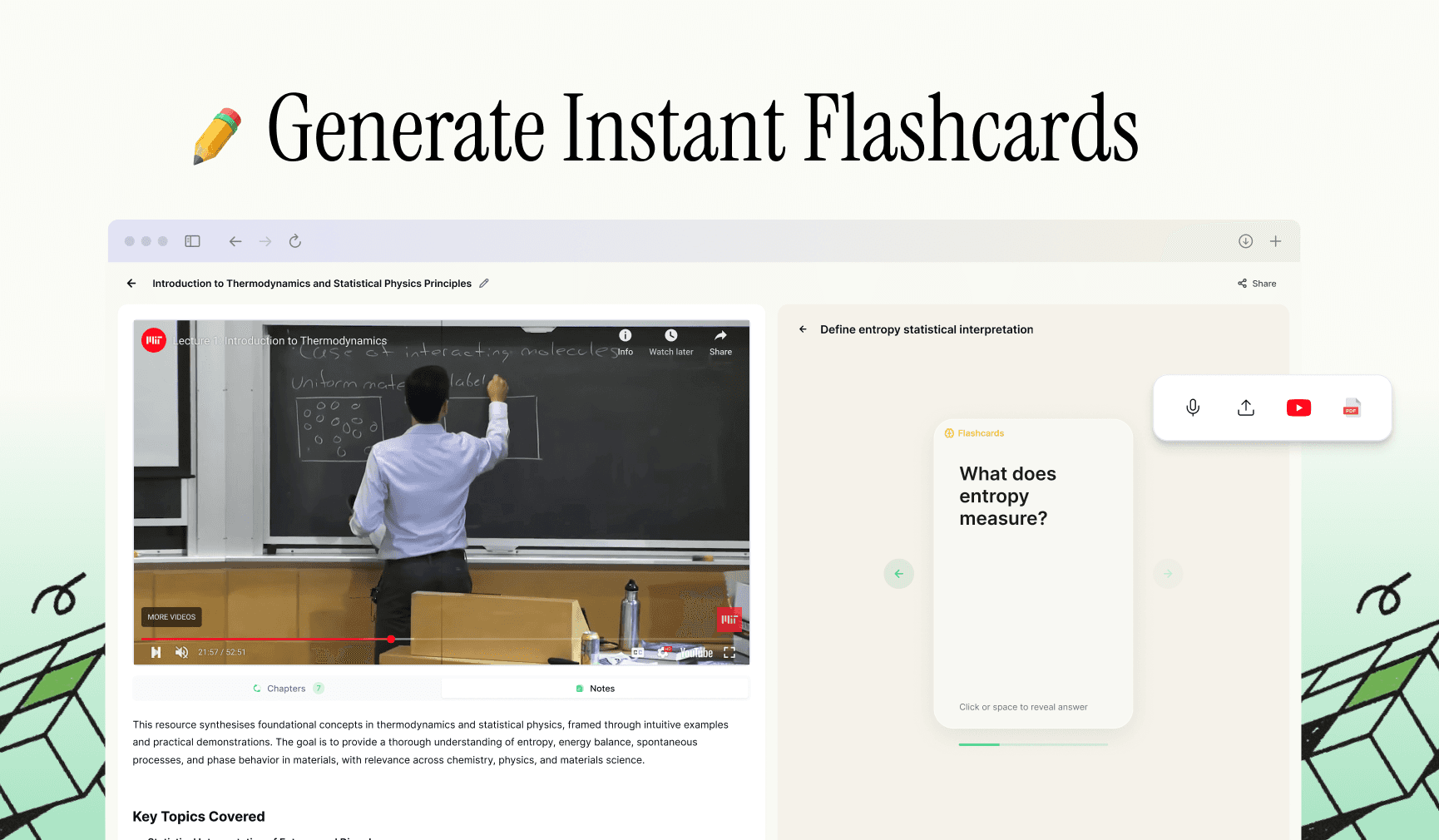
How to study African History with flashcards (a simple system)
The most effective way to master African History is through a two-pass approach. First, generate your deck based on your specific curriculum or notes. Then, go through the cards in focused rounds. Don't try to learn the entire continent's history in one sitting; break it down by era or region to avoid confusion.
Make a deck from your notes (or generate it automatically from your PDF).
Do one quick round to identify which empires or dates you struggle with.
Review these weak cards daily using a spaced repetition schedule.
Mix in harder cards with easier ones to keep your brain engaged.
Perform a final mixed review of all regions before your exam.
Generate African History flashcards automatically in Duetoday
Making history flashcards manually is incredibly time-consuming. You often spend more time writing out the cards than actually studying them. Duetoday solves this by automating the creation process, ensuring your cards are consistent, accurate, and ready for review instantly.
Upload or paste your African History lecture notes or PDFs.
Click Generate Flashcards to let our AI identify the most important themes.
Review, edit for personal context, and start studying immediately.
Common African History flashcard mistakes
Many students create cards that are too wordy, which leads to rote memorization of a paragraph rather than understanding a concept. Avoid these common pitfalls:
Cards are too long: If a card has five sentences, split it into five separate cards.
Ignoring the 'Why': Don't just memorize when a war happened; include a card on why it started.
Chronology confusion: Ensure your cards help you place events in order, not just in isolation.
No review schedule: Flashcards lose their power if you only look at them once a week.
Ready to generate your African History flashcards?
Stop drowning in dates and names. Upload your notes to Duetoday, generate a comprehensive deck, and master your African History course with ease. Works with notes, PDFs, slides, and transcripts.
FAQ
How many flashcards do I need for African History? It depends on the scope of your course, but a typical unit (like Pre-colonial Empires) usually requires 40-60 high-quality cards.
What’s the best format for history cards? Use a 'Question and Answer' format with a focus on 'Cause and Effect' to understand the narrative of history.
How often should I review my cards? Daily review is best for short-term memory, moving to every 3-5 days once you feel confident with the material.
Should I make cards from a textbook or my lecture notes? Use both! Your textbook provides the depth, while lecture notes highlight what your instructor thinks is most important for the exam.
How do I stop forgetting dates after a few days? Spaced repetition is key. Duetoday helps by highlighting the cards you struggle with so you see them more often.
Can I generate African History flashcards from a PDF? Yes, Duetoday is designed to parse PDFs and extract key historical facts into flashcard format automatically.
Are digital flashcards better than paper for history? Digital cards are superior for history because you can easily add images of maps, update facts, and use automated scheduling.
How long does it take to make a full deck? Manually, it could take hours. With Duetoday, it takes less than a minute after you upload your material.
Can Duetoday organize my cards by region? Yes, you can generate specific decks for West Africa, East Africa, Southern Africa, or specific time periods like the Colonial Era.

Duetoday is an AI-powered learning OS that turns your study materials into personalised, bite-sized study guides, cheat sheets, and active learning flows.