Generate Flashcards for Administrative Law
Make and generate flashcards for Administrative Law to master judicial review, agency rules, and legal procedures with ease.
Generate Flashcards with AI Free
Maximize Your Administrative Law Study Sessions
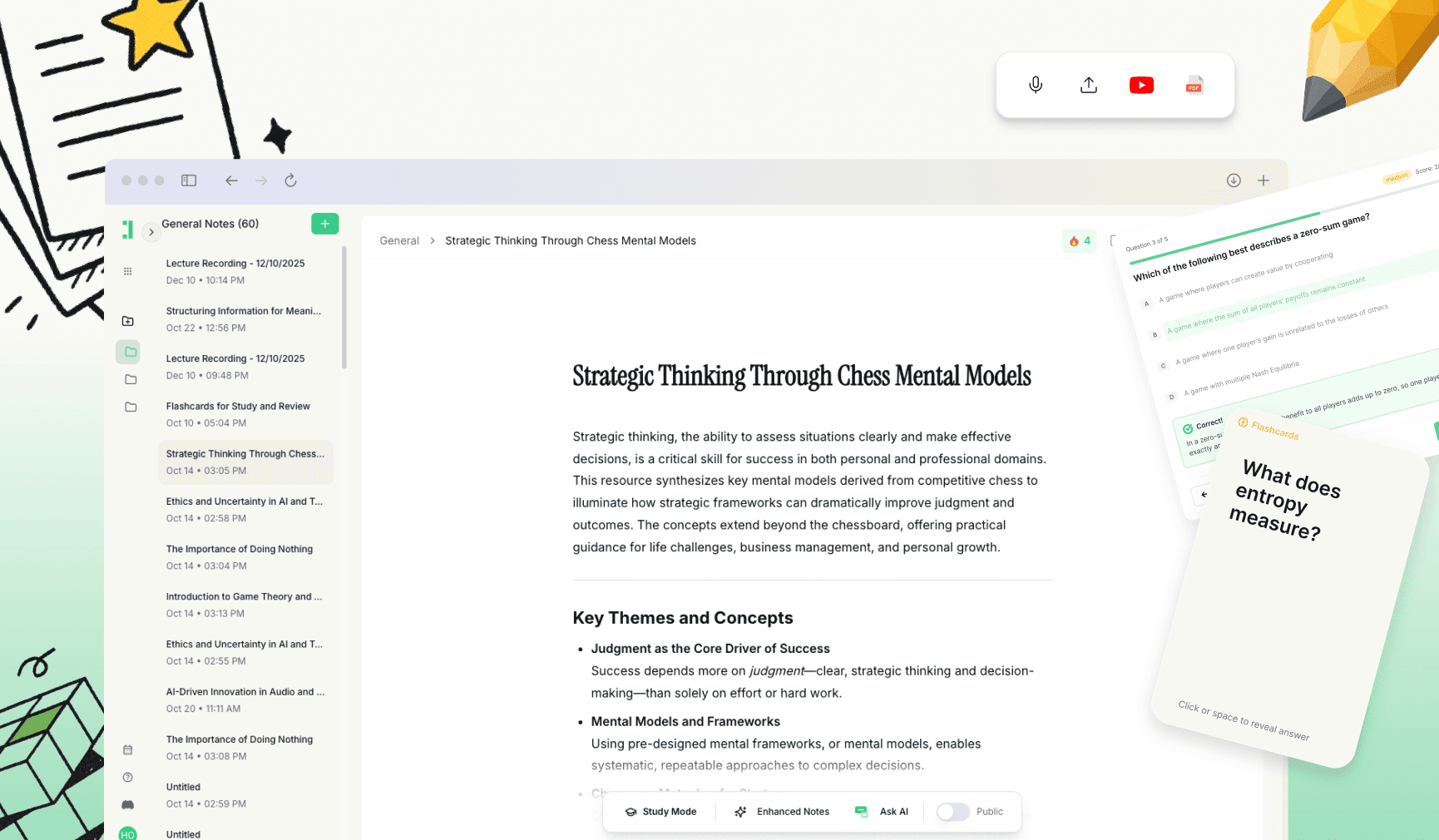
Turn your notes, PDFs, slides, or lectures into Administrative Law flashcards so you can review faster and remember more. Instead of drowning in complex statutes and agency rulings, use AI-powered recall to master the material.
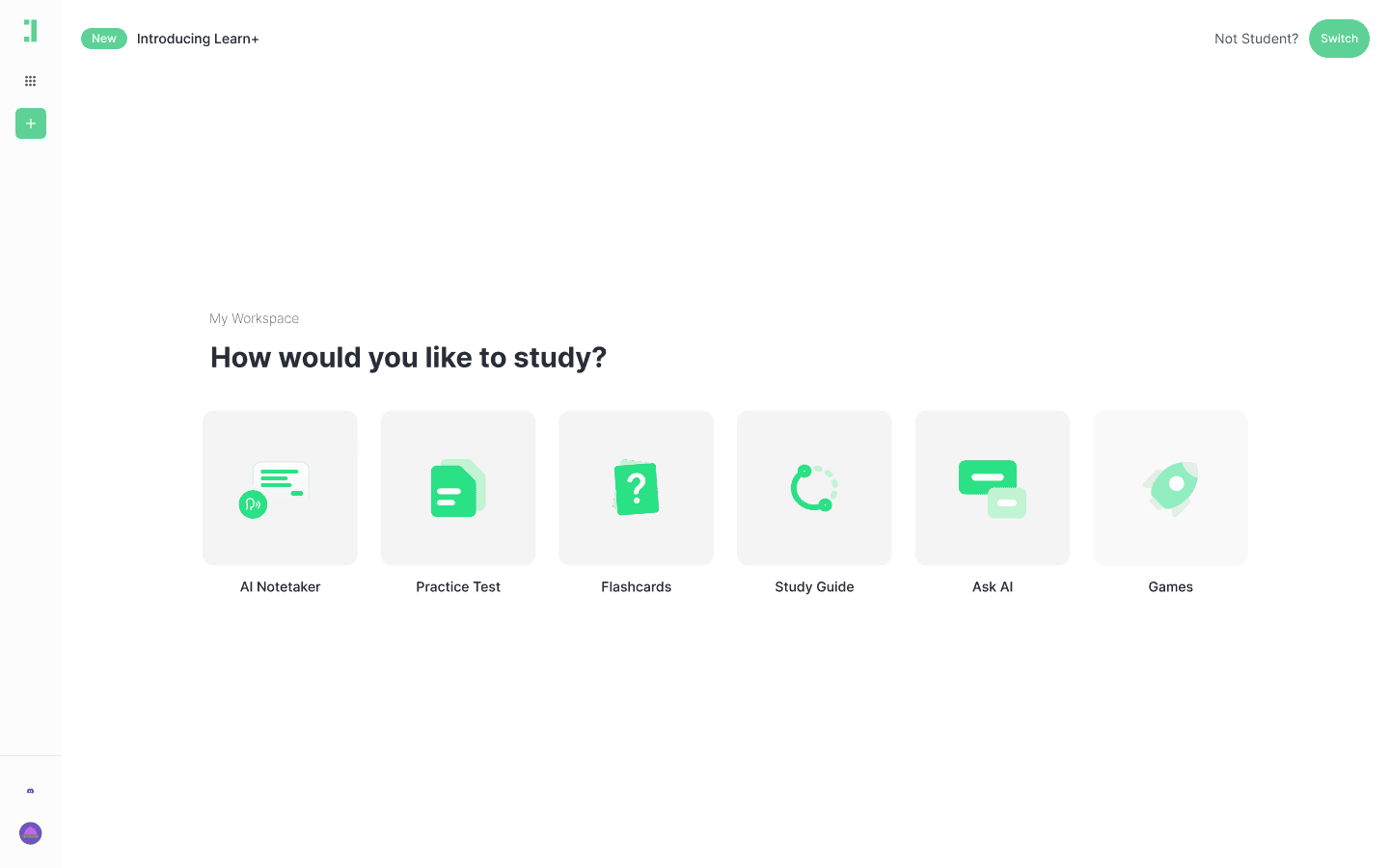
The process in Duetoday is simple: upload your materials, click generate, review the cards, and start studying. It takes the manual labor out of law school prep so you can focus on analysis.
What are Administrative Law flashcards?
Administrative Law flashcards cover the specific legal frameworks governing government agencies. This includes key terms like 'standing,' the intricacies of the Administrative Procedure Act (APA), standards of judicial review, and the delegation doctrine.
The outcome is a shift from passive reading to active testing. Instead of rereading a 50-page chapter on rule-making, you test yourself on the specific steps and exceptions, building long-term retention and legal reasoning skills.
If you already have notes or case briefs, Duetoday can generate a clean deck in minutes so you don't have to type them out by hand.
Why flashcards work for Administrative Law
Administrative Law requires a unique blend of rote memorization for procedural rules and high-level conceptual understanding of constitutional boundaries. Flashcards are the perfect tool to bridge this gap through active recall and spaced repetition.
Remember key terms like 'Chevron deference' and 'Arbitrary and Capricious' without cramming.
Separate similar concepts such as formal vs. informal rule-making.
Learn procedural processes step-by-step, including notice-and-comment pathways.
Practice applying standards of review to different agency actions quickly.
What to include in your Administrative Law flashcards
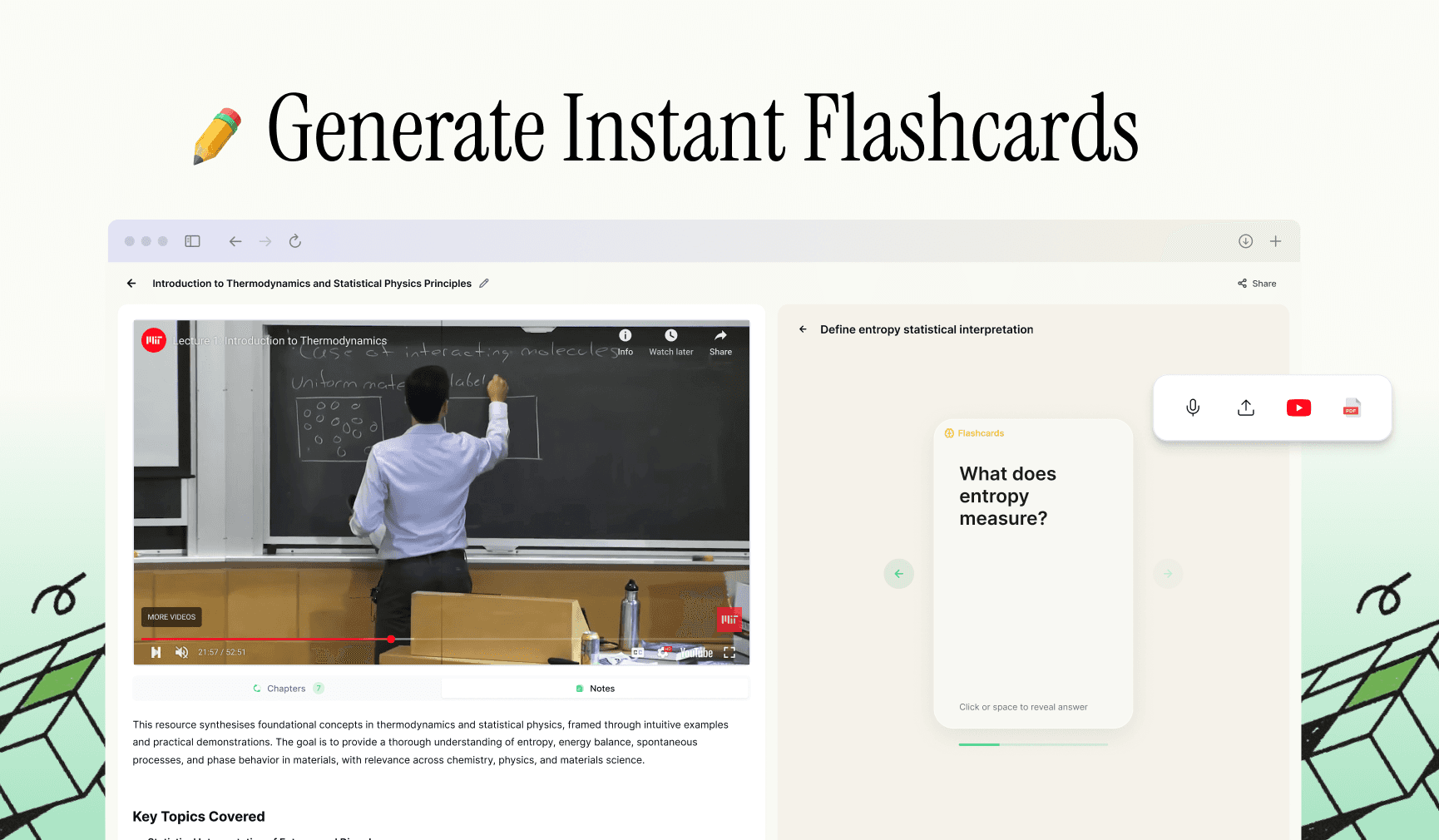
Effective law flashcards follow the one idea per card rule. They should be question-based and force you to apply a rule rather than just reciting a definition. Good decks include definitions, procedural steps, comparisons, and application scenarios.
Definitions & Key Terms: What is the Exhaustion Doctrine? or Define Sovereign Immunity.
Processes & Steps: What are the three requirements for Constitutional Standing?
Comparisons: How is de novo review different from substantial evidence review?
Application: When would a court apply the Chenery doctrine?
How to study Administrative Law with flashcards
Success in Administrative Law requires a systematic approach. Start by generating a deck from your casebook highlights or lecture notes. Use a two-pass method: perform one quick round to identify which standards of review you keep mixing up, then focus your daily sessions on those weak spots.
Make a deck from your notes or generate it from content using Duetoday.
Do one quick round to find weak spots in agency procedures.
Review weak cards daily to cement the rules of the APA.
Mix in harder application cards as you get closer to the exam.
Do a final mixed review of all topics before your finals.
Generate Administrative Law flashcards automatically in Duetoday
Making cards manually is slow and takes time away from actual studying. With Duetoday, you can position yourself for success by converting your complex legal materials into study tools instantly.
Upload or paste your Administrative Law material.
Click Generate Flashcards.
Review, edit, and start studying with active recall.
Common Administrative Law flashcard mistakes
Many students make cards that are essentially paragraphs. Broad cards lead to recognition rather than recall. Keep cards short, avoid memorizing words without context, and always include the 'why' behind a legal standard. Ensure you have comparison cards for similar concepts like 'Ripeness' and 'Mootness' to avoid confusion during the exam.
Ready to generate your Administrative Law flashcards?
Stop rereading your casebook and start recalling the law. Upload your notes now and get a deck you can actually use today.
FAQ
How many flashcards do I need for Administrative Law? A typical semester-long course usually requires 150-250 cards to cover the APA, judicial review, and agency powers thoroughly.
What’s the best format for Administrative Law flashcards? Question-and-answer format works best. For example, 'What standard of review applies to agency findings of fact?' on one side and the answer on the other.
How often should I review my cards? Daily review is recommended for new or difficult concepts like 'Standing,' while mastered topics can be reviewed every 3-4 days using spaced repetition.
Should I make cards from a textbook or case briefs? Case briefs are better for specific rulings, while textbooks provide the overarching procedural rules. Duetoday can use both to create a well-rounded deck.
How do I stop forgetting the APA steps? Use process-based cards that ask 'What happens next?' to build a mental map of the notice-and-comment rule-making procedure.
Can I generate flashcards from a PDF automatically? Yes, you can upload any Administrative Law PDF, like a syllabus or a study guide, to Duetoday to instantly create a study deck.
Are digital flashcards better than paper for law students? Digital cards are generally better because they allow for faster organization and use algorithms to show you the cards you struggle with more frequently.
How long does it take to make a full deck? Manually it can take hours; with Duetoday AI, it takes less than a minute to generate a high-quality deck from your notes.
Can Duetoday organize my flashcards by topic? Yes, the AI can categorize cards into specific subjects like 'Adjudication' or 'Executive Oversight' for more focused study sessions.

Duetoday is an AI-powered learning OS that turns your study materials into personalised, bite-sized study guides, cheat sheets, and active learning flows.