Generate Flashcards for Abstract Algebra
Easily make or generate Abstract Algebra flashcards to master groups, rings, and fields using this comprehensive guide.
Generate Flashcards with AI Free
What are Abstract Algebra flashcards?
Abstract Algebra flashcards are concise study tools designed to help you master the complex structures of algebraic systems like groups, rings, fields, and vector spaces. Unlike standard algebra, these cards focus on axioms, theorems, and the underlying properties that define mathematical operations. By breaking down high-level abstractions into bite-sized questions, you can transform a dense textbook into a manageable series of mental challenges.
Instead of passively rereading your notes on isomorphism or homomorphisms, flashcards force you to define these terms and apply their properties from memory. This builds the mental muscle memory required to solve proofs and identify algebraic structures in exam settings.
Why flashcards are one of the best ways to study Abstract Algebra
Abstract Algebra requires a deep understanding of definitions and the ability to distinguish between closely related concepts. Flashcards utilize active recall and spaced repetition to ensure you don't just recognize a theorem, but can actually state and apply it when the pressure is on.
Memorize axioms for groups, rings, and fields without the overwhelm.
Identify the difference between normal subgroups and centers of groups.
Quickly recall the requirements for a map to be a homomorphism.
Practice applying the First Isomorphism Theorem to various structures.
Internalize Cayley’s Theorem and other fundamental proofs step-by-step.
What to include in your Abstract Algebra flashcards
The secret to effective Abstract Algebra cards is clarity. Since the subject is highly conceptual, each card should focus on a single definition, theorem, or example. Using a question-and-answer format prevents you from simply skimming over complex proofs.
Definitions & Key Terms: "What is the definition of a cyclic group?" or "Define a Euclidean Domain."
Processes & Steps: "How do you determine if a subset is a subgroup?"
Comparisons: "What is the difference between a Ring and a Field?"
Application: "Give an example of a non-abelian group of order 6."
Try these prompts when generating your deck: 'Define the Kernel of a homomorphism,' 'State Lagrange’s Theorem,' or 'What are the properties of an Integral Domain?'
How to study Abstract Algebra with flashcards
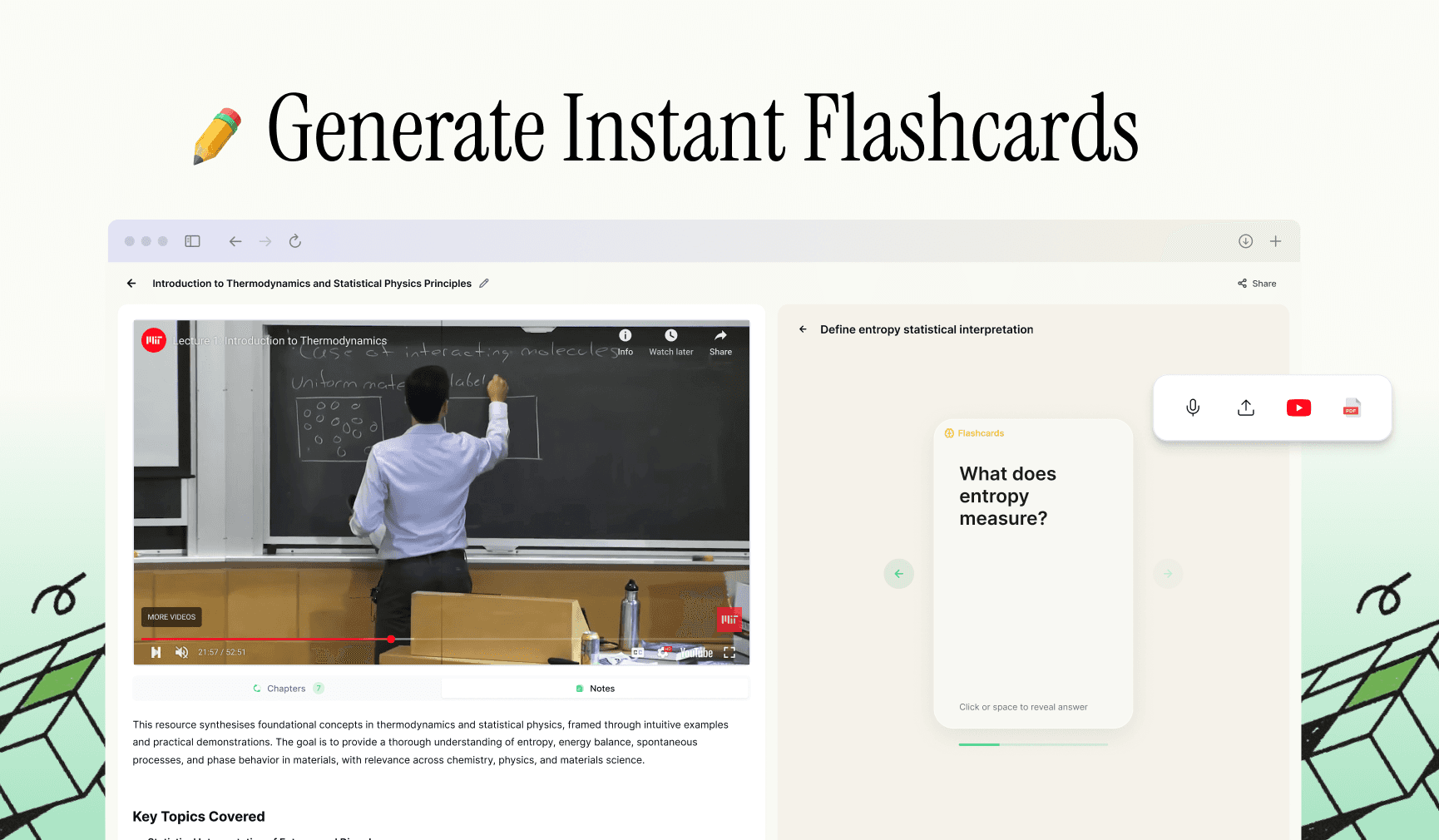
Studying Abstract Algebra isn't about memorizing every proof; it’s about understanding the 'rules of the game.' Start by generating a deck from your lecture notes or syllabus in Duetoday. Once your deck is ready, go through it in rounds. Focus heavily on the axioms and fundamental theorems first, as these are the building blocks for every advanced concept.
Review your deck in short, intense sessions. If you struggle with a specific concept—like Sylow Theorems—mark it for daily review. Over time, your brain will start to see the patterns between different algebraic structures, making proofs feel much more intuitive.
Generate your deck from textbook chapters or PDF notes automatically.
Separate 'Easy' cards from 'Hard' ones to optimize your time.
Review high-difficulty cards every day until the logic clicks.
Mix cards from different chapters to test your ability to switch contexts.
Simulate exam conditions by answering cards out loud or on paper.
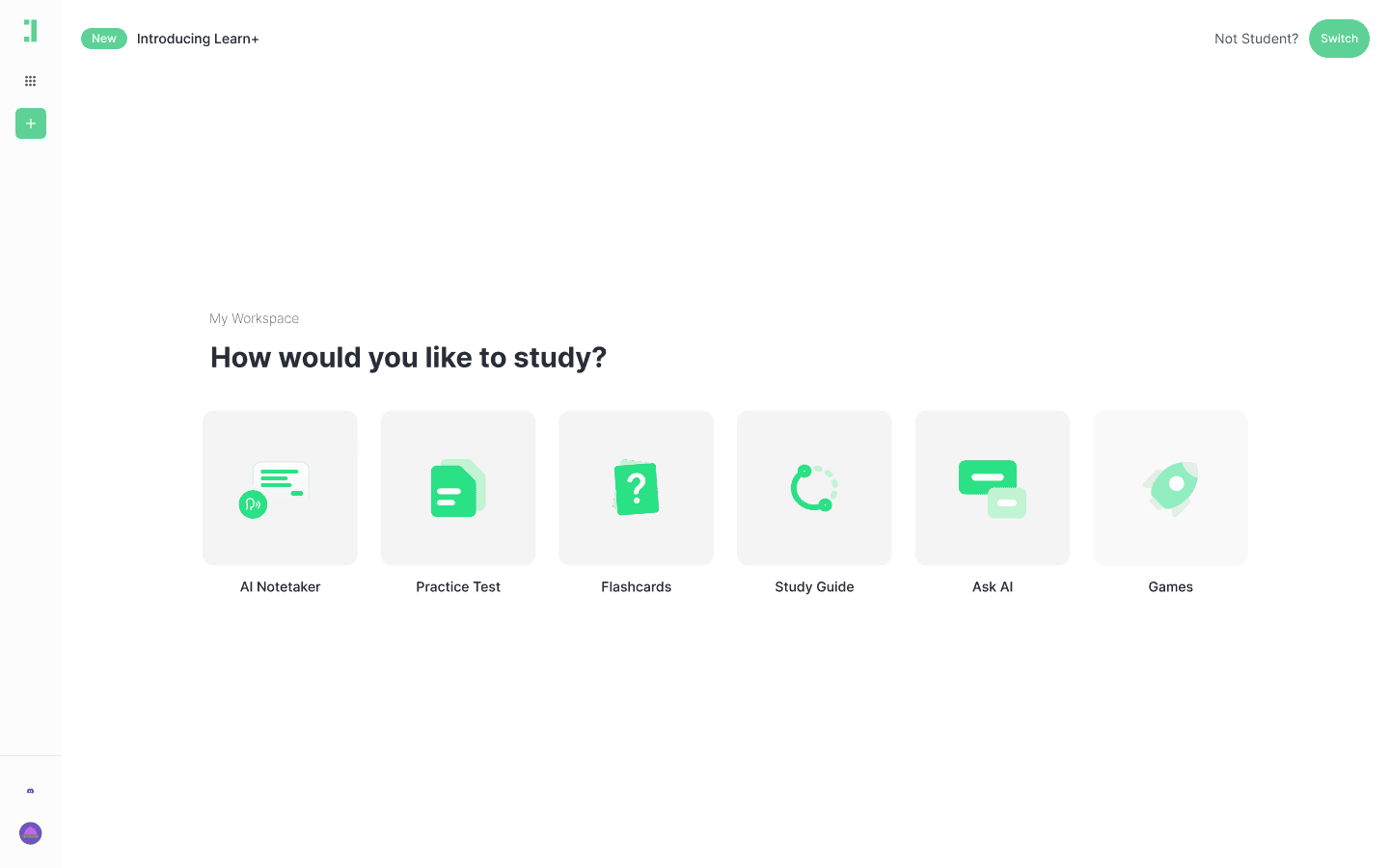
Generate Abstract Algebra flashcards automatically in Duetoday
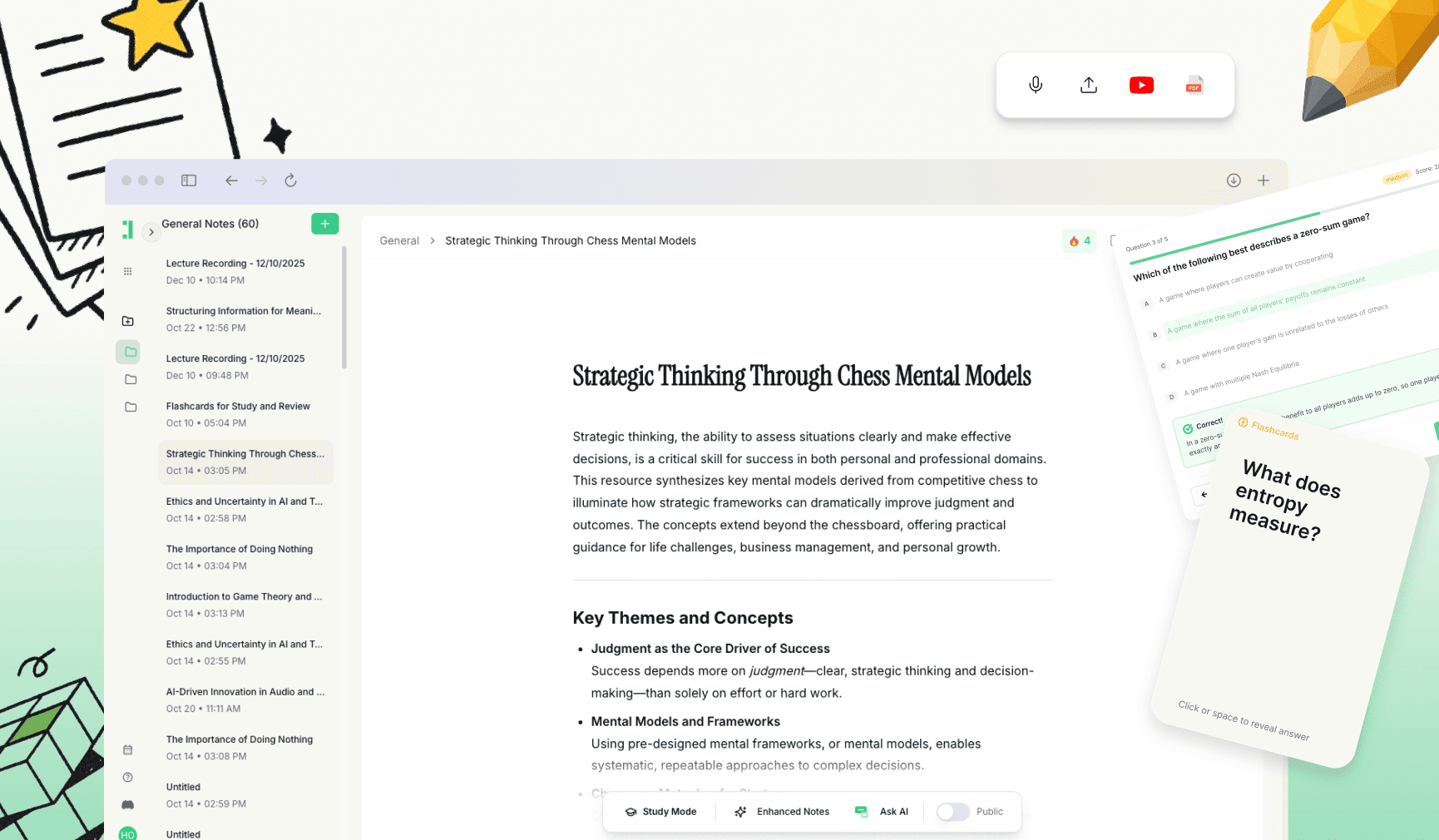
Creating flashcards for a subject as notation-heavy as Abstract Algebra by hand is exhausting. You end up spending more time writing out equations than actually studying them. Duetoday automates this process by scanning your PDFs, slides, or lecture transcripts to identify the core components of your course.
Simply upload your math materials and watch as the AI extracts definitions, examples, and theorem statements into a structured deck. You can then edit the cards to add your own notes or start studying immediately.
Upload your Abstract Algebra notes or textbook PDFs
Click Generate Flashcards
Review your AI-generated deck and start your session
Common Abstract Algebra flashcard mistakes
Many students make their cards too dense, essentially copying a whole theorem and its proof onto one card. This leads to recognition rather than recall. To avoid this, keep your prompts specific. Don't ask 'What is Group Theory?'; instead, ask for the four axioms a set must satisfy to be a group. Another mistake is neglecting examples—always include cards that ask for a specific counter-example to a statement.
FAQ
How many flashcards do I need for Abstract Algebra? Usually 100-200 cards suffice for a standard semester, focusing on core definitions, theorems, and specific examples for each structure.
What’s the best format for math flashcards? Use a 'Q&A' format. The front should ask for a definition or theorem, and the back should provide the concise answer or the conditions required.
How often should I review my cards? Daily review is best for Abstract Algebra because the concepts are cumulative. Missing a few days can make later chapters much harder to grasp.
Should I make cards from my textbook or lectures? Both. Lectures often highlight the specific proofs the professor favors, while textbooks provide the formal definitions needed for accuracy.
How do I stop forgetting theorem names? Create specific 'Name the Theorem' cards where the front describes the result and the back provides the title (e.g., 'Lagrange’s Theorem').
Can I generate flashcards from LaTeX notes? Yes, Duetoday can process various formats including PDFs containing mathematical notation to create clean cards.
Are digital cards better than paper? For math, digital is often better because you can easily include complex notation and shuffle cards to prevent 'serial position' memory where you only know the order of the notes.
Can Duetoday handle group theory and ring theory? Absolutely. It can distinguish between different modules of Abstract Algebra to create specialized decks for different sections of your course.

Duetoday is an AI-powered learning OS that turns your study materials into personalised, bite-sized study guides, cheat sheets, and active learning flows.