Generate Flashcards for Alcohols, Aldehydes, and Ketones
Generate Alcohols, Aldehydes, and Ketones flashcards in seconds with AI. Try for free!
Generate Flashcards with AI Free
Generate Flashcards for Alcohols, Aldehydes, and Ketones
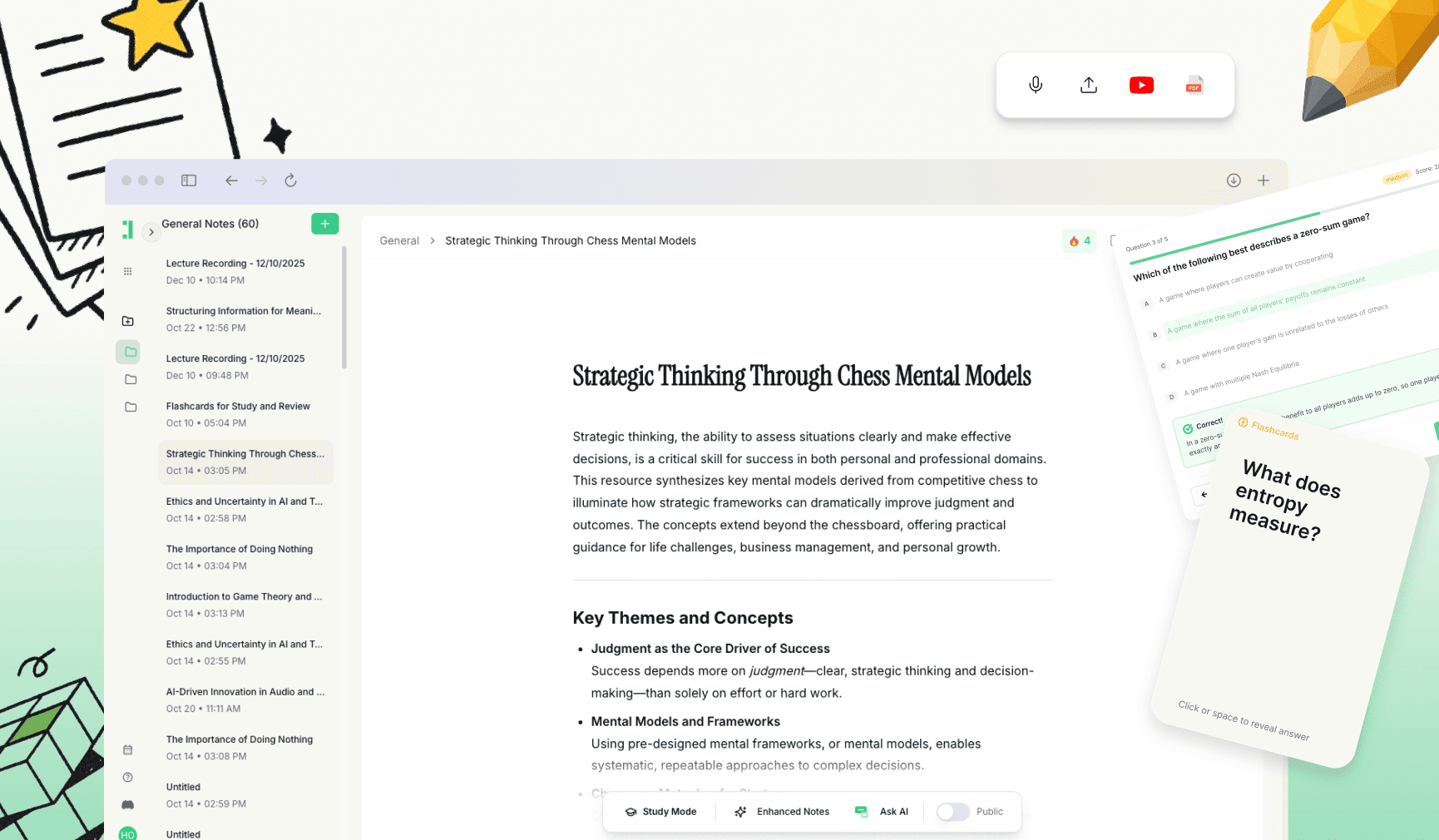
Turn your organic chemistry notes, reaction maps, or textbook chapters into Alcohols, Aldehydes, and Ketones flashcards so you can master functional groups and reaction mechanisms faster than ever.
Generate Chemistry FlashcardsUpload Study Material
In Duetoday, you simply upload your lecture slides or paste your chemistry notes. Our AI analyzes the chemical structures and reaction pathways to generate a custom deck, which you can then refine and study using active recall.
What are Alcohols, Aldehydes, and Ketones flashcards?
These flashcards cover the essential oxygen-containing functional groups in organic chemistry. They focus on identifying structures, understanding IUPAC nomenclature, predicting physical properties like boiling points, and memorizing specific reaction reagents.
Instead of staring at a complex reaction wheel, these cards force you to recall the specific reagent needed to oxidize a primary alcohol or the mechanism of a nucleophilic addition to a carbonyl group. If you have your notes ready, Duetoday can build this deck in seconds.
Why flashcards work for Alcohols, Aldehydes, and Ketones
Organic chemistry requires a mix of rote memorization and logical application. Flashcards bridge this gap by using active recall and spaced repetition to move reaction mechanisms into your long-term memory.
Memorize functional group priorities and suffixes for nomenclature.
Distinguish between oxidation states (Alcohols vs. Carbonyls).
Master the specific conditions for Grignard reactions.
Practice identifying nucleophiles and electrophiles in carbonyl reactions.
What to include in your flashcards
Effective chemistry flashcards follow the "one concept per card" rule. Don't try to put an entire multi-step synthesis on one card; break it down into the prompt, the reagent, and the intermediate.
Functional Groups: Identify the -OH, -CHO, and -CO- groups.
Reagents: What does PCC do to a secondary alcohol?
Properties: Compare the solubility of alcohols vs. alkanes.
Mechanisms: What is the first step in hemiacetal formation?
Example prompts: "What is the product of propan-2-ol with K2Cr2O7?", "Define a Jones Oxidation," or "Which has a higher boiling point: Ethanol or Ethanal?"
How to study organic chemistry with flashcards
Start with a "two-pass" system. First, use your generated deck to learn the basic definitions and reagents. Once you can identify the molecules, move to a second pass focusing on drawing the mechanisms and predicting products of mixed reactions.
Generate your deck from your syllabus or textbook PDF.
Perform an initial review to flag the reactions you find most confusing.
Review high-difficulty cards daily to strengthen neural pathways.
Mix cards from different chapters to ensure you can identify groups in isolation.
Self-test by drawing the structures on a whiteboard before flipping the card.
Generate Alcohols, Aldehydes, and Ketones flashcards automatically
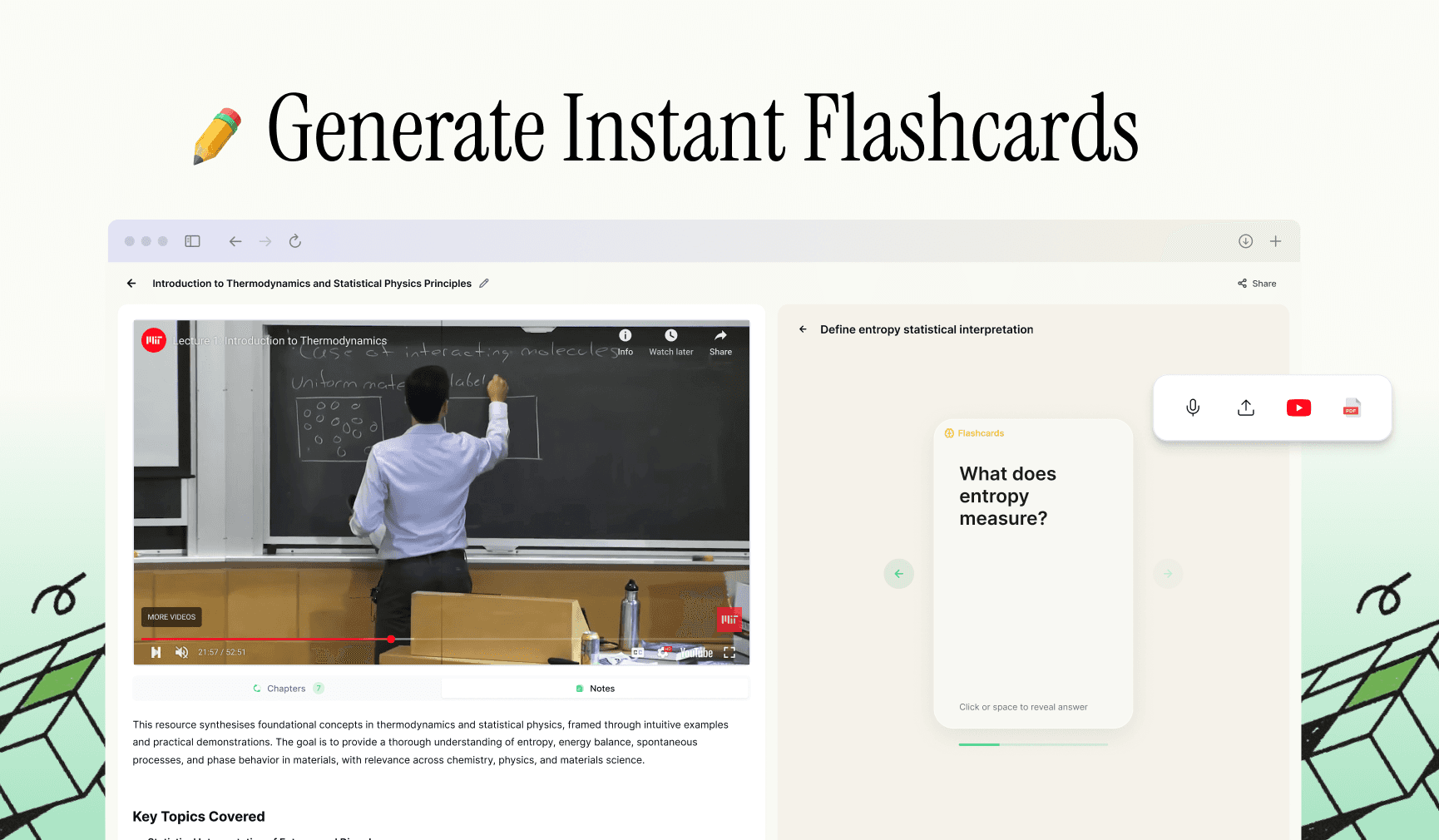
Manually drawing chemical structures and reagents on paper cards is incredibly time-consuming and often leads to messy, illegible notes. Duetoday automates the process so you can spend your time studying, not prepping.
Simply upload your organic chemistry slides or paste a list of reactions, and Duetoday will generate structured cards with clear questions and precise answers.
Upload your O-Chem PDFs or notes.
Click Generate Flashcards.
Review, edit for accuracy, and start your session.
Generate Flashcards in Duetoday
Common mistakes (and how to fix them)
Many students make cards that are too vague, such as putting "Alcohol Reactions" on one side. This is too broad. Break them down into specific types like dehydration, oxidation, or substitution.
Cards are too complex: Keep one reagent or one product per card.
Ignoring physical properties: Don't just study reactions; include cards on hydrogen bonding.
Forgetting reagents: Always include the specific acid or base catalyst required.
Lack of visualization: Ensure you can mentally "see" the carbonyl group.
FAQ
How many flashcards do I need for this topic? Usually 40-60 cards per unit to cover nomenclature, properties, and the major reaction types for all three groups.
What is the best format for chemistry flashcards? Question-on-front, Answer-on-back with a specific focus on either 'Reagent', 'Product', or 'Mechanism step'.
How often should I review? Daily for the first week after learning the material, then every 3-4 days to maintain retention until your exam.
Should I make cards from my textbook or lectures? Lectures usually highlight what the professor thinks is most important, but textbooks provide the detail needed for mechanisms.
How do I stop forgetting reactions? Use Duetoday's spaced repetition to ensure you are prompted with the hardest reactions right before you are likely to forget them.
Can I generate cards from my lab manual? Yes, uploading lab procedures is a great way to memorize the 'why' behind specific experimental steps.
Is digital better than paper for O-Chem? Digital is superior for the speed of generation and the ability to rearrange cards as you master them.
How long does it take to make a deck? With Duetoday, you can turn a 20-page chapter into a deck in less than 2 minutes.

Duetoday is an AI-powered learning OS that turns your study materials into personalised, bite-sized study guides, cheat sheets, and active learning flows.