
>

>

ChatGPT prompts for time blocking study sessions that actually work.

Chatgpt prompts for time blocking [Free Guide]

Master your schedule with these ChatGPT prompts for time blocking study sessions. Learn how to turn syllabus dates into actionable study blocks to boost productivity.

Use Study AI Free
ChatGPT Prompts for Time Blocking Study Sessions

Students often struggle with overwhelming workloads and the paralysis of not knowing which subject to tackle first. These prompts unlock a structured approach to your day, turning chaotic To-Do lists into clear, time-limited blocks that maximize focus and retention. Copy and paste the prompts below to transform how you manage your academic life.

The Quick Start Guide

To get the most out of these prompts, follow this simple framework: Paste your source data > Set your constraints > Refine the output. For the best results, provide ChatGPT with your specific lecture topics, upcoming deadlines from your syllabus, and your preferred waking hours so it doesn't have to guess your availability.

How to Use These Prompts Effectively

  • Step 1: Input your materials: Copy your class schedule, syllabus dates, or specific chapter lists into the chat.

  • Step 2: Define your energy levels: Tell the AI when you are most alert (e.g., "I focus best between 9 AM and 11 AM").

  • Step 3: Apply a framework: Ask for specific techniques like the Pomodoro method or the 2-hour deep work block.

  • Step 4: Sync to reality: Review the output for any overlapping commitments and move the final plan into a tool like Duetoday for automated tracking.

Part 1: Understanding and Structuring Your Time

The Priority Matrix Creator

Use this when you have 10+ tasks and don't know where to start.

"I have the following list of tasks: [Paste Tasks]. Categorize these into an Eisenhower Matrix based on urgency and importance. Then, create a time-blocked schedule for a 4-hour study session focusing on the 'Urgent and Important' items first."

A good answer will rank your tasks and assign specific 30-60 minute windows to each high-priority item.

The Energy-Mapped Schedule

Use this to align difficult subjects with your peak mental performance.

"Create a daily time-blocked schedule for a student. I am most focused in the morning and hit a slump around 3 PM. Include blocks for [Subject A] and [Subject B]. Schedule the hardest deep work for my peak focus times."

A good answer provides a chronological list that places cognitively demanding work in the AM hours.

Syllabus-to-Schedule Converter

Use this at the start of a semester to visualize the coming weeks.

"Here are my syllabus dates: [Paste Dates]. Create a weekly time-blocking template that ensures I spend 5 hours per week on each subject, leading up to these deadlines. Build in 'buffer blocks' for unexpected delays."

A good answer provides a recurring weekly structure with dedicated prep time for upcoming exams.
Part 2: Practicing and Refining Your Focus

The Pomodoro Master Plan

Use this for long Sunday prep sessions to avoid burnout.

"Break down a 6-hour study window into Pomodoro sessions (25 mins work / 5 mins break). Assign these specific topics to each block: [List Topics]. Include a 30-minute long break halfway through."

Expect a granular breakdown that tells you exactly what to study during every 25-minute interval.

The Exam-Cram Recovery Block

Use this when you are behind and need to prioritize high-yield topics.

"I have an exam in 48 hours and haven't covered [List Chapters]. Create an intensive time-blocking plan that prioritizes the most difficult concepts first and includes active recall drills every 2 hours."

A good answer focuses on 'high-yield' study methods like practice testing rather than just reading.

The 'Deep Work' Buffer System

Use this to stay organized when your schedule is unpredictable.

"Design a daily study schedule that includes two 90-minute 'Deep Work' blocks. Between these, insert 15-minute 'Admin' blocks for emails and quick tasks. Leave the final hour of the day as a 'Buffer' for overflow work."

A good answer creates a resilient schedule that doesn't fall apart if one task runs over time.

The Interleaving Skill Switcher

Use this to improve long-term retention by mixing different subjects.

"Create a time-blocked afternoon (1 PM - 5 PM) using the interleaving technique. I need to study Math, Biology, and History. Rotate the subjects every 45 minutes to keep my brain engaged."

A good answer prevents 'mastery illusion' by forcing your brain to switch contexts frequently.

The Reflection and Review Block

Use this at the end of every week to ensure you are actually improving.

"Create a 1-hour Friday afternoon time block for a 'Weekly Review.' Include steps for checking off completed tasks, migrating unfinished tasks to next week, and reflecting on study wins."

A good answer provides a checklist format to help you close out your week mentally.

Common Mistakes to Avoid

  • No Source Context: Asking for a schedule without providing your syllabus leads to generic, useless plans.

  • Ignoring Travel/Food: Forgetting to block time for basic human needs like eating or commuting makes a schedule impossible to follow.

  • Over-optimism: Don't let ChatGPT schedule 8 hours of back-to-back deep work; your brain needs downtime to consolidate memory.

  • Zero Flexibility: Failing to include 'Buffer Blocks' means one late bus or long phone call ruins your entire day.

Automate Your Learning with Duetoday

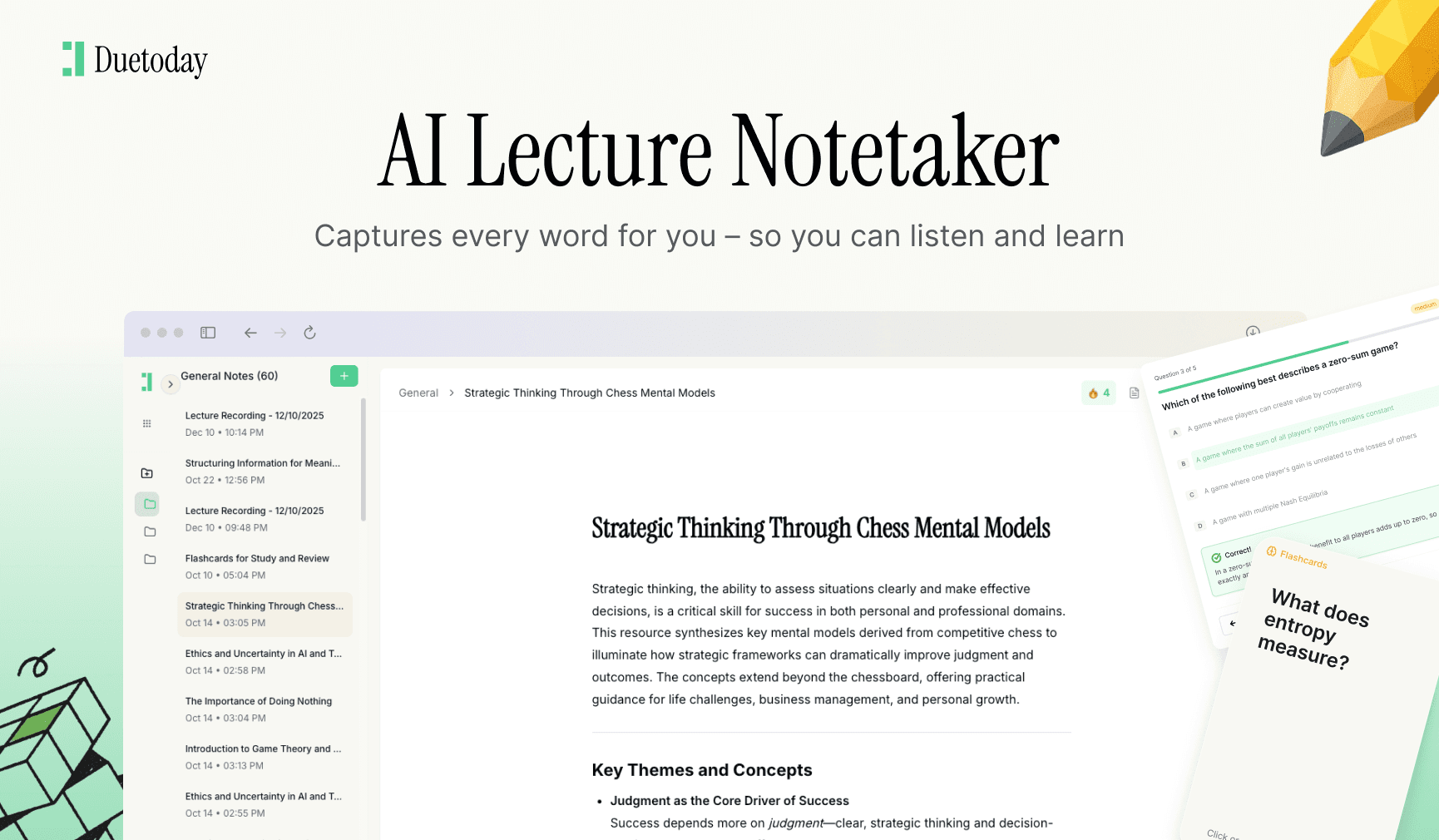
If you find manual time-blocking tedious, Duetoday can do the heavy lifting for you. Simply upload your lecture PDFs or YouTube links, and Duetoday’s AI Brain will automatically extract key points, generate study tasks, and sync them with your Google Calendar. It turns your learning materials into a living, breathing schedule without you ever having to write a single prompt.

Pick two prompts from the list above and try them out today. If you want a more seamless experience where your notes and calendar talk to each other, give Duetoday a try.

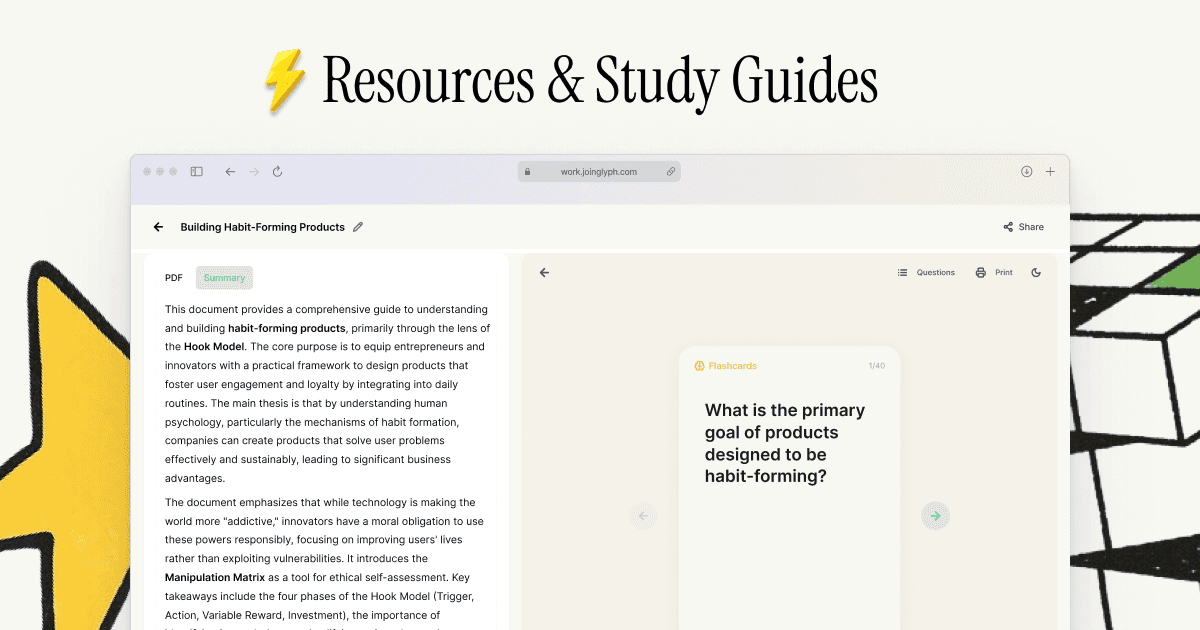
Duetoday is an AI-powered learning OS that turns your study materials into personalised, bite-sized study guides, cheat sheets, and active learning flows.

More Chatgpt Prompts
GET STARTED

Most Powerful Study Tool
for Students and Educators

Try Out Free. No Credit Card Required.
