
>

>

ChatGPT prompts for ADHD study workflows that focus and finish.

Chatgpt prompts for Studying With ADHD [Free Guide]

Stop the ADHD overwhelm with these ChatGPT prompts designed for focus, executive function, and structured studying. Get better results in less time.

Use Study AI Free
ChatGPT Prompts for Studying With ADHD (Focus + Structure)

Students with ADHD often struggle with the 'wall of awful'—that paralyzed feeling when a task feels too big, too vague, or too boring to start. These prompts unlock a system for breaking down complex topics into dopamine-friendly milestones, ensuring you maintain focus and actually retain what you read. Copy and paste the prompts below to turn your study sessions from chaotic to structured.

The Quick Start Guide

To get the most out of these ADHD-specific prompts, follow this exact workflow:

  • Input: Paste your syllabus, a specific PDF, or a messy transcript of your notes.

  • Adjust: Tell ChatGPT your specific frustration (e.g., "I am overwhelmed" or "I can't visualize this").

  • Constraint: Use the rule of one—always ask for one task or one explanation at a time to prevent cognitive overload.

How to Use Selective Prompting for Executive Function

Traditional studying fails ADHD brains because it lacks immediate feedback and structure. To fix this, follow these steps: First, upload your material and ask the AI to identify the 'Big Rocks' (the 20% of info that yields 80% of results). Second, set a time constraint, such as 'Explain this for a 25-minute Pomodoro session.' Third, ask the AI to act as a body double or a Socratic tutor that checks your understanding after every paragraph. Finally, convert the output into a format that allows for active recall, like flashcards or a practice quiz, to keep your brain engaged.

Bucket A: Internalizing and Understanding

The 'Explain Like I'm Curious' Prompt

Use this when you are staring at a dense page of text and your brain is refusing to process the words.

"I have ADHD and I'm feeling overwhelmed by this text. Please read [Paste Text/Context] and summarize the three most important concepts using high-energy language and analogies. Use bullet points and bold headers to make it visually clear and easy to scan."

A good answer provides a high-level overview that feels manageable and interesting, rather than a wall of academic jargon.

The Executive Function Breakdown

Use this when you have a large project or exam and don't know where to start.

"I need to study [Subject] for my exam on [Date]. Break this down into 30-minute 'micro-tasks' that feel low-friction. For each task, tell me exactly what the first step is so I don't get stuck on the 'starting' phase."

A good answer gives you a checklist of tiny, actionable wins that trick your brain into starting.

The Socratic Focus Filter

Use this to stay engaged with the material through interaction rather than passive reading.

"Act as a supportive tutor. I will paste my notes below. Don't summarize them all at once. Instead, ask me one question at a time about the material to see if I understand it. If I get it right, give me a 'level up' fact and move to the next concept."

A good answer is a back-and-forth dialogue that provides the dopamine hits needed to keep an ADHD brain focused.
Bucket B: Remembering and Retention

The Spaced Repetition Architect

Use this to plan your study schedule without the mental tax of organization.

"Based on these notes [Paste Notes], create a 5-day study schedule. For each day, give me 3 specific focus points and one active recall exercise (like a practice question). Keep it realistic for someone who struggles with long periods of focus."

A good answer provides a clear, time-bound roadmap that removes the 'what should I do next?' anxiety.

Visualizing Concepts

Use this when abstract concepts feel too 'floaty' to stick in your memory.

"I'm struggling to visualize [Concept]. Describe it to me as a physical machine or a movie scene. Use sensory details. Then, give me a 'cheat sheet' summary I can look at for a quick 5-second refresh."

A good answer anchors an abstract idea to a concrete, memorable image.

Bucket C: Practice and Execution

The 'Explain It Back' Drill

Use this to prove you actually know the material and aren't just recognizing it.

"I'm going to explain [Topic] to you. Listen to my explanation and tell me: 1. What I got right, 2. What I missed, and 3. One common mistake students make with this topic that I should avoid."

A good answer provides immediate, constructive feedback that feels like a game/challenge.

AI Mock Exam (ADHD Style)

Use this to simulate the test environment in short, high-intensity bursts.

"Generate 5 multiple-choice questions based on [Text]. Give me the questions one by one. Do not give the answer until I respond. After each answer, give me a quick 'Keep going!' or 'Good try' to keep my momentum up."

A good answer keeps the pace fast and the feedback loop tight, which is essential for ADHD engagement.

Common Mistakes to Avoid

  • Information Dumping: Pasting 50 pages and asking for a summary often leads to vague, useless advice. Break it up.

  • Passive Reading: If you just ask ChatGPT to summarize, you’ll likely zone out while reading it. Always ask for questions or tasks.

  • Ignoring the 'Wall': Don't try to use 'boring' prompts. Ask the AI to use humor, personas, or storytelling to keep your interest.

  • Hallucination Risks: ADHD brains can sometimes miss small errors. Always double-check key dates and names against your original source material.

Automate Your ADHD Study Workflow

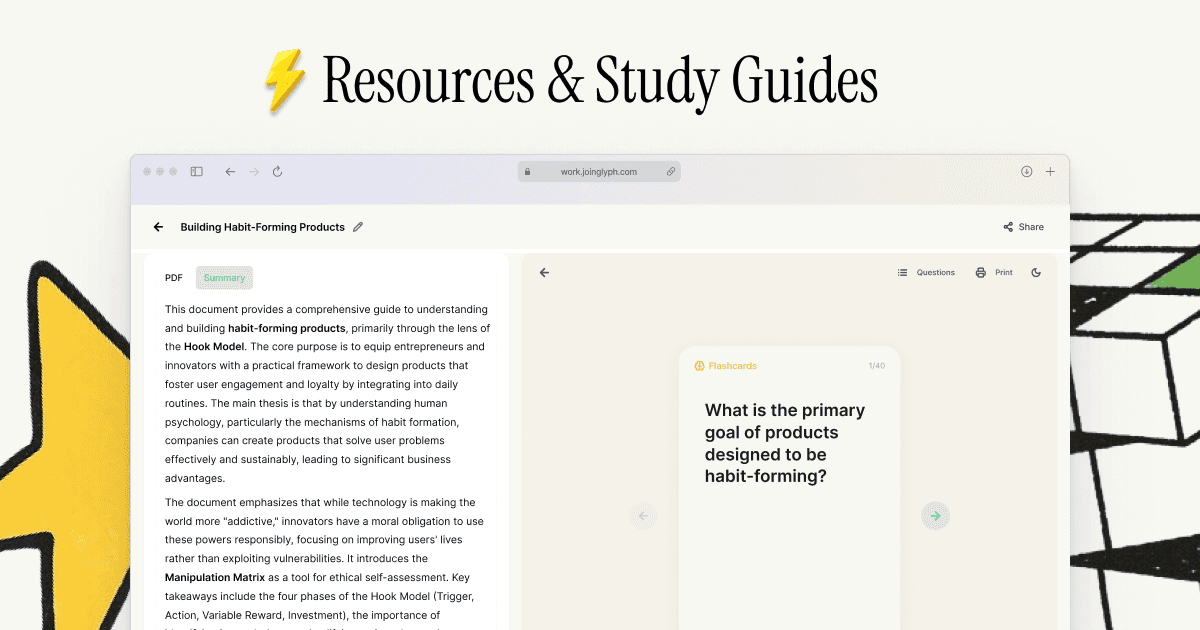
If managing prompts feels like another chore on your to-do list, Duetoday AI can help. Instead of perfect prompting, just upload your material. Duetoday connects your lectures, PDFs, and notes into a single 'AI Brain' that automatically builds flashcards, practice sets, and structured study plans tailored to how you learn. Stop jumping between tabs and start finishing your work.

Pick two prompts from this list and try them on your hardest subject today. If you want it done automatically, let Duetoday handle the structure so you can focus on the learning.

Duetoday is an AI-powered learning OS that turns your study materials into personalised, bite-sized study guides, cheat sheets, and active learning flows.

More Chatgpt Prompts
GET STARTED

Most Powerful Study Tool
for Students and Educators

Try Out Free. No Credit Card Required.
