
Chatgpt prompts for Studying When You’re Tired [Free Guide]
Struggling to focus? Use these ChatGPT prompts for studying when you're tired to simplify complex topics, generate summaries, and stay productive with low energy.
Use Study AI Free
ChatGPT Prompts for Studying When You’re Tired
When you're physically and mentally drained, staring at a dense textbook feel like trying to climb a mountain in pajamas. These prompts unlock a 'low-friction' mode for your brain, transforming overwhelming material into bite-sized, easy-to-digest pieces that require half the mental energy. Simply copy and paste the prompts below to keep your momentum alive without the burnout.
Quick Start: How to Use This Page
To get the most out of these prompts, follow this simple setup: Paste your lecture notes or textbook transcript directly into ChatGPT and ask it to adopt the persona of a 'patient, simplified tutor.' Always specify that you are feeling low-energy so it avoids long-winded technical jargon. The Golden Rule: Never ask ChatGPT to 'teach' from its own memory alone—always provide your specific course material as the primary source to prevent hallucinations.
How to Use These Prompts Effectively
Step 1: Feed the AI: Paste your slides, PDFs, or handwritten notes into the chat.
Step 2: Set the Energy Level: Explicitly tell the AI you have 'low brain power' so it uses simpler analogies and shorter sentences.
Step 3: Chunk the Output: Ask for information in small batches rather than one giant summary.
Step 4: Automate the Grind: Use the AI to build your study tools (like flashcards) while you rest, so they are ready for later.
Bucket A: Understand (Low-Energy Comprehension)
1. The 'Explain Like I’m 12' Low-Power Mode
Use this when you literally cannot process another academic sentence and need the core concept broken down into plain English.
A good answer provides a clear 'Aha!' moment without requiring you to re-read sentences multiple times.
2. The 'Bottom Line' Summary
Perfect for when you have a mountain of reading but only enough energy to understand the 'why' behind it.
A good response identifies the high-yield topics that are most likely to appear on a test.
3. Visual Logic Builder
When reading text feels like too much, use this prompt to create a mental map of how ideas connect.
This should result in a structured list or diagram that maps out the logical progression of the topic.
Bucket B: Remember (Passive Coding)
4. The Instant Flashcard Generator
Use this to prep for your next high-energy session without doing the manual labor of writing cards now.
A good answer yields a clean, two-column list that focuses on high-impact vocabulary.
5. The Mnemonics Creator
When you can't memorize through sheer force of will, let the AI create catchy shortcuts for you.
A good answer provides a creative, easy-to-remember phrase that links the concepts together.
Bucket C: Practice (Low-Friction Review)
6. The 'Lazy' Quizzer
Review your knowledge without the stress of an 'exam' environment.
This creates an interactive, low-stakes dialogue that keeps you engaged without being overwhelming.
7. The Error Spotter
If you've written something but are too tired to proof-read for conceptual errors, use this.
A good answer will gently correct your logic and point out exactly where you went off track.
8. The Spaced Repetition Planner
Let the AI handle the logistics of 'when' to study so you can just focus on 'what' to study.
A good output is a realistic, time-blocked plan that accounts for your current fatigue levels.
Common Mistakes to Avoid
Information Overload: Don't ask for a 'comprehensive guide.' When you're tired, ask for 'the essentials' only.
Ignoring Sources: Don't let the AI guess facts; always provide your class-specific notes.
Passive Scrolling: Don't just read what ChatGPT says. Use the 'Lazy Quizzer' prompt to ensure you're actually processing the info.
Ignoring the Body: If you're too tired to focus, the best prompt is sometimes 'Give me a 5-minute study plan and then tell me to go to bed.'
Automate Your Learning with Duetoday
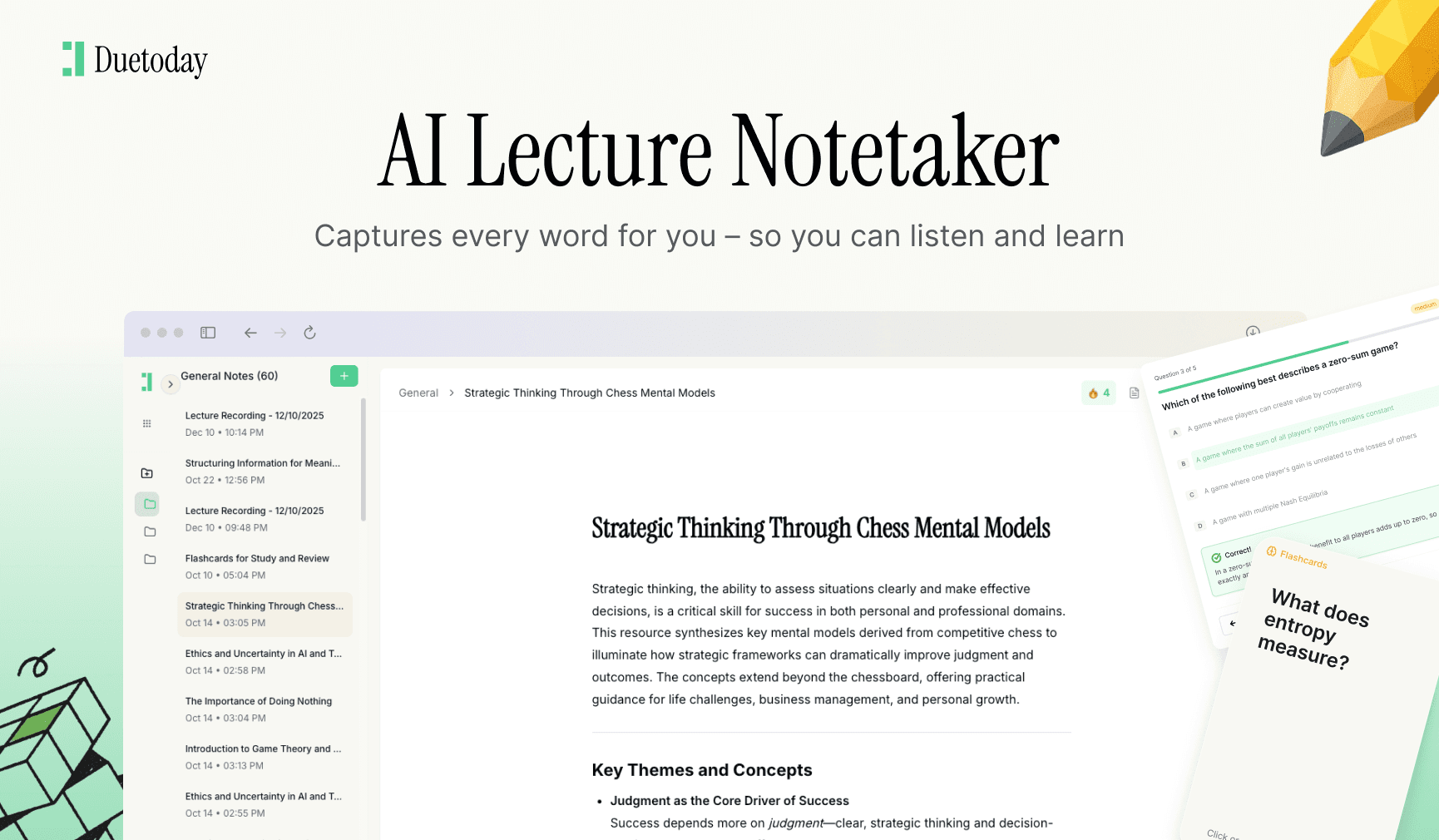
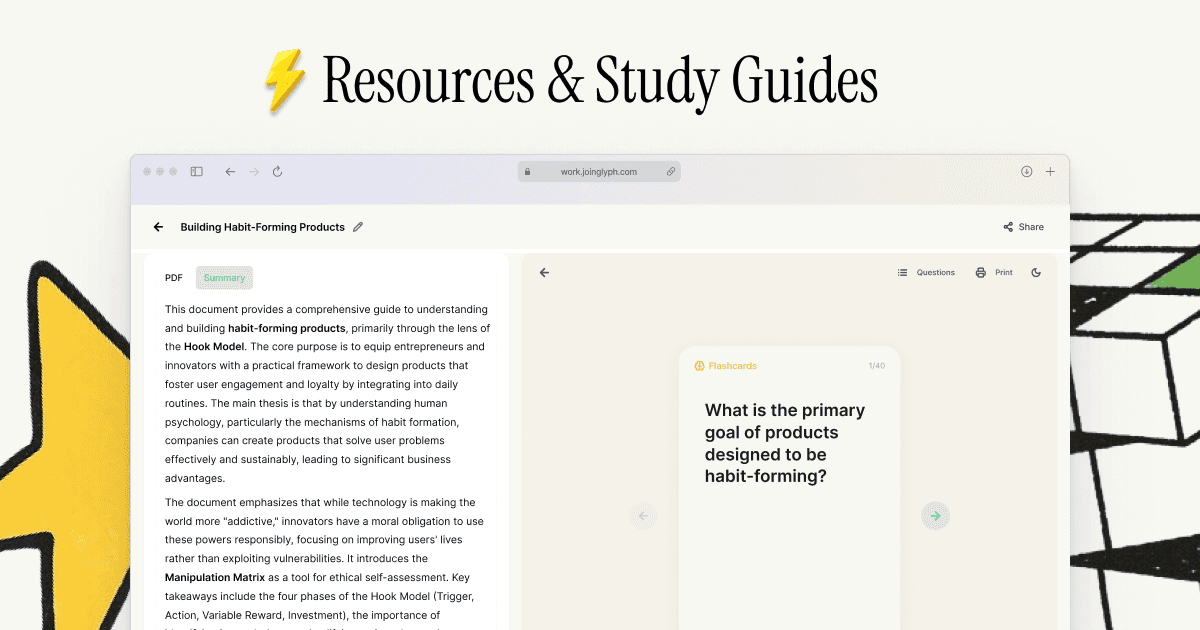
If copying and pasting prompts feels like too much work while you're exhausted, Duetoday can automate the entire process. Simply drop your YouTube links, PDFs, or lecture recordings into your Duetoday AI Brain, and it will instantly generate summaries, flashcards, and practice quizzes for you. No prompting required—just pure, effortless retention.
Pick two prompts from this list, try them out, and see how much easier your study session becomes. If you want it done automatically, Duetoday is ready when you are.

Duetoday is an AI-powered learning OS that turns your study materials into personalised, bite-sized study guides, cheat sheets, and active learning flows.
More Chatgpt Prompts
GET STARTED
Most Powerful Study Tool
for Students and Educators
Try Out Free. No Credit Card Required.
