
>

>

ChatGPT prompts for spaced repetition for mastery and long-term recall.

ChatGPT prompts for Spaced Repetition [Free Guide]

Discover the best ChatGPT prompts for spaced repetition. Learn how to turn notes into schedules, flashcards, and active recall drills to master any subject.

Use Study AI Free
ChatGPT Prompts for Spaced Repetition

Mastering complex subjects often feels like a race against the forgetting curve where information vanishes as quickly as it was learned. These ChatGPT prompts for spaced repetition unlock a systematic way to reinforce your memory, ensuring that every hour of study translates into long-term retention. Copy and paste the prompts below to transform your notes into a lifelong knowledge base.

Quick Start: How to Use This Page

To get the most out of these prompts, follow this simple framework: Paste your source material (lecture notes, PDF text, or YouTube transcripts) into ChatGPT first. Specify your current knowledge level and your exam or deadline date. The Golden Rule: Never let ChatGPT guess facts; always provide the text you want it to help you remember to prevent hallucinations and ensure accuracy.

A System for Spaced Repetition Success

  • Step 1: Input Source Material: Provide the specific text, notes, or slides you are studying.

  • Step 2: Define the Interval: Tell ChatGPT your timeframe (e.g., 'I have an exam in 30 days').

  • Step 3: Generate Active Recall: Use prompts to create flashcards or Q&A sets rather than just summaries.

  • Step 4: Schedule: Ask for a specific review calendar based on scientifically backed intervals like 1-3-7-30 days.

Bucket A: Understand & Organize

The 'Concept Map' Prompt

Use this when you have a large volume of new information and need to see how the pieces fit together before scheduling reviews.

"I am providing my notes on [Topic]. Please identify the 5 core pillars of this subject and explain how they interrelate. Create a hierarchy of information from most fundamental to most complex so I can prioritize my initial review sessions."

A good answer provides a structured outline that categorizes information into buckets, making it easier to assign different review frequencies to each.

The Socratic Knowledge Gap Finder

Use this to test your baseline understanding before you set your repetition schedule.

"Act as a Socratic tutor. Based on the attached notes, ask me three increasingly difficult questions about [Specific Concept]. Do not give me the answers. After I respond, tell me where my logic is weak and what I should focus on for my first review session tomorrow."

A good answer challenges your assumptions and identifies exactly which parts of your notes you don't actually understand yet.
Bucket B: Remember & Schedule

The 1-3-7-30 Day Scheduler

Use this to turn a list of topics into a concrete study plan based on the forgetting curve.

"I have the following list of topics to learn for my [Subject] exam on [Date]. Create a study schedule using spaced repetition intervals (1 day, 3 days, 7 days, and 30 days). Present this in a table format showing exactly what I should review each day starting today."

A good answer provides a clear table with dates and specific topics, ensuring you hit the 'forgetting' threshold just in time to reinforce the memory.

Anki-Style Flashcard Generator

Use this to convert dense text into atomic, testable units for long-term retention.

"Analyze these notes and create 10 flashcards. Use the 'Atomic' principle: each card should only have one question and one answer. Format them as 'Front: [Question]' and 'Back: [Answer]'. Focus on definitions, formulas, and causal relationships."

A good answer avoids 'bloated' cards and focuses on quick, punchy questions that are easy to review in a few seconds.

Bucket C: Practice & Refine

The 'Teach it Back' Drill

Use this to move information from short-term to long-term memory through active output.

"I will explain [Concept] to you in my own words. Based on the source material provided earlier, please critique my explanation. Did I miss any nuances? Did I use the correct terminology? Once I correct it, tell me when I should explain it to you again to maximize retention."

A good answer provides constructive feedback and points out 'blind spots' in your mental model that you might have skipped over.

The Error-Log Analysis

Use this when you keep getting the same practice questions wrong to break the cycle of forgetting.

"Here is a list of questions I missed in my latest review session. Analyze these errors and tell me if there is a pattern in my misunderstanding. Then, give me a mnemonic or a simple analogy to help me remember the correct logic for my next review in 3 days."

A good answer simplifies complex logic and provides a 'mental hook' to ensure the information sticks during the next repetition.

Common Mistakes to Avoid

  • Passive Reading: Asking ChatGPT for a summary is not spaced repetition. You must ask for quizzes or flashcards.

  • Ignoring the Source: If you don't provide your notes, ChatGPT might use different definitions than your professor.

  • Inconsistent Intervals: Spaced repetition only works if you actually follow the 1-3-7-30 schedule; skipping days breaks the curve.

  • Too Much Info: Trying to memorize every word. Focus prompts on 'High-Yield' concepts only.

Master Your Learning Today

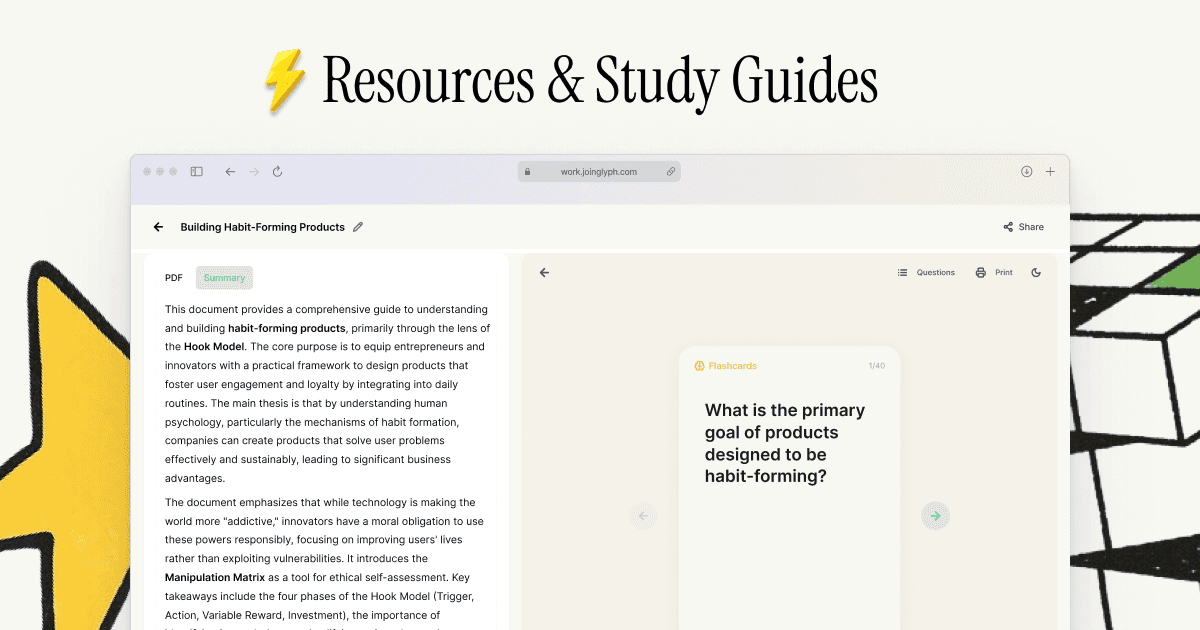
Spaced repetition is the closest thing to a superpower in education. Pick two prompts from the 'Schedule' and 'Practice' sections above and apply them to your notes today. If you want a system that does this automatically—syncing your Notion, YouTube links, and PDFs into a single retention brain—give Duetoday a try.

Duetoday is an AI-powered learning OS that turns your study materials into personalised, bite-sized study guides, cheat sheets, and active learning flows.

More Chatgpt Prompts
GET STARTED

Most Powerful Study Tool
for Students and Educators

Try Out Free. No Credit Card Required.
