
ChatGPT prompts for self-assessment [Free Guide]
Master self-assessment with these ChatGPT prompts. Learn how to evaluate your knowledge, identify weaknesses, and prepare for exams with AI-driven feedback.
Use Study AI Free
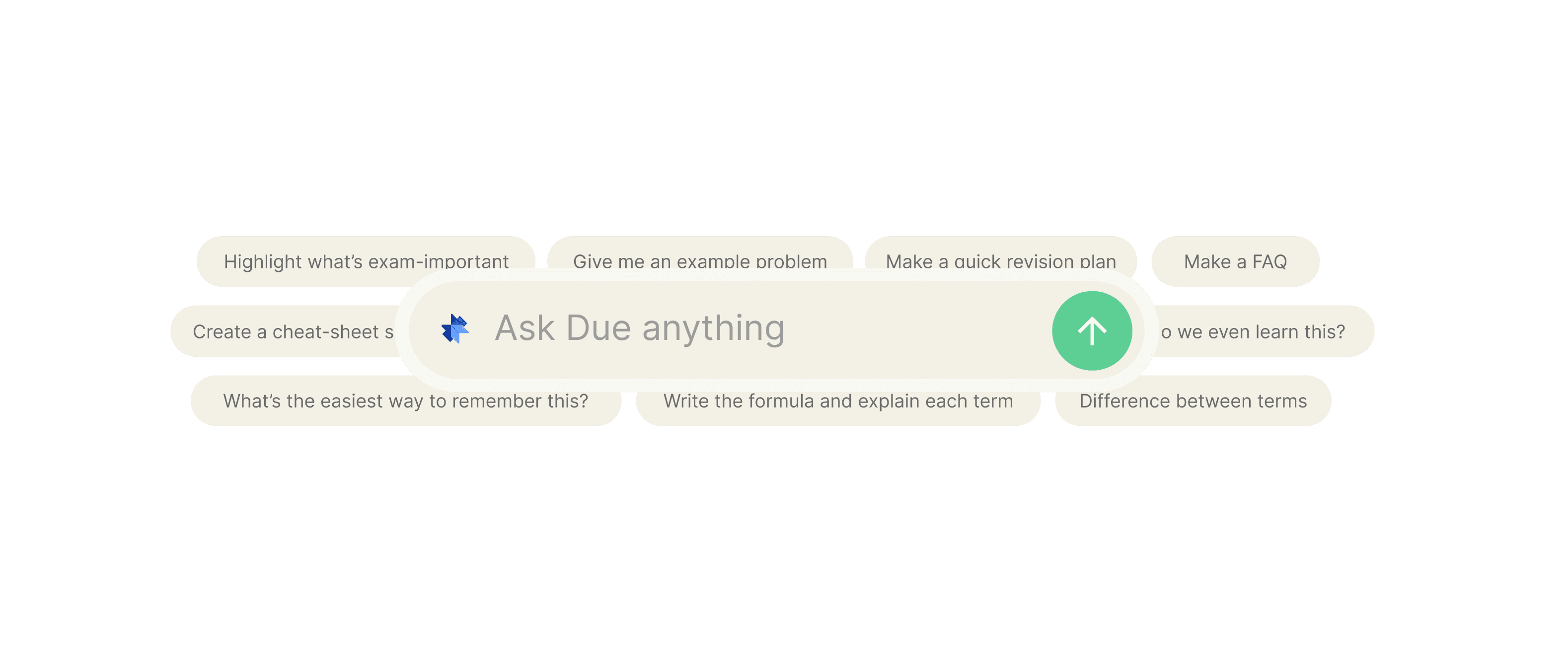
ChatGPT Prompts for Self-Assessment
Students often struggle to objectively evaluate what they actually know versus what they simply recognize, leading to the 'illusion of competence.' These ChatGPT prompts unlock deep self-assessment, allowing you to identify critical knowledge gaps and improve retention through active retrieval. Simply copy and paste the prompts below to transform your study materials into an interactive personal examiner.
The Quick Start Guide
To get the most out of these self-assessment prompts, follow this layout: paste your lecture notes, textbook chapters, or PDF transcripts directly into the chat first. Tell ChatGPT: 'I am providing my study material; only use this content to evaluate me.' Replace the bracketed variables like [Topic] or [Grade Level] to match your specific needs. The golden rule: never let AI guess—always provide the source text to ensure the assessment is accurate to your curriculum.
How to Use These Prompts Effectively
Step 1: Feed the AI: Paste your source material (notes, slides, or YouTube transcripts) so the AI has a factual baseline.
Step 2: Set the Difficulty: Define your constraints, such as 'PhD level analysis' or 'SAT prep format,' to ensure the questions aren't too easy.
Step 3: Perform the Drill: Answer the AI's questions without looking at your notes to test genuine recall.
Step 4: Analyze and Iterate: Ask the AI to spot patterns in your mistakes and convert those weak points into a study plan.
Bucket A: Understand (Audit Your Comprehension)
The Logic Gap Finder
Use this when you feel like you understand a topic but aren't sure if your logic holds up under scrutiny.
A good answer will pinpoint exactly where your explanation transitioned from factual to vague.
The Analogy Stress Test
Use this to see if you truly grasp abstract concepts by relating them to real-world scenarios.
This prompts the AI to move beyond surface-level definitions into structural understanding.
Bucket B: Remember (Test Your Recall)
The Active Recall Quizzer
Use this for a quick pulse-check on your memory of key terms and dates.
A good output provides challenging questions that avoid simple 'yes/no' answers.
The Flashcard Transformer
Use this to turn dense paragraphs into bite-sized retrieval practice.
This ensures your flashcards promote deep thinking rather than rote memorization.
Bucket C: Practice (Application and Feedback)
The Socratic Tutor Mode
Use this when you want to be guided toward an answer rather than being given it.
This simulates a real one-on-one tutoring session, forcing your brain to do the heavy lifting.
The Error Log Analysis
Use this after you have completed a practice test or set of problems.
This turns your mistakes into data-driven study habits.
Common Mistakes in AI Self-Assessment
Asking without Context: If you don't provide your specific notes, ChatGPT may test you on material your professor doesn't care about.
Ignoring Difficulty Levels: Failing to specify 'Undergraduate' or 'Medical School level' results in questions that are too simple to be useful.
Passive Review: Using AI to just summarize your notes instead of asking it to quiz you doesn't build long-term retention.
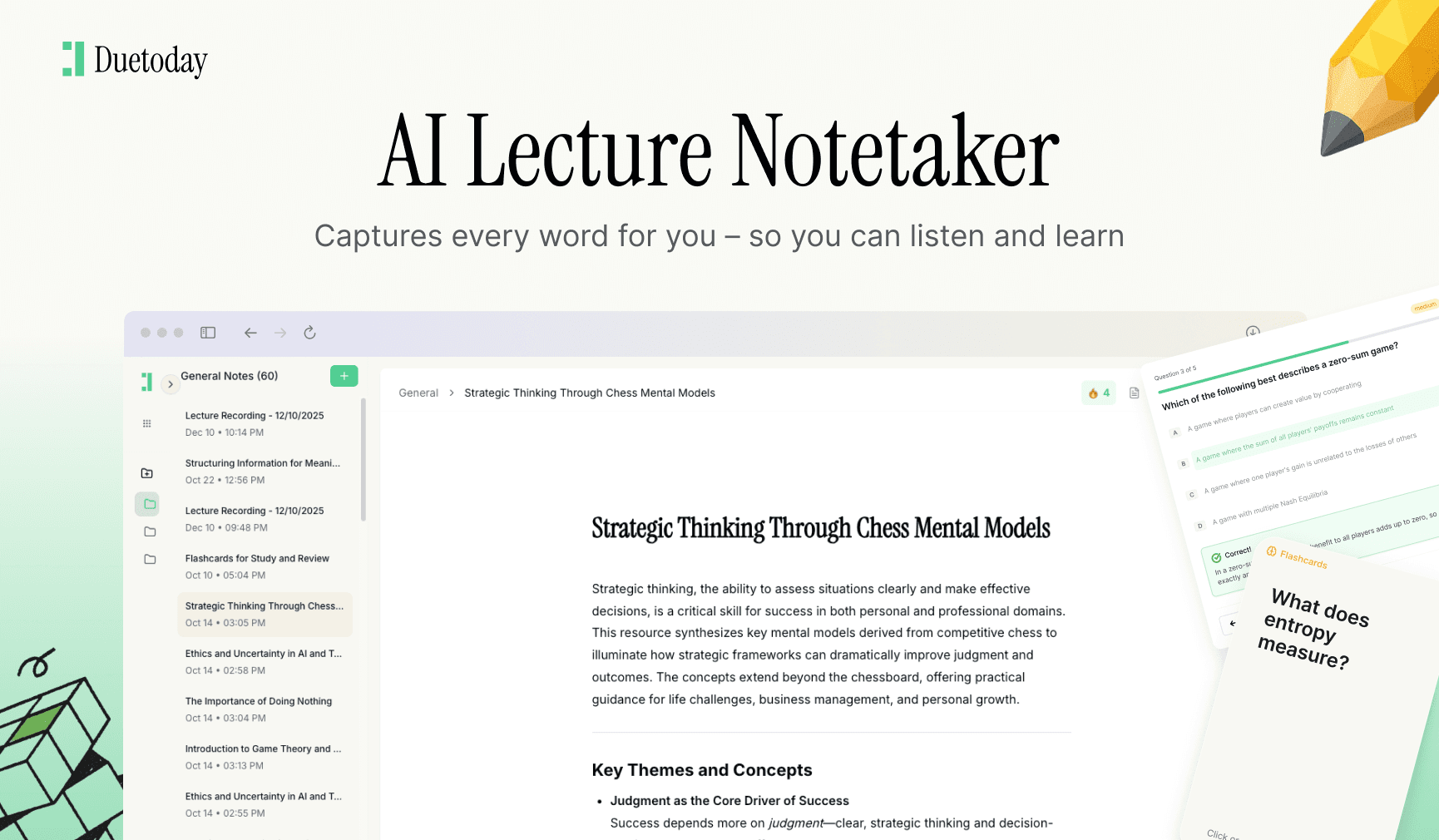
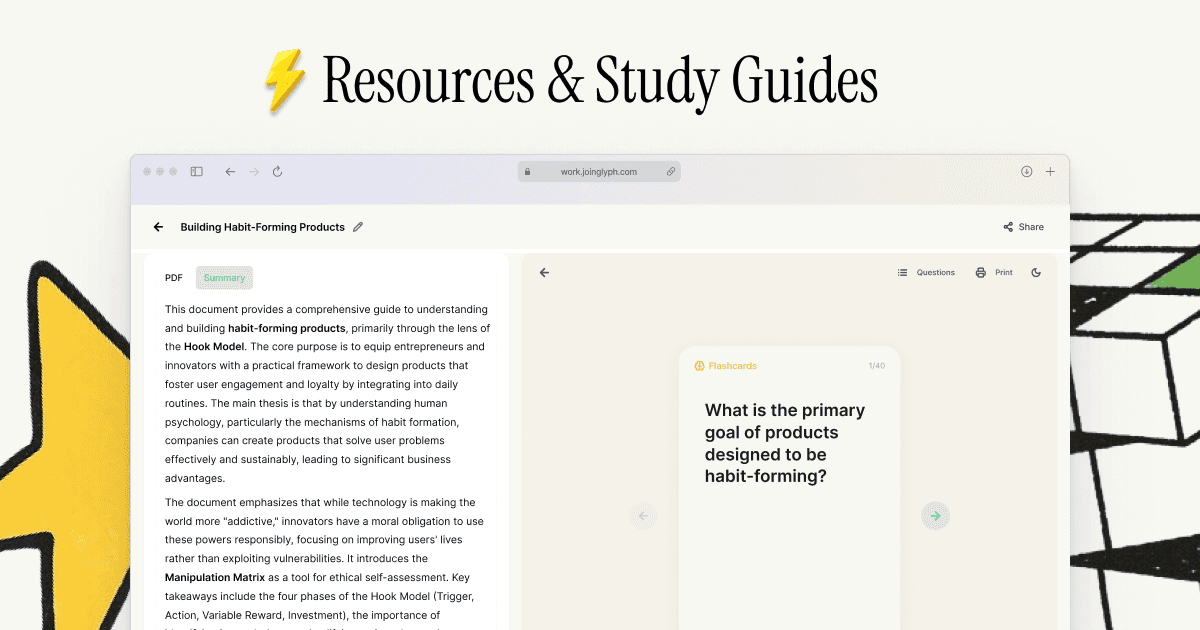
Pick two prompts from the list above and run them against your most difficult subject today. If you want a more seamless experience where your PDFs and YouTube lectures are automatically turned into these assessments, Duetoday can do the heavy lifting for you.

Duetoday is an AI-powered learning OS that turns your study materials into personalised, bite-sized study guides, cheat sheets, and active learning flows.
More Chatgpt Prompts
GET STARTED
Most Powerful Study Tool
for Students and Educators
Try Out Free. No Credit Card Required.
