Chatgpt prompts for Science Exam Prep [Free Guide]
Master your science exams with these expert ChatGPT prompts. Learn how to simplify complex theories, generate practice quizzes, and build a retention plan today.
Use Study AI Free
ChatGPT Prompts for Science Exam Prep
Students often struggle to navigate the sheer volume of dense terminology and complex mechanisms found in science curricula, leading to mechanical memorization instead of true conceptual understanding. These prompts unlock the ability to break down scientific theories into digestible parts, enabling faster retention and more effective active recall practice. Simply copy and paste the prompts below to transform your study materials into a personalized science tutor.
The Quick Start Guide
For the best results with these science prompts, follow this protocol: Paste your specific textbook chapter, lecture notes, or research paper into ChatGPT first. Replace the bracketed variables like [Topic] or [Complexity Level] with your specific needs. The golden rule: always provide your source text so ChatGPT doesn't hallucinate scientific facts or pull from outdated data; grounding the AI in your specific syllabus ensures exam accuracy.
How to Use These Science Prompts
Step 1: Feed the AI: Upload or paste your lecture slides, lab reports, or textbook excerpts to provide context.
Step 2: Define the Scope: Specify your academic level (e.g., AP Biology, Organic Chemistry, Undergraduate Physics) and the exam date.
Step 3: Interactive Drill: Ask the AI to output a specific format like a table, a list of definitions, or a practice quiz to verify your knowledge.
Step 4: Bridge to Retention: Take the outputs and move them into a system for spaced repetition to ensure the information sticks until test day.
Part 1: Understand Complex Concepts
The Simple Analogist
Use this when a biological process or physical law feels too abstract to grasp.
A good answer provides a relatable metaphor (like comparing a cell to a factory) and links it back to technical terms.
Socratic Science Tutor
Use this to build deep conceptual understanding rather than just reading a summary.
A good answer will challenge your assumptions and guide you toward the correct scientific reasoning step-by-step.
The Visual Descriptor
Use this to understand diagrams, pathways, or cycles that are hard to visualize.
A good answer creates a mental map of the process, ensuring you understand the order of operations.
Part 2: Remember and Retain
The Flashcard Architect
Use this to prepare materials for active recall and spaced repetition software.
A good answer ignores filler and focuses on the 'must-know' facts that frequently appear on science exams.
The Mnemonic Generator
Use this for memorizing lists, such as the periodic table groups, taxonomic ranks, or bone names.
A good answer provides creative, memorable phrases that correlate the first letter of each item to a vivid image.
Part 3: Practice and Test
The Mock Examiner
Use this to simulate the actual test environment and identify knowledge gaps.
A good answer mimics the phrasing found in standardized science exams and provides detailed explanations for the correct answers.
The Error-Log Analyst
Use this after a practice session to ensure you don't repeat the same mistakes.
A good answer pinpoints the exact misconception and provides a 'rule of thumb' for future problems.
The "Teach It Back" Drill
Use this to confirm you have truly mastered a topic before moving on.
A good answer provides constructive feedback and acts as a sounding board for your verbal mastery of the subject.
Common Pitfalls in Science Prep
Accepting Hallucinations: AI can sometimes invent chemical reactions or physical constants. Use your source text as an anchor.
Ignoring Symbols: Ensure ChatGPT interprets mathematical notations and chemical formulas correctly by double-checking its LaTeX or text output.
Passive Learning: Don't just ask for a summary. Use the prompts that require you to answer questions or solve problems.
Automate Your Science Prep with Duetoday
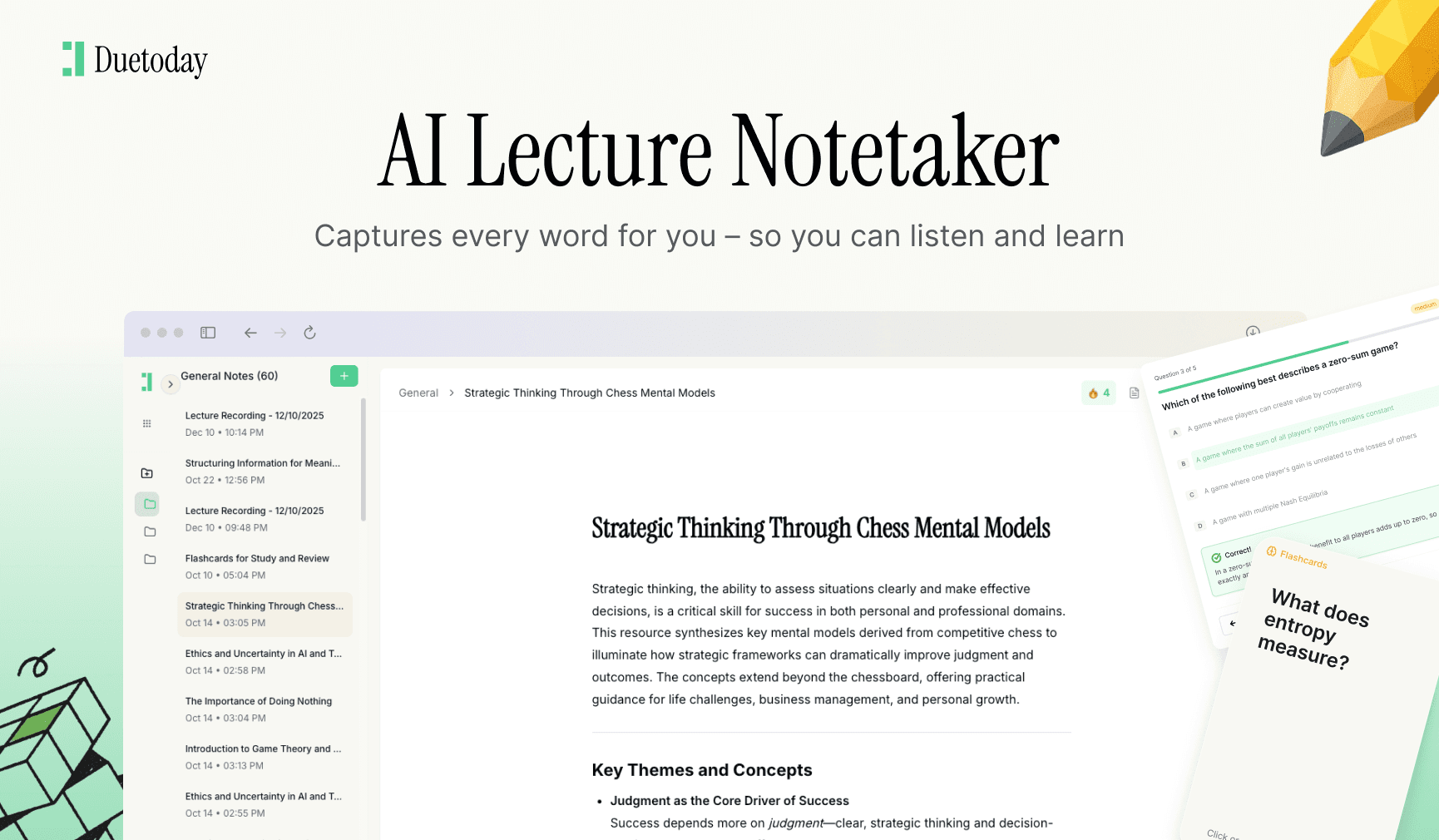
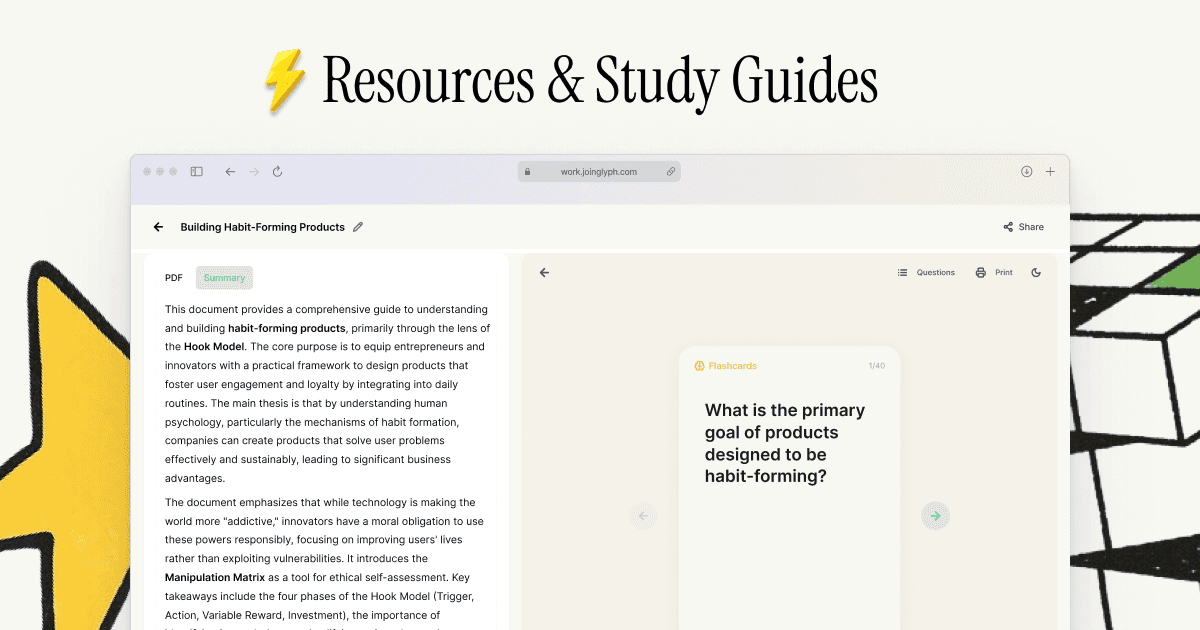
If you want this process automated without the manual prompting, Duetoday is the solution. As a retention-first AI workspace, Duetoday allows you to upload your science PDFs, YouTube lectures, and lab notes into a single 'AI Brain.' It automatically generates flashcards, structured study guides, and practice quizzes directly from your materials—connecting your calendar to create a personalized study plan. Try Duetoday today and turn your notes into an active study system.
Pick two prompts from this list and start your session. If you want to skip the prompting and get straight to studying, Duetoday can handle the heavy lifting for you.

Duetoday is an AI-powered learning OS that turns your study materials into personalised, bite-sized study guides, cheat sheets, and active learning flows.
More Chatgpt Prompts
GET STARTED
Most Powerful Study Tool
for Students and Educators
Try Out Free. No Credit Card Required.