
>

>

ChatGPT Prompts for Research Methods: Master Data and Theory Fast

Chatgpt prompts for Research Methods [Free Guide]

Master complex research methodologies with our expert ChatGPT prompts. Learn to analyze data, understand variables, and generate study guides instantly.

Use Study AI Free
ChatGPT Prompts for Research Methods

Mastering research methods often feels like drowning in a sea of variables, sampling techniques, and statistical validity. These prompts unlock the ability to simplify complex academic jargon, bridge the gap between theory and application, and build a robust mental model for your exams. Copy and paste the prompts below to transform your study material into actionable insights.

Quick Start Guide

For the best results when using ChatGPT for research methods, follow this simple framework:

  • Input: Paste your specific lecture notes, methodology chapters, or research paper snippets.

  • Variables: Define the level of depth (e.g., undergraduate, PhD, or beginner).

  • Constraint: Explicitly tell the AI not to invent data; it should only work with the provided text or established scientific principles.

How to Use These Prompts

  1. Provide Context: Start by uploading your PDF, slides, or pasting text into the chat.

  2. Set the Persona: Ask ChatGPT to act as a senior research consultant or a Socratic tutor.

  3. Iterate: If an explanation is too dense, ask for a "real-world analogy" or an "even simpler breakdown."

  4. Test Knowledge: Always end a session by asking for a practice scenario where you have to identify the methodology mistakes.

Bucket 1: Understand Complex Methodology

The Conceptual Decoder

Use this when you are struggling to understand the difference between abstract concepts like ontology and epistemology.

"I am providing notes on [Topic]. Explain the difference between [Term A] and [Term B] using a concrete real-world research example. Use a table to compare their strengths, weaknesses, and when a researcher would choose one over the other."

A good answer provides a clear comparison table and a scenario involving actual data collection.

The Variable Investigator

Use this to clarify how different variables interact within a study design.

"Based on this research abstract: [Paste Text], identify the independent variable, dependent variable, and any potential confounding variables. Explain how the researcher controlled for bias."

A good answer isolates the variables accurately and explains the logic of the experimental control.

Bucket 2: Remember and Synthesize

The Spaced Repetition Architect

Use this to create a long-term retention plan for your research methods exam.

"Based on the following syllabus topics: [List Topics], create a 14-day spaced repetition schedule. Include specific active recall questions for each day that cover sampling methods and validity types."

A good answer provides a calendar-style breakdown with high-quality retrieval questions.
The Visual Mindmap Prompt

Use this to see how different research designs connect to one another.

"Create a hierarchical outline of Quantitative Research Designs. Group them by Experimental, Quasi-experimental, and Non-experimental. For each, list one specific data collection tool commonly used."

A good answer creates a clean, structured hierarchy that is easy to visualize as a map.

Bucket 3: Practice and Apply

The Socratic Method Drill

Use this to test if you actually understand the 'Why' behind a research choice.

"Act as a thesis advisor. I will propose a research design for [Topic], and you will ask me 3 challenging questions about my sampling frame and internal validity. Do not give the answers; wait for my response."

A good answer mimics a viva or exam defense, pushing you to justify your methodological choices.

The Mistake Spotter

Use this to train your eye for flawed research before an exam.

"Write a short paragraph describing a fictional research study that contains 3 major methodological flaws (e.g., selection bias, lack of a control group). After I try to find them, provide the answer key with explanations."

A good answer creates a tricky but realistic scenario that helps you apply theory to practice.

The Flashcard Generator

Use this to prepare for quick-fire terminology questions.

"Convert these notes [Paste Notes] into a set of 10 Q&A flashcards. Each question should focus on identifying a specific threat to external validity or a type of reliability."

A good answer provides concise, clear definitions that are ready to be imported into a study tool.

Common Mistakes to Avoid

  • No Context: Asking "What is a P-Value?" gives a generic answer. Paste your notes to see how your professor specifically wants it defined.

  • Blind Trust: ChatGPT can hallucinate statistical formulas. Always double-check calculations against your textbook.

  • Passive Reading: Don't just read the summaries. Use the prompts to generate *quizzes* so you are forced to retrieve information.

Master Research Methods with Duetoday

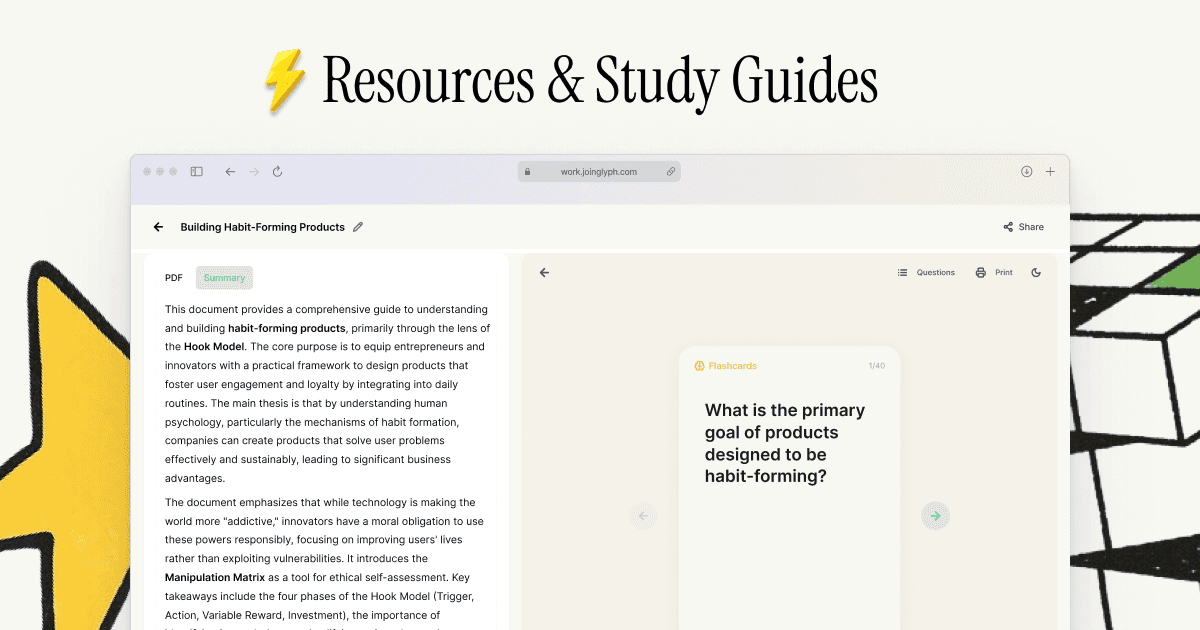
If you find yourself constantly copy-pasting notes into ChatGPT, there is a faster way. Duetoday is a retention-first workspace that lives where you learn. Simply upload your research methodology PDFs, YouTube lectures, or Notion notes, and Duetoday turns them into a searchable "AI Brain." Instead of manually prompting, Duetoday automatically generates flashcards, structured study guides, and practice exams based specifically on your materials. Start studying smarter, not harder.

Pick two prompts above and start your session, or let Duetoday handle the heavy lifting for you.

Duetoday is an AI-powered learning OS that turns your study materials into personalised, bite-sized study guides, cheat sheets, and active learning flows.

More Chatgpt Prompts
GET STARTED

Most Powerful Study Tool
for Students and Educators

Try Out Free. No Credit Card Required.
