
>

>

ChatGPT prompts for prioritizing what to study: focus on what matters.

Chatgpt prompts for prioritizing what to study [Free Guide]

Struggling with exam overwhelm? Use these ChatGPT prompts to prioritize your study material, identify high-yield topics, and create a strategic learning plan.

Use Study AI Free
ChatGPT Prompts for Prioritizing What to Study

Students often feel paralyzed by a mountain of notes, unsure which concepts are essential for the exam and which are just background noise. These prompts unlock a strategic advantage by helping you filter through the fluff, identify high-yield topics, and allocate your limited time to the areas that will actually impact your grades.

Copy and paste the prompts below to transform your disorganized study sessions into a focused, high-retention learning plan.

The Quick Start Guide

To get the best prioritization from AI, follow this simple framework:

  • Paste your source: Provide your syllabus, lecture headings, or a list of learning objectives.

  • State the goal: Tell the AI if you are studying for a final exam, a professional certification, or a quick quiz.

  • Specify the timeline: Mention if you have 48 hours or two weeks to prepare.

The Golden Rule: Always provide your specific course materials so ChatGPT doesn't guess based on general web data that might not be on your specific exam.

How to Use These Prompts Effectively

Using AI for prioritization requires a repeatable system to ensure you aren't just skimming the surface. First, upload your material (notes, slides, or syllabus text) into the chat. Second, set strict constraints such as the difficulty level of the course and the weight of each topic in your grading rubric. Third, ask for a gap analysis to see where your current knowledge is weakest. Finally, convert the output into a structured schedule or action items in a platform like Duetoday to ensure you actually execute the plan.

Bucket A: Understand the Landscape

Identify High-Yield Topics

Use this when you have a massive syllabus and don't know where to start.

I am attaching my course syllabus and lecture titles for [Subject]. Based on these materials, identify the 'High-Yield' topics that are most likely to appear on a cumulative exam. Rank them from 1 to 10 based on complexity and importance, and explain why each topic is a priority

A good answer will categorize topics into 'Must Know,' 'Should Know,' and 'Nice to Know,' giving you a clear roadmap for your first study session.

The Pareto Analysis (80/20 Rule)

Use this to find the 20% of information that will result in 80% of your exam score.

Analyze these notes on [Topic]. Apply the Pareto Principle to identify the core 20% of concepts that form the foundation for the remaining 80% of the material. Summarize these 'core' concepts clearly so I can master them first

The output should strip away the minor details and highlight the fundamental principles that everything else builds upon.

Concept Dependency Mapping

Use this to understand the order in which you should study topics to avoid getting confused.

I have these 5 topics to study: [List Topics]. Create a 'Dependency Map' showing which concepts I need to understand first before moving on to more advanced ones. Tell me the most logical sequence to study these to maximize my understanding

A good response will explain the prerequisites for each topic, preventing you from wasting time on advanced material you aren't ready for yet.
Bucket B: Remember and Organize

The 'Stop-Light' Prioritization

Use this to categorize your current confidence levels across all topics.

Here is a list of topics for my upcoming [Subject] exam. For each topic, ask me to rate my current understanding as Red (Poor), Yellow (Fair), or Green (Good). Once I respond, generate a study plan that prioritizes the Red and Yellow topics while maintaining the Green ones

A good answer will provide a structured table and a suggested time allocation percentage for each color category.

Time-Boxed Study Planner

Use this when you have a specific deadline and need a realistic schedule.

I have an exam in [Number] days and these [Number] topics to cover. I can study for [Number] hours per day. Create a prioritized study schedule that allocates more time to the most difficult topics while ensuring I have a final day for a comprehensive review

The output should be a day-by-day breakdown with specific time blocks assigned to each prioritized topic.

Bucket C: Practice and Refine

The 'Gap Finder' Prompt

Use this to find out what you've missed in your own notes.

I am pasting my notes on [Topic]. Compare these notes to the standard undergraduate curriculum for this subject. What key concepts or common exam questions are missing from my notes that I should prioritize researching

This helps you identify 'blind spots' in your preparation that could otherwise surprise you on exam day.

Mock Exam Weighting

Use this to simulate how an examiner might weigh different chapters.

Based on the attached syllabus for [Course Name], if you were designing a 50-question final exam, how many questions would you allocate to each chapter? List the chapters in order of importance so I know where to focus my practice questions

A good answer provides a numerical breakdown, helping you visualize the 'weight' of each section of your textbook.

Common Mistakes to Avoid

  • Asking without providing source text: AI cannot know your specific professor's priorities without seeing your syllabus or slides.

  • Not defining difficulty: If you don't tell the AI what you find hard, it might prioritize the wrong things for your specific needs.

  • Letting it hallucinate citations: Always verify that the 'important' topics it lists actually exist in your required reading.

  • Ignoring retrieval: Don't just list what's important; make sure you use these priorities to drive active recall and practice.

Automate Your Prioritization with Duetoday

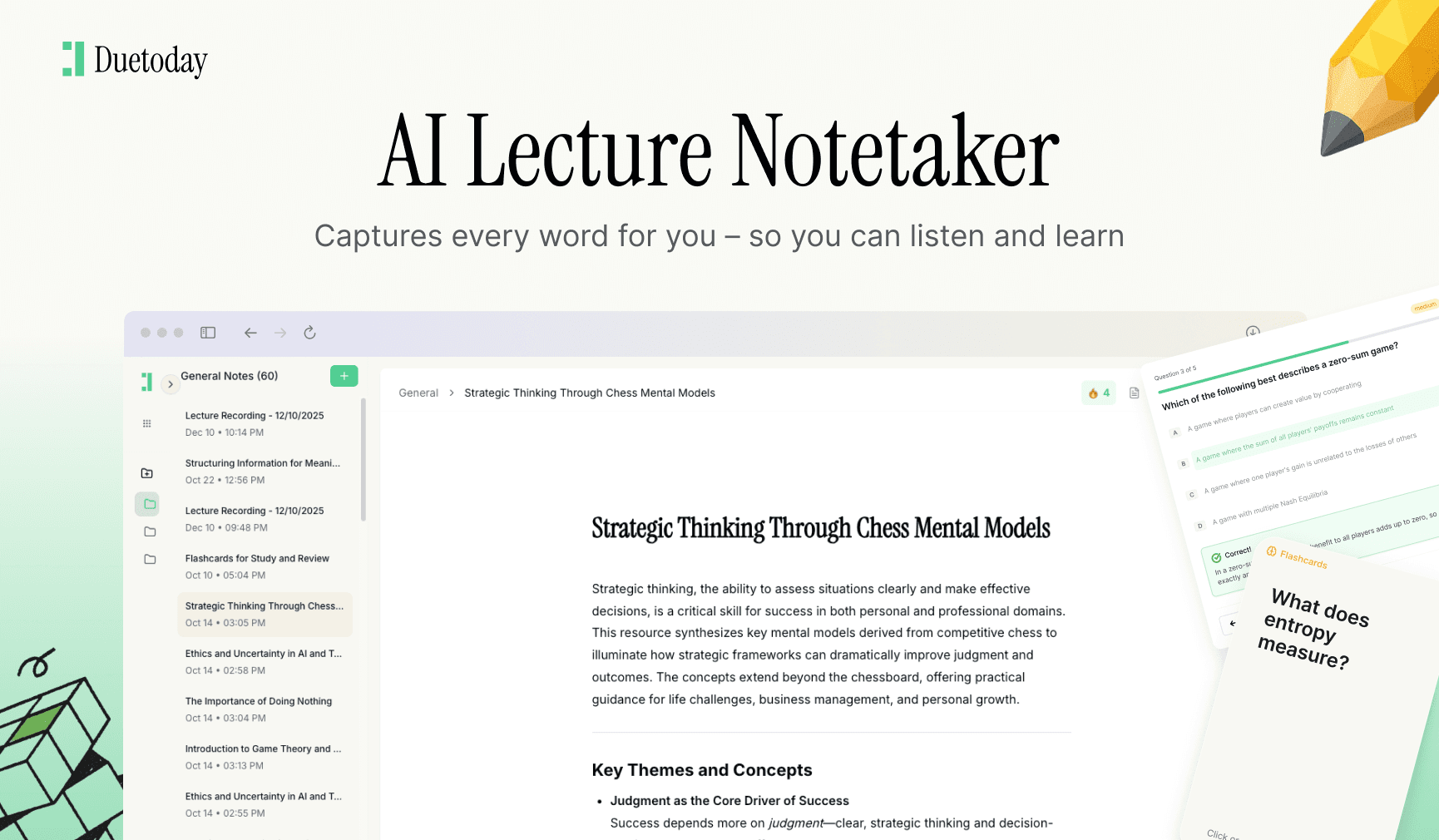
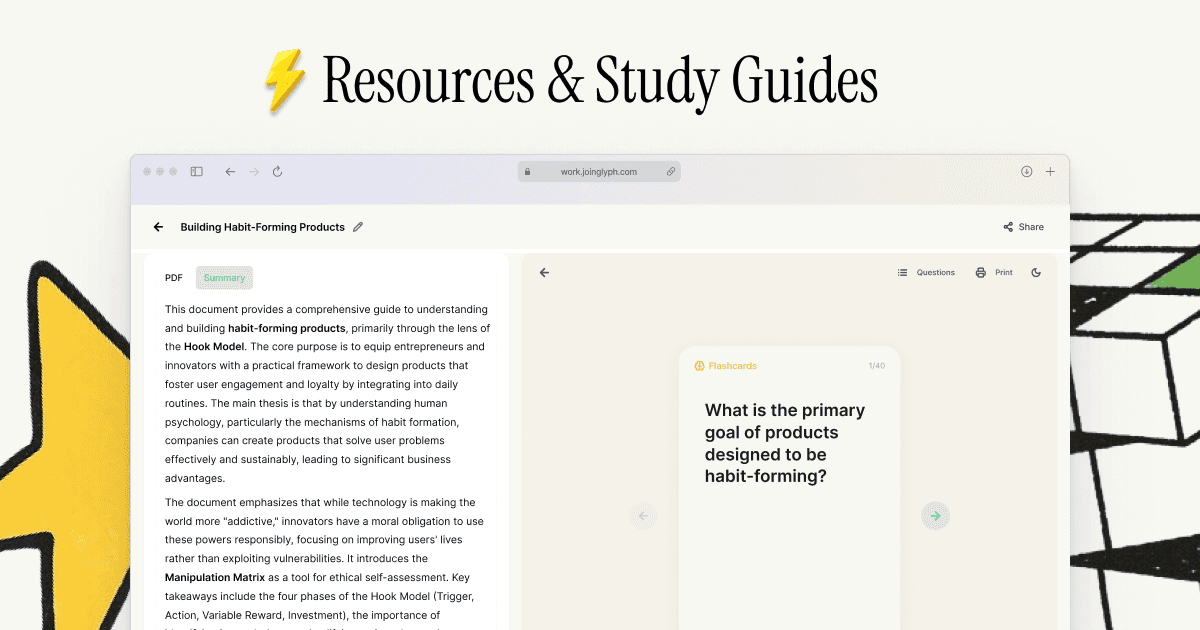
If you want this process automated without the constant copy-pasting, Duetoday is your solution. Simply upload your lecture recordings, PDFs, and Notion notes, and our AI Brain will connect the context across all your materials. It identifies the most important points, builds your 1-click study guides, and even syncs with your Google Calendar to ensure your study plan is executed on time. Stop guessing what to study and let Duetoday build your path to mastery.

Pick two prompts from above and start your session. Want it done automatically? Try Duetoday.

Duetoday is an AI-powered learning OS that turns your study materials into personalised, bite-sized study guides, cheat sheets, and active learning flows.

More Chatgpt Prompts
GET STARTED

Most Powerful Study Tool
for Students and Educators

Try Out Free. No Credit Card Required.