
>

>

ChatGPT prompts for morning-of-exam plans that keep you calm.

Chatgpt prompts for Morning-of-Exam Plan [Free Guide]

Clear your head and stay focused with these ChatGPT prompts for morning-of-exam plans. Create schedules, quick reviews, and a calm mindset in minutes.

Use Study AI Free
ChatGPT Prompts for Morning-of-Exam Plan

The morning of a major exam is often a blur of adrenaline, anxiety, and the frantic urge to cram. Many students struggle to balance a final review with the mental stillness needed to actually perform when the clock starts. These prompts unlock a structured, low-stress workflow that transitions you from 'panic mode' to 'performance mode' by focusing on high-leverage recall instead of mindless reading.

Copy and paste the prompts below to build your ultimate exam-day ritual.

Quick Answer: The Best Way to Use This Page

To get the best morning-of-exam plan from AI, don't just ask for a schedule—provide context. Paste your most important summary notes or a list of your 'weak spots' directly into the chat. Tell ChatGPT exactly how much time you have before you leave the house and what time the doors close. The golden rule: provide your specific source material so the AI doesn't waste your time with generic facts that won't be on your specific test.

How to Use These Prompts

  • Step 1: Paste your condensed study guide or a list of 5-10 key concepts into the chat.

  • Step 2: Set your constraints, such as 'I have 45 minutes' and 'I am feeling anxious about [Topic X].'

  • Step 3: Use the output to run a 'brain dump' or active recall session rather than just reading.

  • Step 4: Save the final checklist to your phone so you can reference it on the commute.

Bucket A: Understand & Align

1. The Focus Filter

Use this when you have a mountain of notes but only 30 minutes to review.

"I have my exam in 2 hours. Based on these notes [Paste Notes], identifies the top 5 'must-know' concepts that are most likely to appear as high-value questions. Provide a 2-sentence summary for each and one 'pro-tip' for not mixing them up."

A good answer provides a high-level conceptual map that centers your brain on the 'big wins' rather than trivial details.

2. The 'Explain Like I'm 5' Emergency

Use this for that one concept that still feels like gibberish the morning of the test.

"I still don't fully grasp [Concept]. Explain it to me using a simple real-world analogy. Then, explain it once more using the technical terminology I'll need for the exam so I can recognize the keywords."

This provides a mental 'hook' you can rely on when you see the technical term on the paper.

3. The Mental Gear-Up

Use this to shift from passive reading to active thinking.

"Act as a Socratic tutor. Ask me three challenging questions based on [Topic] one by one. Do not give me the answers. Wait for my response, then tell me if I'm right or where my logic is slightly off."

This warms up your retrieval pathways so your brain is already 'online' when the exam starts.
Bucket B: Remember & Recall

4. The Formula & Keyword Blitz

Use this to memorize the 'hard facts' that require rote memory.

"From these notes, extract all formulas, dates, or key terms. Present them in a table. In the second column, provide a 'mnemonic device' or a funny rhyme to help me remember each one during the next hour."

A good output is a clean, scannable table that acts as a mental 'cheat sheet' you memorize right before walking in.

5. The Cheat-Sheet Simulation

Use this to test if you actually know the material or just recognize it.

"Based on the attached text, generate 5 fill-in-the-blank questions regarding the most difficult technical details. I will answer them now to test my memory before I leave."

This forces active retrieval, which is the most effective way to lock in knowledge in a short window.

Bucket C: Practice & Execute

6. The 'Common Pitfalls' Warning

Use this to avoid the 'silly mistakes' that cost easy marks.

"Based on [Subject/Topic], what are the 3 most common mistakes students make on exam questions? Explain how to spot the 'trap' in the question phrasing and how to avoid falling for it."

This answer prepares your 'defense' against tricky wording often used by examiners.

7. The Confidence-Building Drill

Use this when you feel the onset of 'imposter syndrome' or panic.

"Give me one medium-difficulty practice problem based on [Topic]. Once I solve it, give me positive feedback and one tiny refinement. I need a quick win to boost my confidence."

A good answer is a manageable task that proves to your brain that you actually know the material.

8. The Logistics & Anxiety Checklist

Use this to ensure you don't forget the basics like pens, IDs, or calculators.

"I am taking a [Subject] exam today. Create a 10-item 'Leaving the House' checklist including required materials, time management tips for the exam hall, and a 1-minute grounding exercise."

This offloads the 'planning' stress to the AI so you can save your mental energy for the test questions.

Common Mistakes to Avoid

  • Asking without source text: ChatGPT might hallucinate a theory that isn't on your syllabus. Always paste your notes.

  • Cramming new info: Do not use these prompts to learn brand-new chapters. Stick to refining what you've already studied.

  • Ignoring the clock: Don't get stuck in a deep conversation with the AI. Set a timer for your 'AI session' and stop when it's over.

  • Passive reading: If ChatGPT gives you a summary, don't just read it. Recite it back out loud or write it down from memory.

Master Your Exam Morning

The secret to a successful exam morning isn't knowing more; it's accessing what you already know. Pick two of these prompts—one for focus and one for confidence—and start your session now. Want it done automatically? Let Duetoday build your study brain for you.

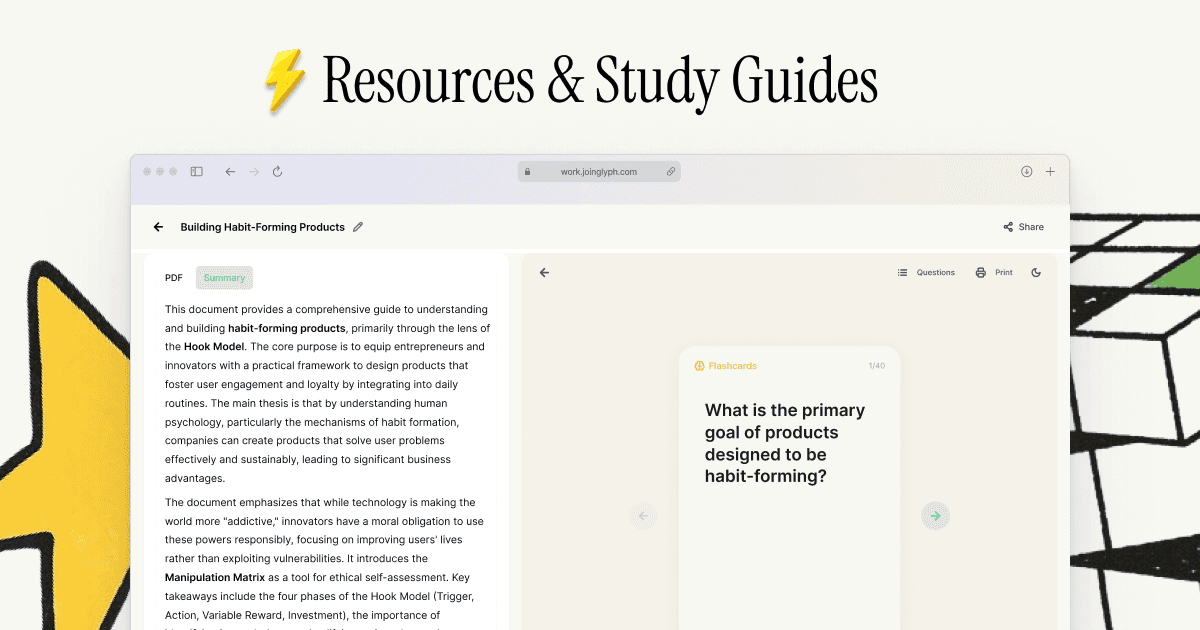
Duetoday is an AI-powered learning OS that turns your study materials into personalised, bite-sized study guides, cheat sheets, and active learning flows.

More Chatgpt Prompts
GET STARTED

Most Powerful Study Tool
for Students and Educators

Try Out Free. No Credit Card Required.
