
>

>

ChatGPT prompts for memorizing lists and processes that stick.

Chatgpt prompts for Memorizing Lists [Free Guide]

Master complex sequences and lists with these expert ChatGPT prompts. Learn how to use AI for mnemonics, active recall, and long-term retention.

Use Study AI Free
ChatGPT Prompts for Memorizing Lists and Processes

Students often struggle to move beyond rote repetition when trying to memorize long lists of terms or multi-step scientific processes. These specific prompts unlock faster retention by transforming static information into mental models and creative mnemonics. Simply copy and paste the prompts below to turn your messy notes into a structured memory map.

Quick Answer: The Best Way to Use This Page

To get the best results, don't just ask ChatGPT to 'help me memorize.' Instead, paste your specific list of items or the steps of a process directly into the chat. Tell the AI your current knowledge level (e.g., medical student or high schooler) and specify if you need a mnemonic, a story, or a practice quiz. The one golden rule: Always provide your own source text to ensure the AI doesn't hallucinate incorrect steps or facts.

How to Use These Prompts

  • Step 1: Paste your source material (lecture slides, textbook paragraphs, or list of steps).

  • Step 2: Set your constraints (e.g., 'Make it funny,' 'Use a 10-year-old's vocabulary,' 'Create a 5-step breakdown').

  • Step 3: Ask for specific output like a 'Memory Palace' or 'Active Recall Quiz' to test your progress.

  • Step 4: Move the generated content into a spaced repetition system like Duetoday for long-term storage.

Bucket A: Understand the Sequence

The 'Explain the Logic' Prompt

Use this when you have a list of steps but don't understand why they happen in that specific order.

I am going to provide a list of steps for [Process]. Please explain the logical 'why' behind each step so I understand the cause-and-effect relationship instead of just memorizing words. [Insert Process Steps]

A good answer explains the transition between steps so the sequence feels inevitable rather than random.

The Analogy Builder

Use this for abstract processes that are hard to visualize.

Compare this list of [Process/Lists] to a real-world everyday activity (like cooking, driving, or a sports game) to help me visualize how the parts move together. [Insert List]

A good answer creates a vivid mental anchor that makes the complex list feel familiar.
Bucket B: Remember Through Association

The Mnemonic Master

Use this to create acronyms or funny sentences that anchor a list in your mind.

Create three different mnemonics for this list: one acronym, one funny sentence, and one rhyming poem. Use the first letter of each of these items: [Insert List]

A good answer provides creative, catchy, and easy-to-recall phrases tailored to the specific sequence.

The Memory Palace Architect

Use this for long lists (10+ items) that need a spatial sequence.

Guide me through creating a 'Memory Palace' for this list. Use a standard house layout and place each item in a colorful, exaggerated way in a specific room. [Insert List]

A good answer uses weird, sensory-rich imagery that makes the items impossible to forget.

The Story Linker

Use this for processes where order is critical.

Write a 100-word micro-story where each item in this list appears as a character or a key plot point in the exact order provided. [Insert List]

A good answer builds a narrative thread that makes the next item in the list a natural part of the story.

Bucket C: Practice and Recall

The 'Missing Step' Challenge

Use this to test if you actually know the sequence or just recognize it.

I will study this list for 2 minutes. Then, I want you to paste the list back to me but remove 3 random steps and replace them with blanks. I will try to fill them in. [Insert List]

A good answer creates an immediate active recall opportunity without giving away the answers.

The Error-Log Drill

Use this after you’ve tried to recite the list from memory.

Here is my attempt at reciting the [List/Process]. Compare it to the original source text I provided. Highlight what I missed, what I got out of order, and give me a tip to remember the parts I failed. [Insert Original & Your Attempt]

A good answer provides corrective feedback and specific hooks for your 'weakest links' in the list.

The 'Teach the Class' Prompt

Use this to verify deep mastery of a process.

Act as a student who is confused about [Process]. Ask me three 'why' questions about the transition between steps that I have to explain simply to you. [Insert Process Description]

A good answer mimics a real student's confusion, forcing you to synthesize and explain the logic of the list.

Common Mistakes to Avoid

  • No Context: Asking ChatGPT to 'help me memorize the Krebs cycle' without providing your specific textbook's version (details vary!).

  • Passive Reading: Just reading the mnemonics it generates without actually testing yourself on them.

  • Information Overload: Trying to memorize 50 items at once—break your lists into chunks of 5-7 items.

  • Ignoring Visuals: Not asking for 'spatial' or 'visual' descriptions when you are a visual learner.

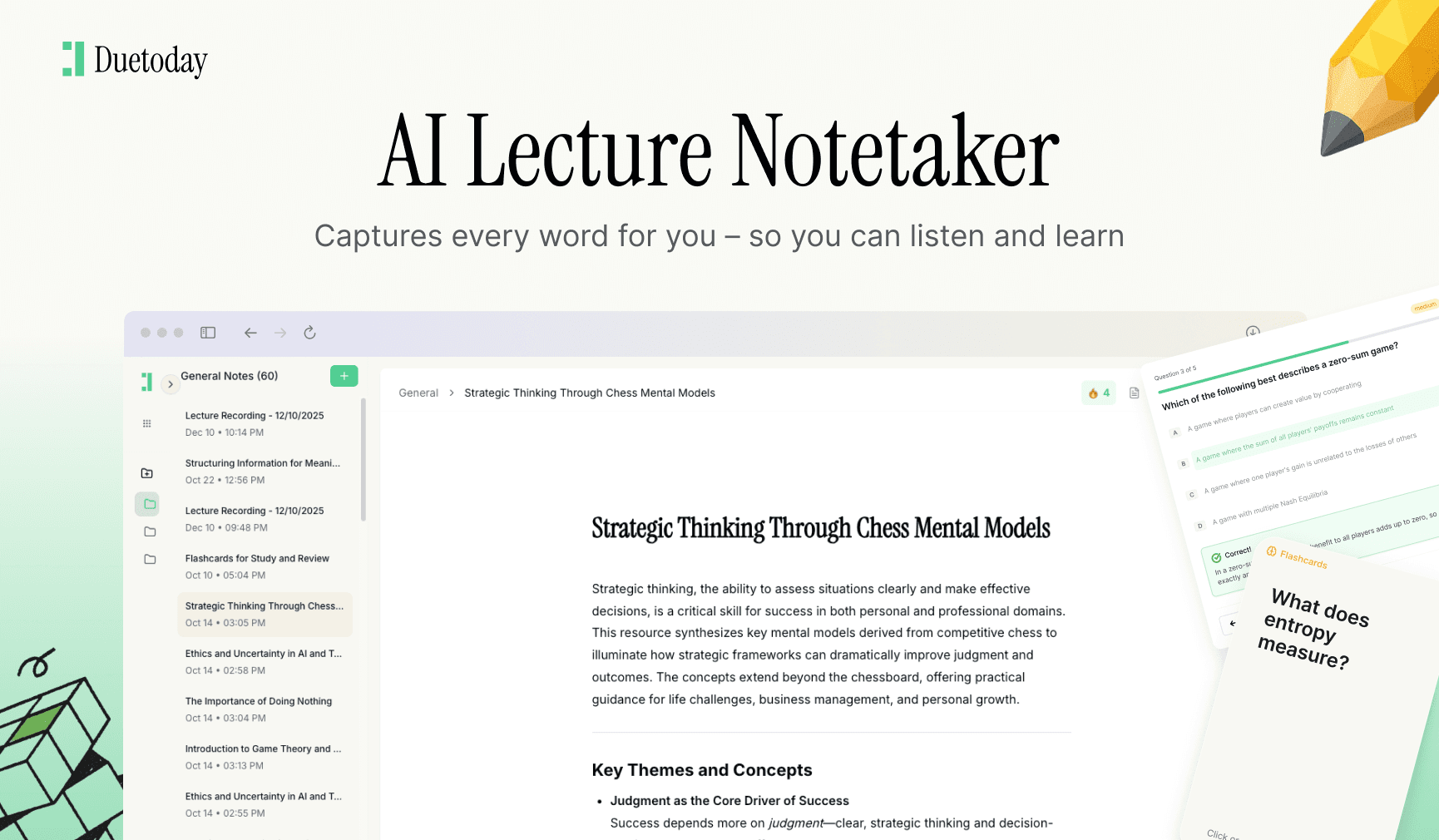
Pick two prompts from the 'Practice' bucket and start testing your knowledge right now. If you want this process automated—where your lectures are instantly turned into flashcards and quizzes—check out Duetoday.

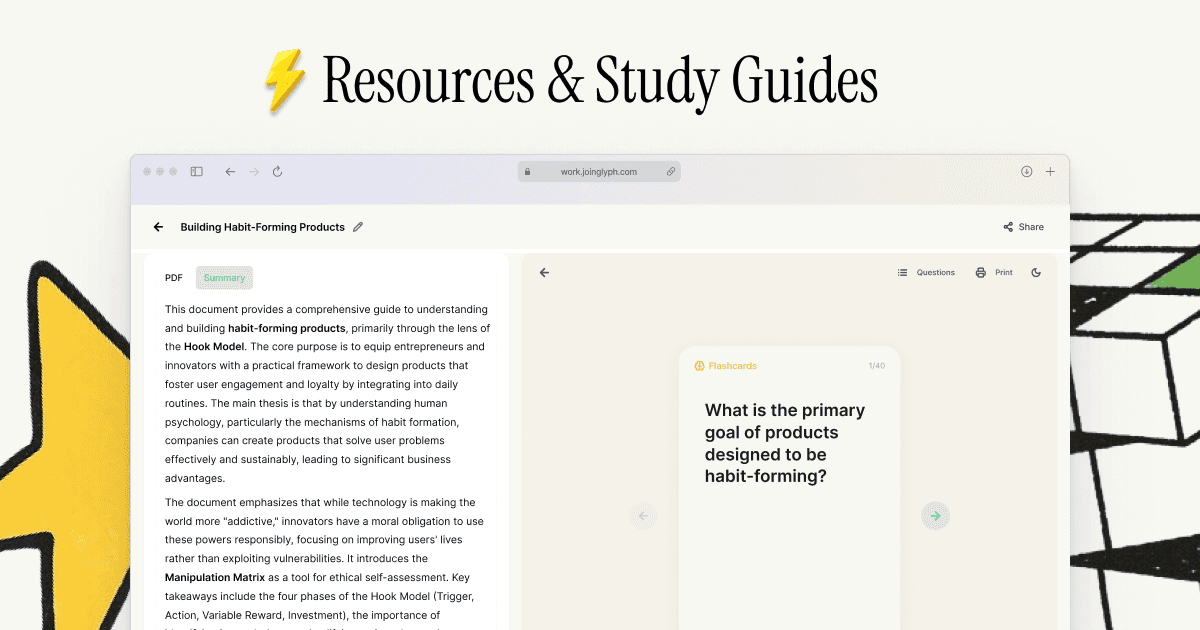
Duetoday is an AI-powered learning OS that turns your study materials into personalised, bite-sized study guides, cheat sheets, and active learning flows.

More Chatgpt Prompts
GET STARTED

Most Powerful Study Tool
for Students and Educators

Try Out Free. No Credit Card Required.
