ChatGPT Prompts for Literature Studying
Many students struggle to move beyond surface-level summaries in literature, often missing the complex thematic structures and historical contexts that earn top marks. These prompts unlock deep textual analysis, helping you connect motifs to character development and prepare for rigorous essay exams in half the time. Simply copy and paste the prompts below to transform how you analyze any text.
Quick Answer: The Best Way to Use This Guide
To get the most out of these literature prompts, always feed the AI the specific text or your class notes first. Replace bracketed text with your specific book title, author, or the literary theory you are currently studying. The golden rule: Never let ChatGPT guess the plot—always provide the source text or your specific lecture notes to ensure the analysis aligns with what your professor expects for the exam.
How to Use These Prompts Effectively
Step 1: Paste the specific chapter, poem, or scene into ChatGPT.
Step 2: Set constraints such as "Analyze this from a Feminist perspective" or "Explain this at an AP Literature level."
Step 3: Ask for specific outputs like a list of symbols or a comparative table.
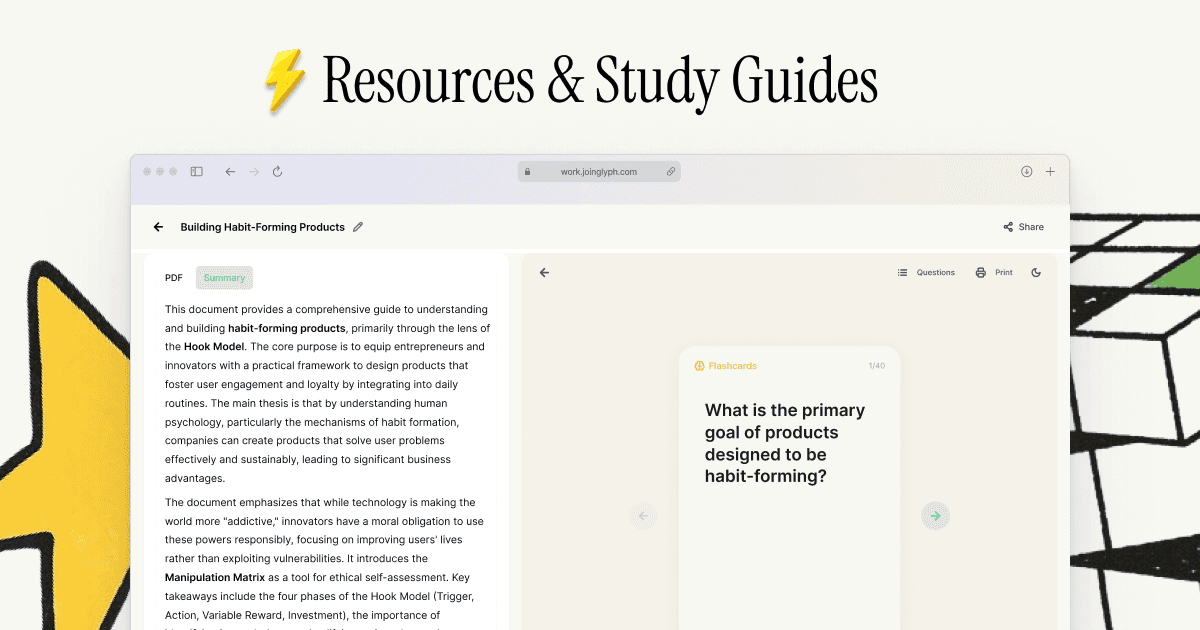
Step 4: Use Duetoday to convert these insights into flashcards for long-term retention.
Bucket A: Deep Understanding & Analysis
1. The Thematic Deconstructor
Use this when you need to understand how a specific theme evolves throughout a novel or play.
"I am studying [Book Title]. Based on the following text [Paste Text], identify the three most prominent themes. For each theme, provide two specific quotes as evidence and explain how they relate to the protagonist’s internal conflict. Write this for a college-level literature student."
"I am studying [Book Title]. Based on the following text [Paste Text], identify the three most prominent themes. For each theme, provide two specific quotes as evidence and explain how they relate to the protagonist’s internal conflict. Write this for a college-level literature student."
"I am studying [Book Title]. Based on the following text [Paste Text], identify the three most prominent themes. For each theme, provide two specific quotes as evidence and explain how they relate to the protagonist’s internal conflict. Write this for a college-level literature student."
A good answer provides specific textual evidence paired with sophisticated analysis of the character's psyche.
2. Character Archetype & Motivation Map
Ideal for tracking complex character growth across multiple chapters.
"Analyze the character of [Name] in [Book Title]. Based on [Source Material], explain their primary motivation and how their interactions with [Secondary Character] highlight their flaws. Identify if they fit a specific literary archetype (e.g., Tragic Hero, Anti-hero) and why."
"Analyze the character of [Name] in [Book Title]. Based on [Source Material], explain their primary motivation and how their interactions with [Secondary Character] highlight their flaws. Identify if they fit a specific literary archetype (e.g., Tragic Hero, Anti-hero) and why."
"Analyze the character of [Name] in [Book Title]. Based on [Source Material], explain their primary motivation and how their interactions with [Secondary Character] highlight their flaws. Identify if they fit a specific literary archetype (e.g., Tragic Hero, Anti-hero) and why."
A high-quality response will link character actions to broader narrative goals and specific literary tropes.
3. Historical & Cultural Contextualizer
Use this to understand why a book was written the way it was in its specific time period.
"Explain the historical context of [Book Title] by [Author]. How do the social norms of the [Time Period] influence the conflict in this specific scene: [Paste Scene]? Connect the author’s background to the perspective presented in the text."
"Explain the historical context of [Book Title] by [Author]. How do the social norms of the [Time Period] influence the conflict in this specific scene: [Paste Scene]? Connect the author’s background to the perspective presented in the text."
"Explain the historical context of [Book Title] by [Author]. How do the social norms of the [Time Period] influence the conflict in this specific scene: [Paste Scene]? Connect the author’s background to the perspective presented in the text."
A good answer bridges the gap between the world of the author and the events in the story.
Bucket B: Remember & Recall
4. The Symbolism Decoder
Use this to track recurring motifs that are likely to appear on your finals.
"Extract all potential symbols from this passage: [Paste Text]. For each symbol, explain its literal meaning and its deeper metaphorical significance within [Book Title]. Organize this into a table format for my study guide."
"Extract all potential symbols from this passage: [Paste Text]. For each symbol, explain its literal meaning and its deeper metaphorical significance within [Book Title]. Organize this into a table format for my study guide."
"Extract all potential symbols from this passage: [Paste Text]. For each symbol, explain its literal meaning and its deeper metaphorical significance within [Book Title]. Organize this into a table format for my study guide."
A good answer creates a clear reference sheet that connects objects to abstract ideas.
5. The Spaced Repetition Flashcard Builder
Turn complex analysis into bite-sized pieces for long-term memory.
"Review these analysis notes and create 10 flashcards. Each card should have a 'Question' about a literary device or character trait on one side and the 'Answer' with a supporting quote on the other. Focus on concepts that are likely to be on a literature final exam."
"Review these analysis notes and create 10 flashcards. Each card should have a 'Question' about a literary device or character trait on one side and the 'Answer' with a supporting quote on the other. Focus on concepts that are likely to be on a literature final exam."
"Review these analysis notes and create 10 flashcards. Each card should have a 'Question' about a literary device or character trait on one side and the 'Answer' with a supporting quote on the other. Focus on concepts that are likely to be on a literature final exam."
A good answer focuses on 'Active Recall' rather than simple definitions.
Bucket C: Practice & Execute
6. Socratic Literature Tutor
Use this to test your knowledge through a dialogue rather than just reading.
"I want you to act as a Socratic Literature Tutor. We are discussing [Specific Scene/Chapter]. Ask me one challenging question at a time to help me discover the underlying irony in the text. Once I answer, provide feedback and ask the next question."
"I want you to act as a Socratic Literature Tutor. We are discussing [Specific Scene/Chapter]. Ask me one challenging question at a time to help me discover the underlying irony in the text. Once I answer, provide feedback and ask the next question."
"I want you to act as a Socratic Literature Tutor. We are discussing [Specific Scene/Chapter]. Ask me one challenging question at a time to help me discover the underlying irony in the text. Once I answer, provide feedback and ask the next question."
A good answer pushes you to think critically instead of just giving you the solution.
7. Comparative Essay Outliner
When you have to compare two different works of literature.
"Create a detailed essay outline comparing the portrayal of [Theme] in [Book 1] and [Book 2]. Use a point-by-point structure. Include a thesis statement that addresses how both authors use [Literary Device] to convey their message."
"Create a detailed essay outline comparing the portrayal of [Theme] in [Book 1] and [Book 2]. Use a point-by-point structure. Include a thesis statement that addresses how both authors use [Literary Device] to convey their message."
"Create a detailed essay outline comparing the portrayal of [Theme] in [Book 1] and [Book 2]. Use a point-by-point structure. Include a thesis statement that addresses how both authors use [Literary Device] to convey their message."
This provides a structural roadmap that ensures you hit all the necessary analytical markers.
8. The 'Teach it Back' Drill
The best way to ensure you actually know the material before the test.
"I will explain the climax of [Book Title] to you. Please listen and then tell me what I missed, where my logic is weak, and if I have misinterpreted any of the author's primary intentions based on the text provided."
"I will explain the climax of [Book Title] to you. Please listen and then tell me what I missed, where my logic is weak, and if I have misinterpreted any of the author's primary intentions based on the text provided."
"I will explain the climax of [Book Title] to you. Please listen and then tell me what I missed, where my logic is weak, and if I have misinterpreted any of the author's primary intentions based on the text provided."
A good answer acts as a mirror, identifying the gaps in your own understanding.
Common Mistakes to Avoid
Relying on Summary: Don't just ask "What happened?" Ask "How did the author use tone to shape what happened?"
Ignoring Citations: AI can misquote. Always cross-reference the quotes it provides with your actual book.
Lack of Context: If you don't tell the AI you are studying for a Master's degree vs. a High School class, the level of analysis will be off.
No Retrieval Practice: Reading AI-generated notes isn't enough; you must use the practice question prompts to test yourself.
Master Literature with Duetoday
If you want to automate this process, Duetoday is the ultimate learning workspace for literature students. Instead of managing dozens of ChatGPT threads, you can simply upload your PDFs, lecture recordings, and YouTube analyses into one place. Duetoday’s AI Brain learns your specific materials, generates organized study guides, and creates flashcards that you can track with a scheduling-aware calendar. Don't just study—retain and recall instantly.
Pick two of the prompts above and start your analysis today. If you want it done automatically, let Duetoday build your literature brain for you.