
Chatgpt prompts for learning definitions fast [Free Guide]
Discover the best ChatGPT prompts for learning definitions fast. Learn how to use AI to simplify complex terms, create flashcards, and improve memorization.
Use Study AI Free
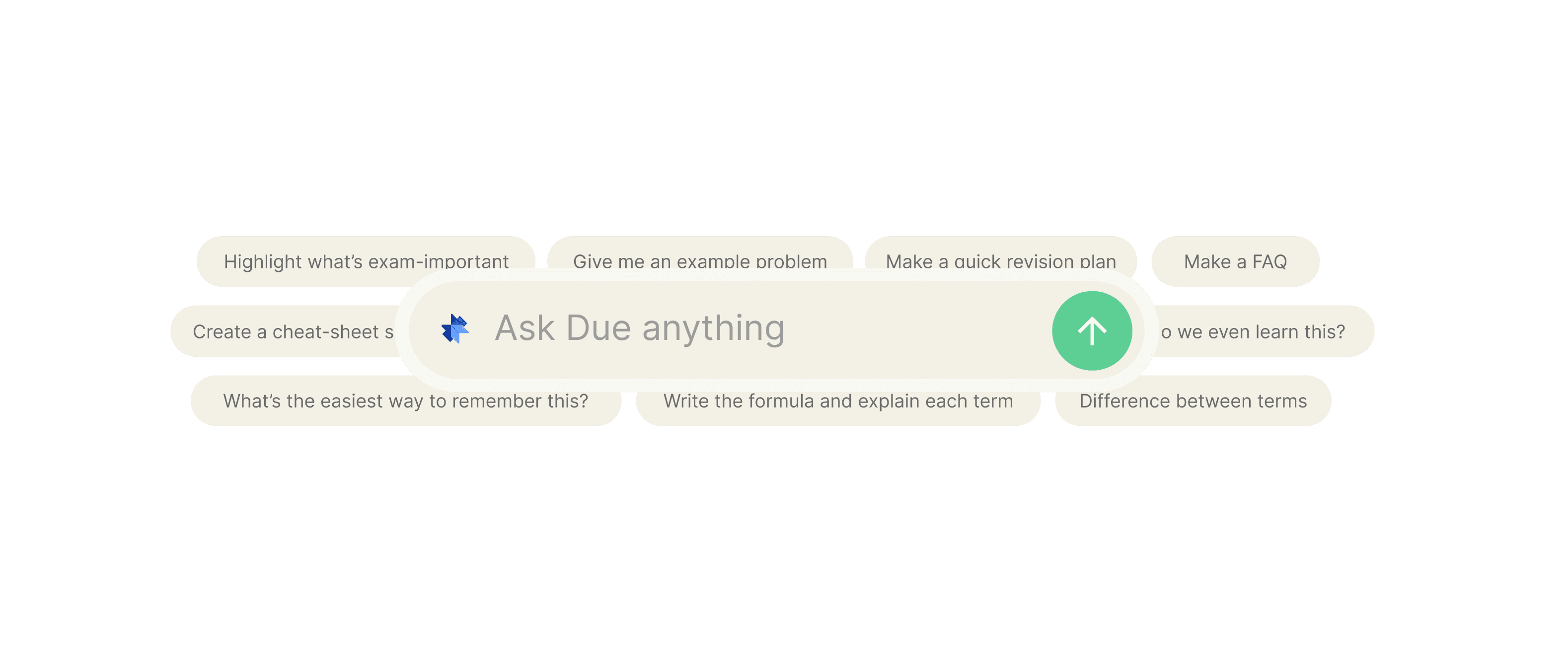
ChatGPT Prompts for Learning Definitions Fast
Students often struggle with the sheer volume of technical terminology and jargon required for exams, which can feel like a foreign language. Using these specific prompts unlocks a faster path to understanding and retention by turning abstract concepts into concrete, relatable mental models. Copy and paste the prompts below to transform your study sessions immediately.
The Quick Start Guide
The most effective way to learn definitions with ChatGPT is to feed it the specific context of your course. Copy your textbook glossary or notes into the prompt and use the 'ELI5' (Explain Like I'm 5) method followed by a request for a technical definition. The Golden Rule: Never let ChatGPT guess; always provide the source text or the specific academic level you are studying at to prevent halluncinations.
How to Use These Prompts Effectively
Step 1: Paste your material: Provide the AI with your lecture slides, textbook snippets, or a list of terms.
Step 2: Set constraints: Tell the AI your grade level and ask for specific formats like analogies or bullet points.
Step 3: Self-check: Ask the AI to quiz you once it has provided the definitions to ensure active recall.
Step 4: Convert to retention: Move these definitions into a system that supports spaced repetition, like flashcards or a specialized AI brain.
Bucket A: Deep Understanding
The Analogy Bridge
Use this when a definition feels too abstract or technical to grasp on the first read.
A good answer will provide a relatable scenario (like comparing a cell membrane to a security guard) before diving into the formal terminology.
The Root Cause Explainer
Use this to understand the 'why' behind a word, making it much harder to forget.
A good answer helps you decode the word itself so you can guess its meaning even if you forget the exact definition.
The 'Mistaken Identity' Filter
Use this for terms that are frequently confused with one another in your field of study.
A good answer provides a clear 'distinction' point that prevents you from mixing them up during an exam.
Bucket B: Memorization & Recall
The Spaced Repetition Planner
Use this to turn a list of definitions into a long-term study schedule.
A good answer provides a specific calendar view showing when to review each term to maximize retention.
The Mnemonic Generator
Use this when you have a list of terms that just won't stick in your memory.
A good answer uses humor or vivid imagery to link the terms together, making them easier to recall under pressure.
Bucket C: Practice & Application
The Socratic Definition Tutor
Use this to test if you actually know the material or if you've just memorized the words.
A good answer will engage in a back-and-forth dialogue, pointing out nuances you might have missed in your explanation.
The Scenario Application Case
Use this for applied sciences or law where definitions must be used in context.
A good answer presents a realistic problem that requires you to apply the definition correctly rather than just reciting it.
The Reverse Definition Quiz
Use this for high-speed active recall practice right before an exam.
A good answer keeps the game-like flow moving and helps build the neurological 'lookup table' in your brain.
Common Mistakes to Avoid
Asking without source text: ChatGPT may give a general definition that differs from your specific textbook's version.
Not defining difficulty: Without a 'level' (e.g., Grad School vs. High School), the AI might give an answer that is too shallow or overly complex.
Ignoring retrieval: Only reading definitions is 'passive' learning. Always follow up with a prompt that asks the AI to quiz you.
Pick two prompts above and start your session now. If you want this process fully automated—from PDF upload to flashcard generation—Duetoday is ready to help.

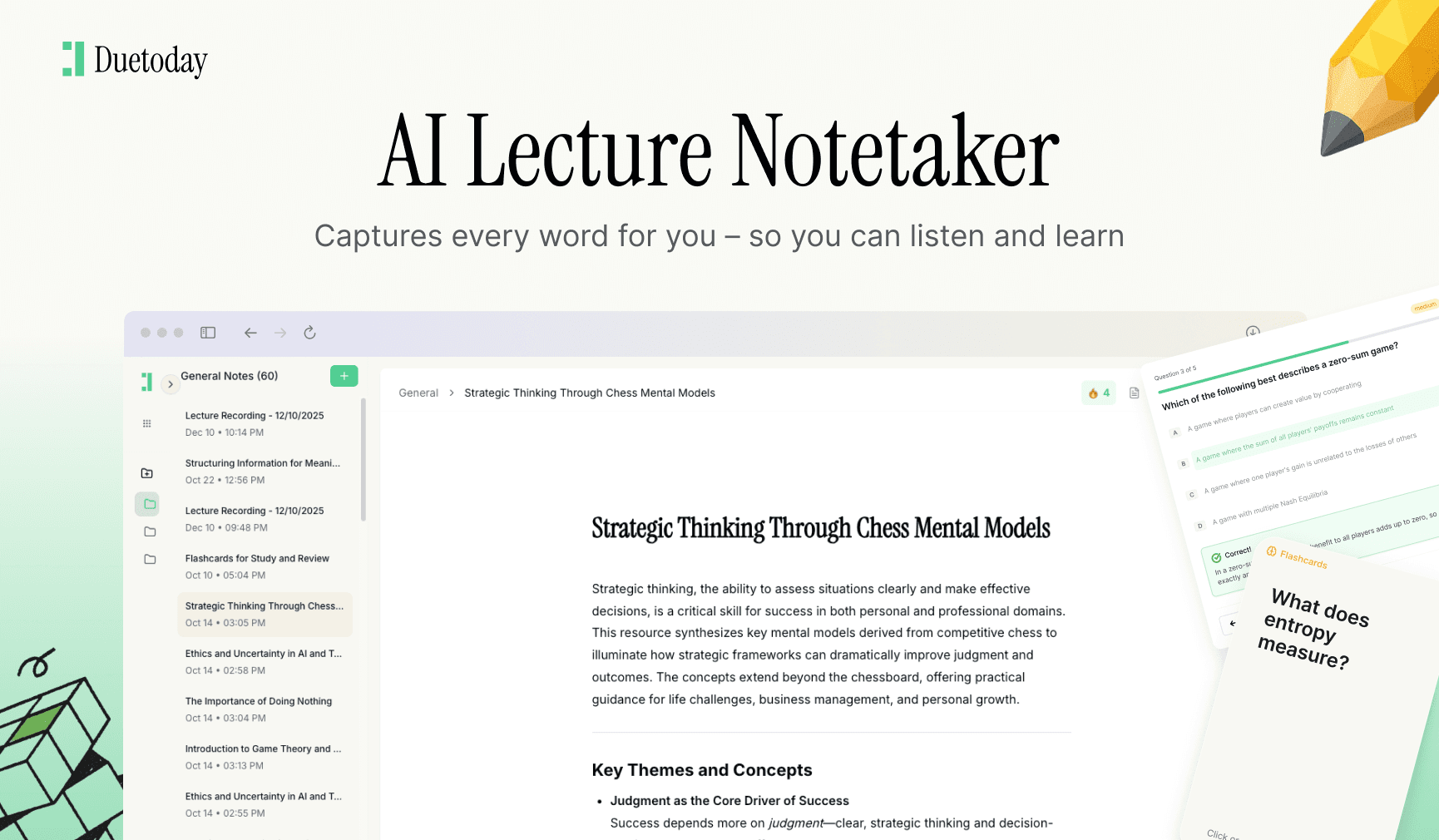
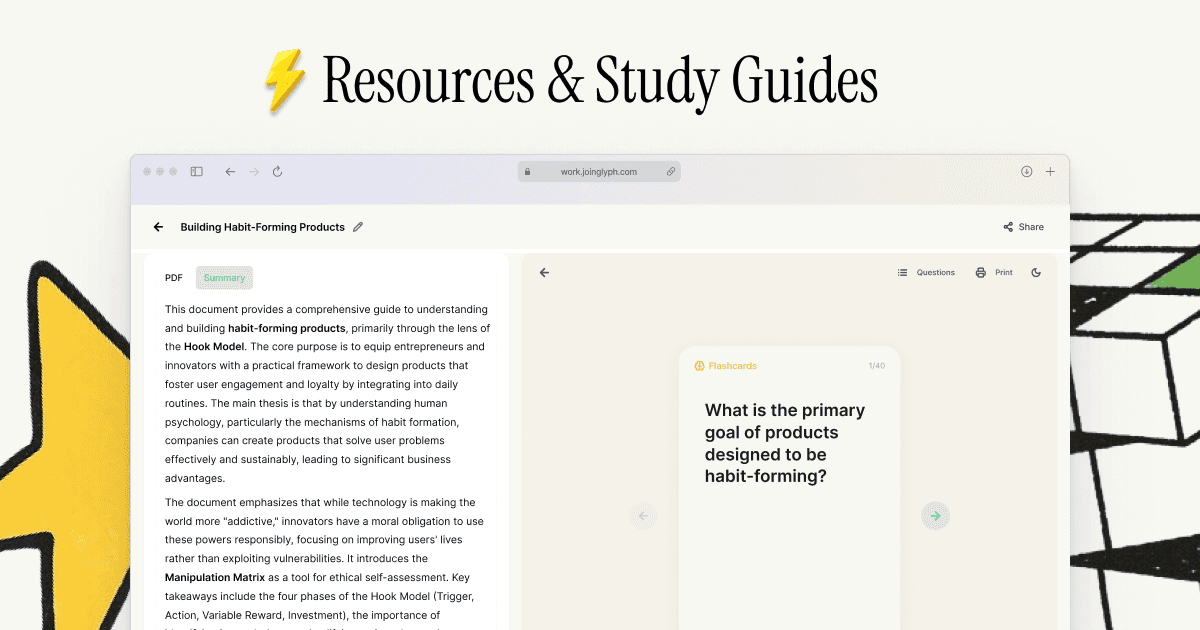
Duetoday is an AI-powered learning OS that turns your study materials into personalised, bite-sized study guides, cheat sheets, and active learning flows.
More Chatgpt Prompts
GET STARTED
Most Powerful Study Tool
for Students and Educators
Try Out Free. No Credit Card Required.
