
>

>

ChatGPT prompts for History Studying to master timelines and facts.

Chatgpt prompts for History Studying [Free Guide]

Master history with these expert ChatGPT prompts. Learn how to transform dates, primary sources, and textbook notes into active study tools and practice exams.

Use Study AI Free
ChatGPT Prompts for History Studying

Many students struggle to keep track of complex historical timelines, conflicting primary sources, and the deep 'why' behind historical events. These prompts unlock a faster way to connect the dots, improve your historical empathy, and retain names and dates without mindless memorization. Copy and paste the prompts below to turn your history notes into a structured learning engine.

The Quick Start Guide

To get the most out of these history prompts, follow this blueprint. What to paste: Copy your specific lecture notes, textbook excerpts, or the text of a primary source document. What to replace: Adjust the [Time Period/Event], [Grade Level], and [Specific Focus] placeholders to match your curriculum. The Golden Rule: Always paste your source material into ChatGPT first. History is full of nuance; don't let the AI guess facts—make it analyze your specific required readings to ensure accuracy.

How to Use These Prompts Effectively

  • Step 1: Input Source Material - Feed the AI your PDF transcripts, textbook chapters, or historical documents to prevent hallucinations.

  • Step 2: Define the Historian’s Lens - Tell ChatGPT if you want to look at history through a political, social, economic, or military lens.

  • Step 3: Analyze and Query - Use the prompts to identify cause-and-effect relationships rather than just asking for dates.

  • Step 4: Active Recall - Convert the outputs into flashcards or practice DBQs (Document-Based Questions) to solidify your memory.

Bucket A: Deep Professional Understanding

The Historical Contextualizer

Use this when you understand the 'what' but don't understand the 'why' behind a specific event.

I am providing notes on [Event]. Act as a history professor and explain the social, economic, and political factors that led to this moment. Use a 'Cause and Effect' framework and explain it at a [Grade Level] difficulty

A good answer will connect multiple historical threads to show how they converged into a single event.

The Primary Source Decoder

Use this to break down dense, archaic language in historical documents or speeches.

Analyze the following primary source text: [Paste Text]. Summarize the main argument, identify the author's bias, and explain the significance of this document in the context of [Time Period].

A good response identifies the intent of the author and the specific audience they were addressing.

The Continuity and Change Expert

Use this to understand how a specific theme (like civil rights or technology) evolved over centuries.

Comparing the period of [Era 1] and [Era 2], explain what stayed the same and what changed regarding [Theme, e.g., voting rights]. Create a table to visualize these differences

A good answer provides a clear comparison that highlights historical evolution.
Bucket B: Memory and Retention

The Narrative Memory Builder

Use this to turn dry facts into a compelling narrative that is easier for your brain to store.

Turn these history notes into a short, engaging story. Focus on the human experience and key figures involved. Maintain historical accuracy while making the sequence of events feel like a logical plot

A good answer turns dates into a 'story arc' that makes triggers and consequences memorable.

The Timeline Architect

Use this to visualize the flow of time and prevent chronological confusion.

Based on the attached text, create a chronological timeline of events. For each date, include a one-sentence description of its significance and one 'preceding' cause

A good answer provides a clean, sequential list that emphasizes how one event led to the next.

Bucket C: Practice and Recall

The Socratic History Tutor

Use this to test your knowledge through a dialogue rather than just reading.

I want to practice my knowledge of [Historical Topic]. Act as a tutor; ask me one challenging question at a time about the causes and consequences of this event. Wait for my answer before asking the next, and provide feedback on my accuracy

A good interaction will push you to think critically about why events unfolded the way they did.

The DBQ Practice Generator

Use this to prepare for high-stakes essay exams like the AP or IB history tests.

Using the provided notes on [Topic], generate a Document-Based Question (DBQ) prompt. Then, provide a high-scoring sample outline that includes a thesis statement and three supporting body paragraph themes

A good answer gives you a clear roadmap for writing a persuasive historical argument.

The Flashcard Creator

Use this to prepare your active recall materials for long-term retention.

Identify the 15 most important dates, figures, and terms from these notes. Format them as a 'Front: Question / Back: Answer' list suitable for flashcards

A good output avoids 'wall of text' answers and keeps facts bite-sized and testable.

Common History Prompting Mistakes

  • Historical Hallucinations: Asking ChatGPT for facts without providing a source often leads to 'blended' history where dates or names are slightly off.

  • Ignoring Bias: History is written from perspectives. Failing to ask the AI to identify the 'point of view' (POV) of a text is a missed opportunity for higher marks.

  • Broad Queries: Asking 'Tell me about the Cold War' is too broad. Ask 'Explain the impact of the Marshall Plan on Western European recovery' instead.

Master History with Duetoday

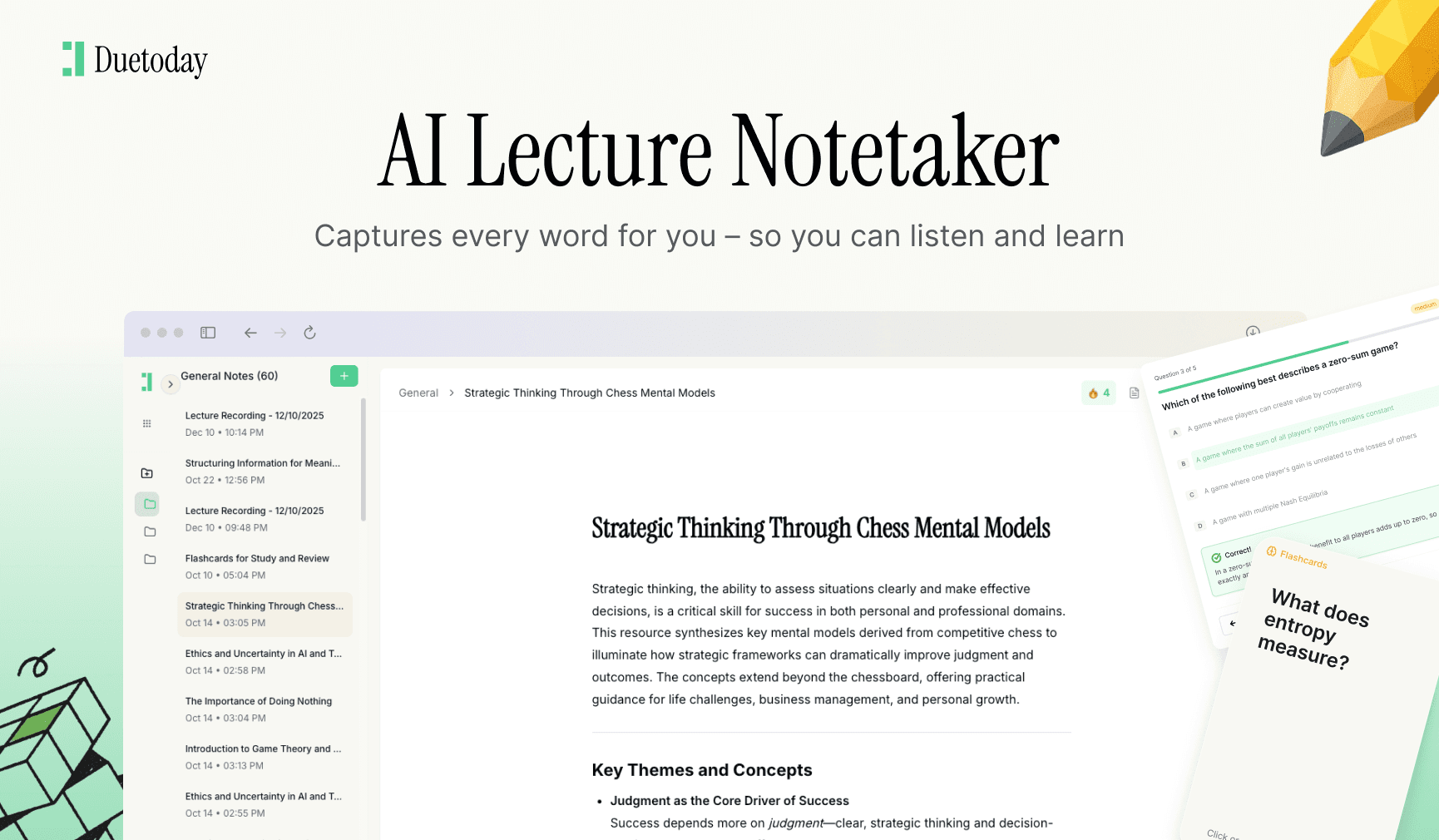
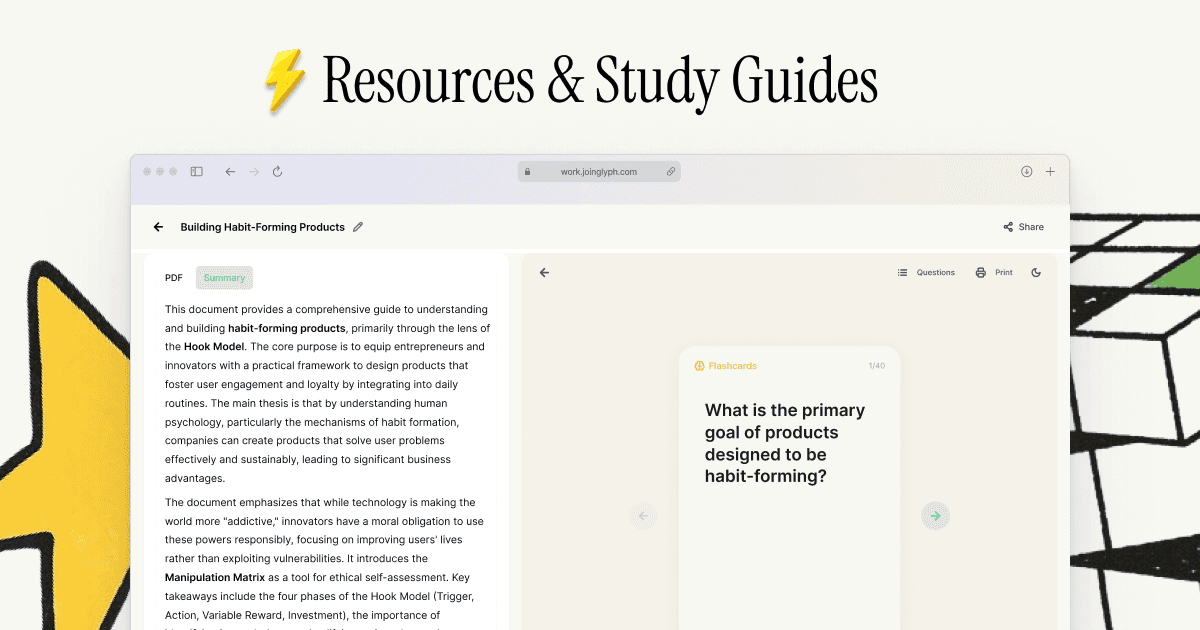
If you want to automate your history study sessions, Duetoday can help. Simply upload your lecture recordings, PDFs of primary sources, or YouTube documentaries. Duetoday’s AI Brain connects your notes, helps you search across all your materials instantly, and generates structured study guides and flashcards so you never have to copy-paste prompts again.

Ready to ace your next history exam? Pick two prompts and start today, or let Duetoday handle the heavy lifting.

Duetoday is an AI-powered learning OS that turns your study materials into personalised, bite-sized study guides, cheat sheets, and active learning flows.

More Chatgpt Prompts
GET STARTED

Most Powerful Study Tool
for Students and Educators

Try Out Free. No Credit Card Required.
