
>

>

ChatGPT prompts for data interpretation questions: Analyze and solve instantly.

Chatgpt prompts for Data Interpretation Questions [Free Guide]

Master data interpretation with these ChatGPT prompts. Learn how to analyze graphs, tables, and charts to boost your score and speed with AI-guided practice.

Use Study AI Free
ChatGPT Prompts for Data Interpretation Questions

Students often struggle to identify key trends, calculate percentage changes, and navigate complex datasets under time pressure. These prompts unlock a faster way to understand visual data, identify patterns, and practice high-level analytical reasoning in seconds. Simply copy and paste the prompts below to transform your raw data or chart descriptions into rigorous practice sessions.

Quick Answer: The Best Way to Use This Guide

To get the most accurate results, paste your dataset or describe the graph directly into ChatGPT. Replace [Topic] with your specific subject (e.g., Global Trade) and [Level] with your exam type (e.g., GRE, GMAT, or SAT). The Golden Rule: Always provide the source text or CSV data first so ChatGPT doesn't hallucinate numbers!

How to Use These Prompts

Follow this repeatable system to master data analysis:

  • Step 1: Paste Your Material: Copy your data table, CSV text, or a detailed description of your chart into the chat.

  • Step 2: Set Constraints: Define your academic level and what specific calculations you need (e.g., growth rates, ratios, or averages).

  • Step 3: Ask and Verify: Generate the output, then ask ChatGPT to explain the logic behind each step to ensure accuracy.

  • Step 4: Convert to Retention: Use the results to create practice sets that challenge your weakest areas.

Bucket A: Understand & Analyze

The Contextual Breakdown

Use this when you have a complex table and need to understand what the most important variables are.

I am providing a dataset regarding [Topic]. Please analyze this data and identify the top 3 most significant trends. Explain the relationship between the independent and dependent variables as if you were a data analyst

A good answer will highlight correlations and explain why specific data points are outliers.

Simplified Interpretation

Use this when a graph or chart feels too dense or confusing to read.

Simplify this data interpretation question for me. Explain the main message of this chart in 3 bullet points using simple language suitable for a beginner. What is the 'story' this data is telling

A good answer strips away jargon and focuses on the high-level takeaway.
The Socratic Data Tutor

Use this when you want to learn the 'how' behind the math instead of just getting the answer.

Don't give me the answer yet. Look at this data interpretation question: [Question]. Walk me through the steps I should take to solve it by asking me one leading question at a time to guide me to the conclusion.

A good answer mimics a live tutor, pushing you to do the mental heavy lifting.

Bucket B: Remember & Retain

Data Formula Flashcards

Use this to turn your practice mistakes into long-term memory.

Based on the data interpretation errors I just made, create 5 flashcards in a Front/Back format. The front should be a scenario requiring a specific calculation (e.g., % change), and the back should be the formula and the steps

A good answer focuses on the specific formulas you struggle with most.

Spaced Repetition Schedule

Use this to plan your study sessions for a major exam involving data.

I have an exam on [Date]. Based on my performance in data interpretation today, create a 2-week spaced repetition schedule to help me master ratio and proportion questions

A good answer provides a clear calendar with specific review intervals.

Bucket C: Practice & Drill

The Error-Log Drill

Use this to analyze why you got a practice question wrong.

I chose [Your Answer], but the correct answer was [Correct Answer]. Analyze my logic in this data interpretation question and identify if my error was a calculation mistake, a reading error, or a conceptual misunderstanding

A good answer provides a 'Post-Mortem' of your thought process to prevent future errors.

Mock Exam Generator

Use this for high-intensity practice under timed conditions.

Generate 5 challenging data interpretation questions based on the attached CSV/Table. Include 2 questions on percentage growth, 1 on weighted averages, and 2 on data sufficiency. Provide an answer key at the end

A good answer provides varied difficulty and mimics the format of your target exam.

Common Mistakes to Avoid

  • Asking without source text: Never ask ChatGPT to interpret a graph it cannot see; always paste the raw numbers.

  • Broad prompts: Avoid 'help me with data'; instead, ask for 'percentage change calculations.'

  • Ignoring Hallucinations: Always double-check the arithmetic for the first few prompts to ensure the AI is calibrated.

  • Passive Learning: Don't just read the summary; use the Socratic prompt to ensure you can solve it manually next time.

Master Data with Duetoday

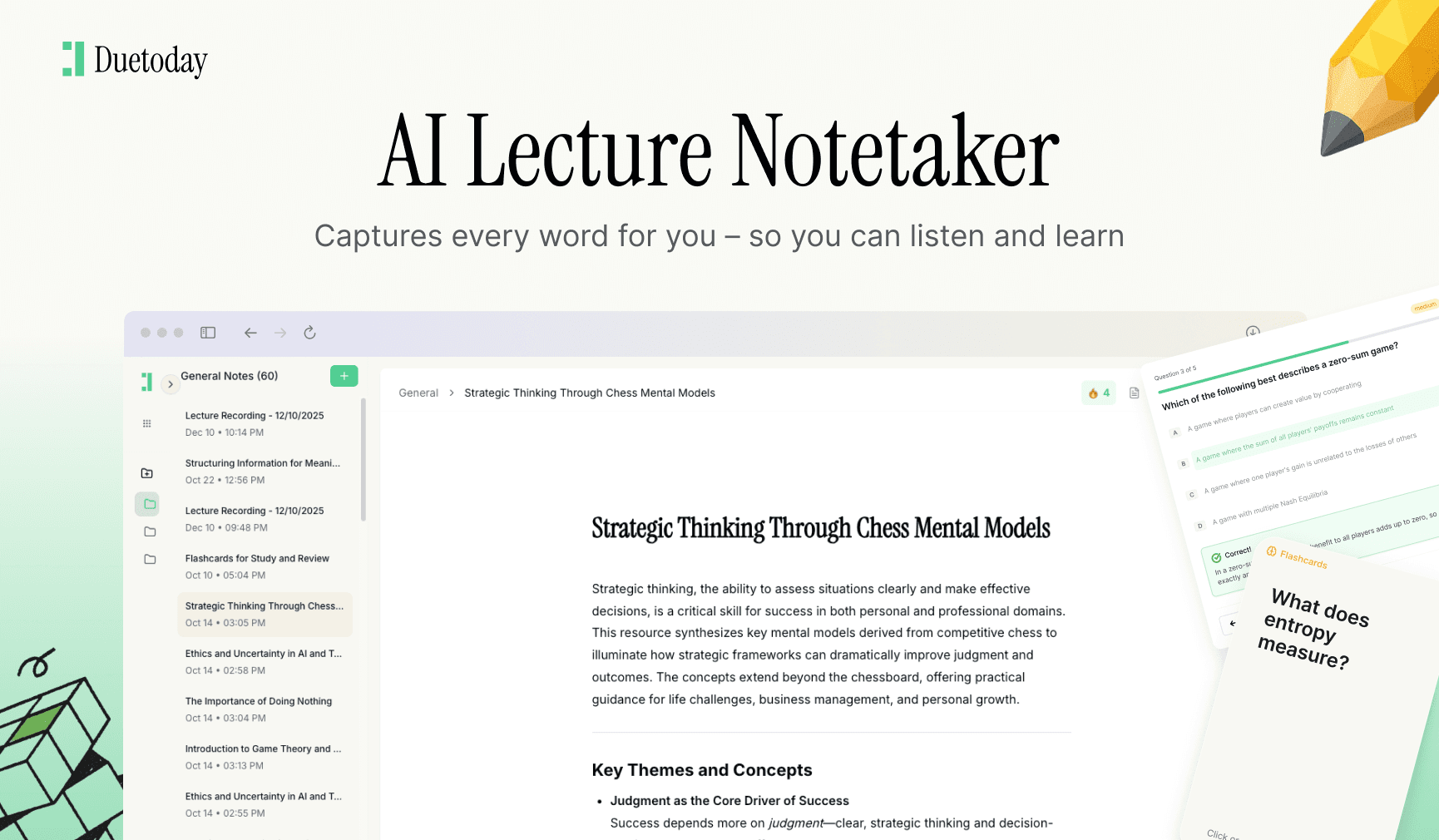
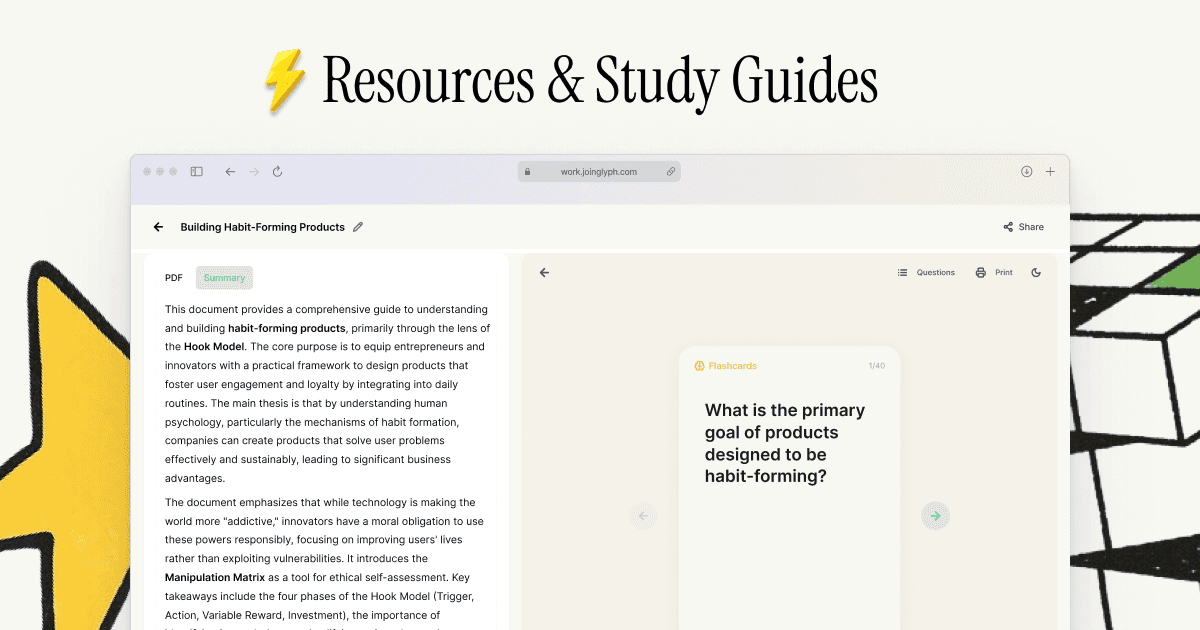
If you want this process automated without the constant copy-pasting, Duetoday can help. Simply upload your PDFs, datasets, or lecture recordings, and our AI Brain will automatically generate flashcards, quizzes, and structured notes. Start your journey to instant recall today.

Duetoday is an AI-powered learning OS that turns your study materials into personalised, bite-sized study guides, cheat sheets, and active learning flows.

More Chatgpt Prompts
GET STARTED

Most Powerful Study Tool
for Students and Educators

Try Out Free. No Credit Card Required.
