
Chatgpt prompts for Cutting Low-Value Topics [Free Guide]
Save hours of studying with these ChatGPT prompts designed to identify and cut low-value topics from your notes, focusing only on what matters for your exams.
Use Study AI Free
ChatGPT Prompts for Cutting Low-Value Topics
Students often struggle to separate high-yield exam material from the 'fluff' that fills up textbooks and lecture slides, leading to burnout and wasted hours. These prompts unlock a filtered study experience, allowing you to prioritize the core concepts that actually drive retention and grades. Simply copy and paste the prompts below to start trimming your workload today.
The Quick Start Guide
To get the most out of these prompts, follow this simple framework: paste your raw lecture notes or chapter text alongside the prompt. Tell ChatGPT exactly what your goal is (e.g., 'I am studying for a 100-level nursing exam') so it can filter accurately. The one golden rule: always provide the source text so the AI doesn't guess what your professor finds important.
How to Use These Prompts Effectively
Step 1: Paste your material: Provide the full transcript, PDF text, or Notion notes you need to filter.
Step 2: Set constraints: Define the exam difficulty, the specific learning objectives, and the desired brevity.
Step 3: Analyze for ROI: Ask the AI to rank topics by 'likelihood of appearance' based on the curriculum.
Step 4: Convert to Action: Move the high-value topics into Duetoday for flashcard generation and spaced repetition.
Bucket A: Identify and Understand the Core
The Pareto Filter (80/20 Rule)
Use this when you have a massive amount of text and only 20% of the time needed to read it.
A good answer provides a bulleted list of essential concepts while explicitly labeling the 'low-value' filler as optional.
High-Yield vs. Low-Yield Audit
Use this to audit a specific chapter or lecture for 'exam-worthy' content.
A good answer helps you visually see which sections of your notes you can safely skim or skip.
The Syllabus Cross-Check
Use this when you have your syllabus and want to remove anything that isn't required learning.
A good answer acts as a surgical tool, removing tangents and deep-dives that aren't on the rubric.
Bucket B: Practice and Refine
The 'Explain Like I'm a Pro' Filter
Use this to remove basic introductory language and focus only on the complex mechanics you don't know yet.
A good answer is dense, expert-level information that respects your prior knowledge.
The Redundancy Detector
Use this when you have multiple sets of notes that repeat the same information.
A good answer prevents you from studying the same concept three times across different documents.
The Socratic Gap Finder
Use this to see if what you cut was actually important by testing your logic.
A good answer provides a 'fail-safe' to ensure you aren't cutting essential context.
Common Mistakes When Filtering Topics
Asking without source text: ChatGPT will guess based on general web data, which may not match your specific professor's focus.
Ignoring context: Cutting a 'low-value' topic that actually serves as a prerequisite for a 'high-value' one later.
Being too vague: Not defining the 'level' of the exam (e.g., AP vs. PhD level) leads to generic filters.
No retrieval practice: Simply identifying high-value topics isn't enough; you must still convert them into active recall tasks.
Automate Your Efficiency with Duetoday
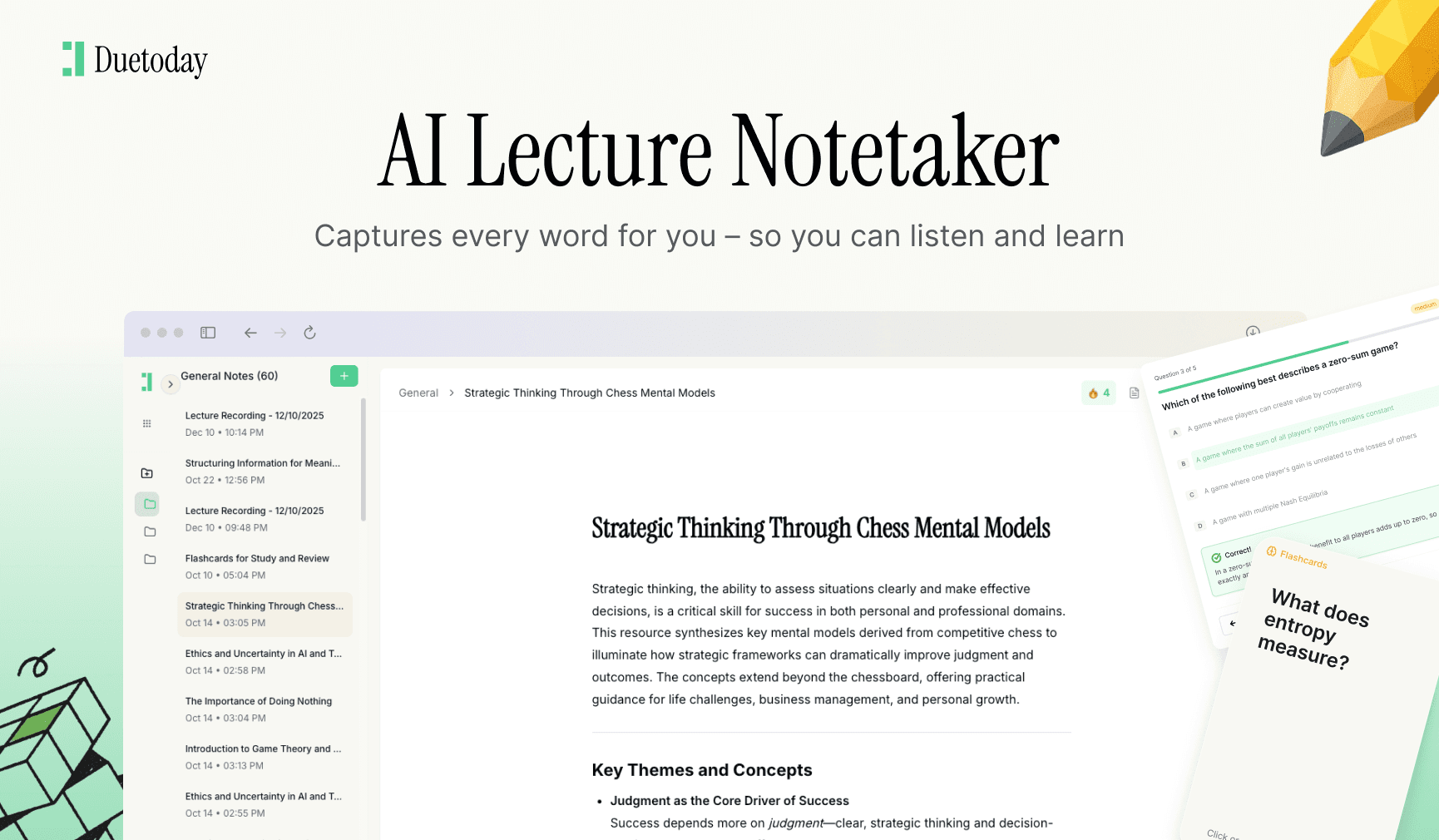
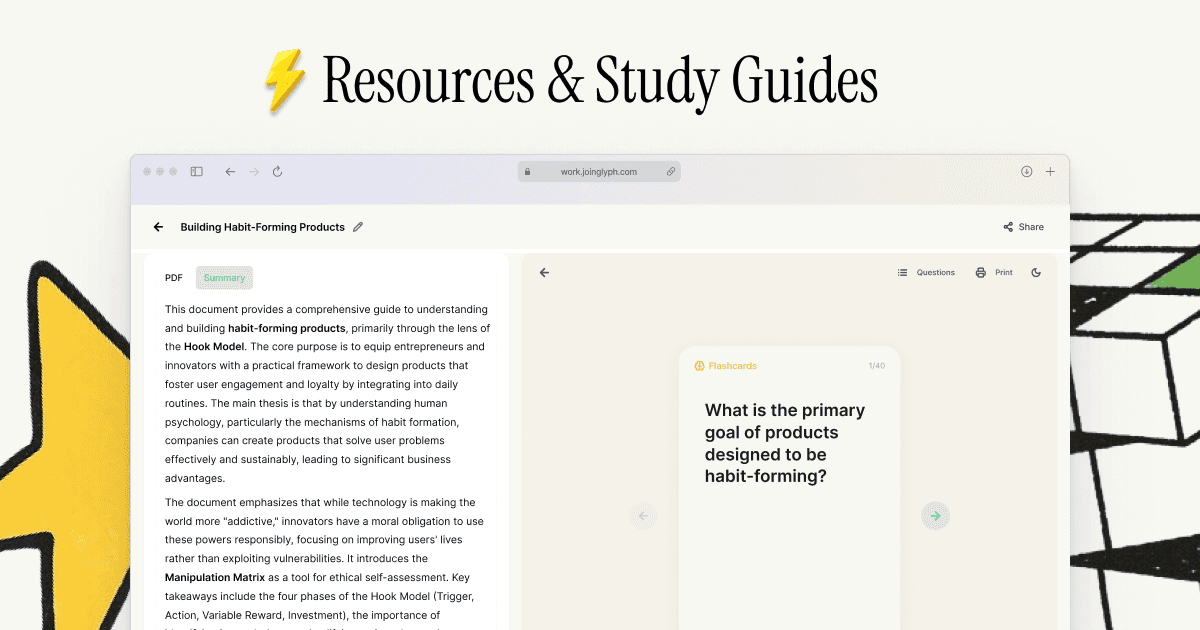
Manually prompting ChatGPT to filter your notes takes time. If you want this process automated, Duetoday is the answer. Simply upload your materials—lecture recordings, PDFs, or YouTube links—and Duetoday’s AI Brain centralizes the content, identifies the key takeaways, and generates high-yield flashcards instantly. It connects the dots across all your sources so you can focus on mastering the material, not just organizing it.
Pick two prompts from the list above and try them on your most bloated set of notes. If you want it done automatically every time, Duetoday is ready for you.

Duetoday is an AI-powered learning OS that turns your study materials into personalised, bite-sized study guides, cheat sheets, and active learning flows.
More Chatgpt Prompts
GET STARTED
Most Powerful Study Tool
for Students and Educators
Try Out Free. No Credit Card Required.
