
>

>

ChatGPT prompts for a personalized learning plan that stick.

Chatgpt prompts for creating a personalized learning plan

Discover the best ChatGPT prompts for creating a personalized learning plan. Learn how to structure your study sessions and automate your schedule with AI.

Use Study AI Free
ChatGPT Prompts for Creating a Personalized Learning Plan

Many students struggle with information overload, often feeling paralyzed by where to start or how to sequence their study materials effectively. These prompts unlock a structured path to mastery, helping you transform chaotic notes and deadlines into a logical, high-retention schedule. Copy and paste the prompts below to build your custom roadmap in seconds.

Quick Answer: The Best Way to Use This Page

To get the most out of these prompts, follow this simple framework: paste your syllabus, lecture notes, or textbook chapter into ChatGPT. Replace the bracketed variables like [Topic], [Goal Date], and [Difficulty Level] with your specific details. The Golden Rule: Never let ChatGPT guess your curriculum; always provide your own source text to ensure the learning plan is accurate and relevant to your actual exams or projects.

How to Use These Prompts

  • Step 1: Feed the AI: Start by pasting your source material (PDF text, YouTube transcript, or Notion notes) into the chat.

  • Step 2: Define Constraints: Specify your available hours per day, your current knowledge level, and your final goal (e.g., passing a certification or building a project).

  • Step 3: Refine the Output: Ask the AI to identify potential bottlenecks or to add specific recall checkpoints.

  • Step 4: Integrate for Retention: Move the generated schedule into a system that supports spaced repetition and active recall.

Bucket A: Understand and Sequence

1. The Curated Roadmap Prompt

Use this when you have a massive pile of material and don't know the logical order of operations.

I am studying [Topic]. Based on the following materials [Paste Text], create a 4-week learning roadmap. Order the topics from fundamental to advanced, ensuring I have the prerequisite knowledge before moving to complex concepts. Identify the 'Big Rocks' I must master first

A good answer provides a weekly breakdown with specific sub-topics and logical transitions between modules.

2. The Gap Analysis Prompt

Use this to find out what you're missing before you start your plan.

I want to reach [Level of Proficiency] in [Topic]. Review my current notes [Paste Notes] and tell me what critical concepts or skills are missing from my current study set that are essential for mastery

This should result in a bulleted list of missing links and suggested resources to fill those holes.

3. The 'Explain the Why' Planner

Use this to build a plan that prioritizes deep understanding over rote memorization.

Create a study plan for [Topic] that focuses on first principles. For every major concept, include a 'Mental Model' section and a 'Real-World Application' task to ensure I understand how these ideas connect

The output should include conceptual milestones rather than just page numbers to read.
Bucket B: Remember and Schedule

4. The Spaced Repetition Architect

Use this to ensure you don't forget what you learned in week 1 by the time you hit week 4.

Based on the topics in [Paste Text], create a review schedule using spaced repetition. Tell me which days I should revisit each topic over the next 30 days to ensure maximum retention for my exam on [Date]

A good answer looks like a calendar or list of dates with specific topics assigned to each review session.

5. The Daily Deep-Work Planner

Use this when you have a busy schedule and need to make the most of limited study hours.

I have [Number] hours per day to study. Based on my materials, create a daily routine that balances 70% active recall (testing myself) and 30% passive consumption (reading/watching)

The output should provide a minute-by-minute breakdown of a typical study session.

Bucket C: Practice and Assess

6. The Socratic Tutor Plan

Use this to transform your learning plan into an interactive experience.

Instead of a static list, I want you to act as a Socratic Tutor. Based on [Material], guide me through a learning plan by asking me one challenging question at a time. Do not move to the next topic until I have demonstrated understanding

This creates a dynamic feedback loop rather than a simple checklist.

7. The Progressive Overload Quizzer

Use this to build a plan that gets harder as you get smarter.

Generate a sequence of 10 practice questions for [Topic]. Start with basic definitions and gradually increase the complexity to case-study applications. Provide the answer key at the very end

A good response will show a clear ramp-up in difficulty, preventing you from plateauing.

8. The Error-Log System

Use this to refine your plan based on your actual performance.

I missed these questions in my last practice session: [Paste Errors]. Analyze these mistakes and tell me which areas of my learning plan I need to revisit and spend an extra 3 hours on this week

This results in a data-driven adjustment to your study schedule.

Common Mistakes to Avoid

  • Asking without Context: If you don't provide the source text, ChatGPT will invent a generic curriculum that might not match your teacher's requirements.

  • Ignoring the 'Why': Don't just ask for a list of topics; ask how they connect to avoid surface-level learning.

  • Forgetting to Practice: Avoid plans that are 100% reading. Ensure your prompts demand 50-70% active recall.

  • Static Planning: Plans should evolve. If you master a topic early, prompt the AI to move you forward.

Conclusion

Creating a personalized learning plan doesn't have to be an administrative nightmare. By using these eight prompts, you can turn ChatGPT into a high-level academic advisor. Pick two prompts—starting with the Roadmap and the Spaced Repetition Architect—and start your session today. If you want this entire workflow automated without the manual prompting, Duetoday can help you build your AI learning brain in one click.

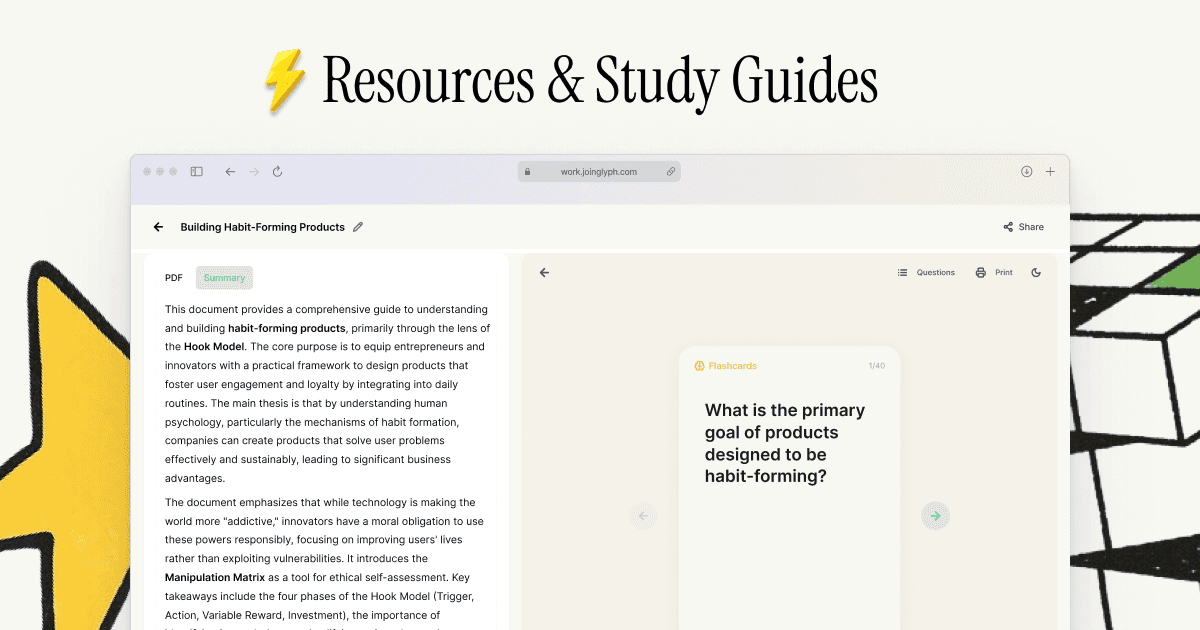
Duetoday is an AI-powered learning OS that turns your study materials into personalised, bite-sized study guides, cheat sheets, and active learning flows.

More Chatgpt Prompts
GET STARTED

Most Powerful Study Tool
for Students and Educators

Try Out Free. No Credit Card Required.
