
ChatGPT prompts for Creating a Mistake Bank [Free Guide]
Stop repeating errors. Use these curated ChatGPT prompts to build a mistake bank that turns wrong answers into mastered concepts for better retention.
Use Study AI Free
ChatGPT Prompts for Creating a Mistake Bank
Many students struggle to keep track of their errors across different subjects, leading to a cycle of repeating the same mistakes during exams. These ChatGPT prompts unlock a systematic way to analyze your failures, ensuring you build faster understanding and long-term retention through targeted review. Copy and paste the prompts below to transform your 'wrong answers' into a personalized learning engine.
Quick Answer: Building Your Error Log
To get the best results, paste your incorrect answer and the marking scheme into ChatGPT. Replace the [Subject] and [Topic] variables with your specific material. The #1 rule for an effective mistake bank: always provide the original source text or the correct solution so the AI doesn't guess the parameters of your error.
How to Use These Prompts
Step 1: Paste the question you got wrong along with your original (incorrect) response.
Step 2: Set constraints such as your academic level and the specific format you want the analysis in (e.g., table or bullet points).
Step 3: Ask the AI to identify the underlying concept gap rather than just providing the right answer.
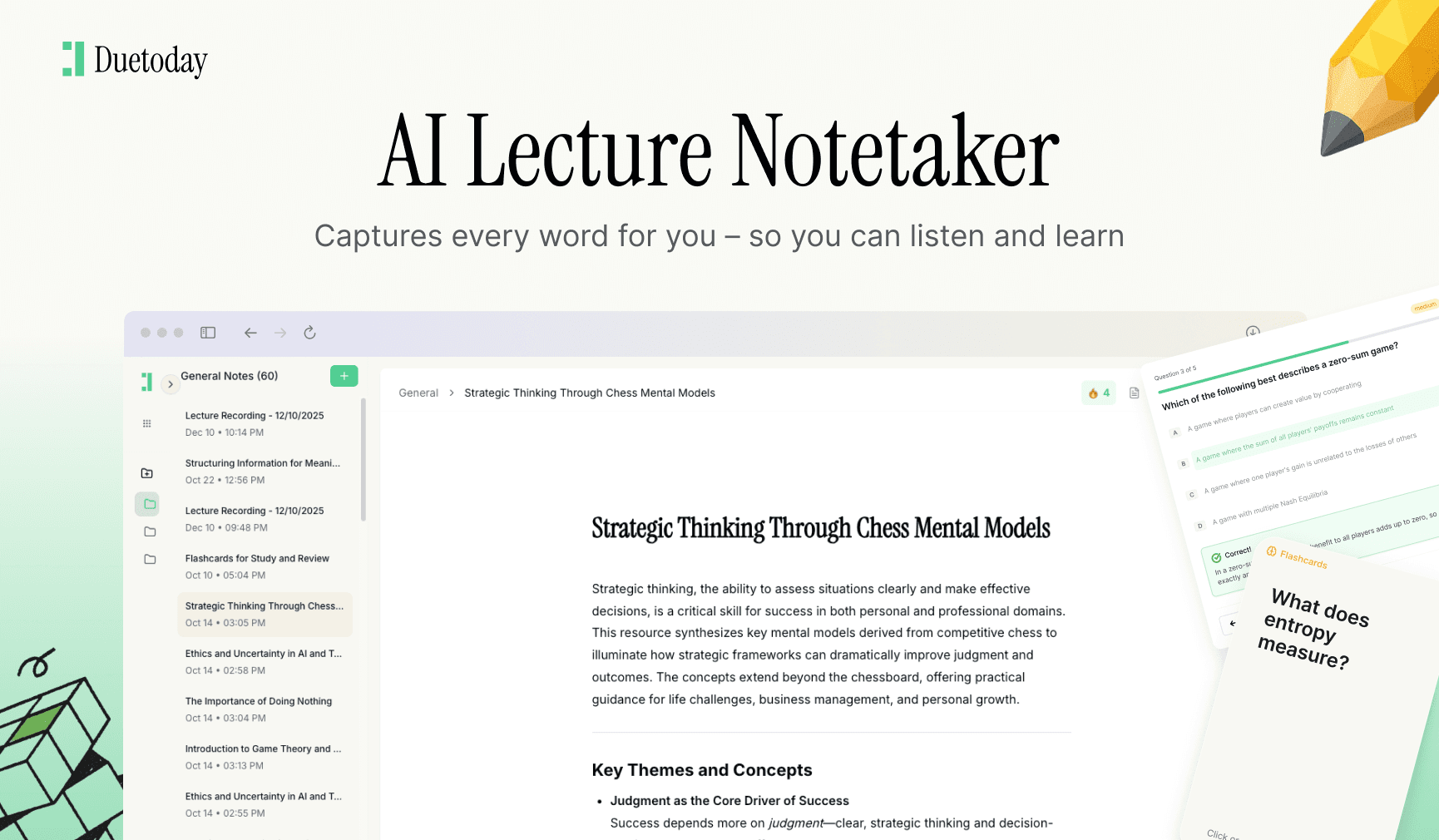
Step 4: Convert the output into a structured format like a Duetoday action item or a flashcard for spaced repetition.
Bucket A: Understand Your Errors
The Root Cause Analyzer
Use this when you aren't sure why your logic failed.
A good answer pinpoint's the specific cognitive leap you missed and explains the 'why' behind the correct path.
The Concept Reframer
Use this to ensure you understand the theory, not just the fix.
A good answer provides a dual-layered explanation that builds confidence from the ground up.
The Mistake Classifier
Use this to see if your errors are due to silly mistakes or lack of knowledge.
A good answer identifies patterns in your behavior so you can adjust your exam technique.
Bucket B: Remember and Correct
Flashcard Generator for Errors
Use this to turn a one-time mistake into a long-term memory.
A good answer creates bite-sized, active recall prompts that focus on the specific hurdle you faced.
The 'Teach it Back' Drill
Use this to verify you have actually learned from the error.
A good answer acts as a mirror, highlighting any persisting gaps in your updated understanding.
Creating a 'Never Again' Checklist
Use this to build a pre-exam ritual.
A good answer provides a highly personalized 'red flag' list tailored to your historical performance.
Bucket C: Practice to Mastery
Modified Problem Generator
Use this to practice the specific concept you failed.
A good answer allows you to apply your new knowledge immediately in a fresh context.
The Socratic Error Tutor
Use this for deep interactive learning.
A good answer guides you through the mental heavy lifting, which is essential for lasting retention.
Common Mistakes to Avoid
No Context: Asking ChatGPT for help without providing the specific question or your original logic.
Ignoring Patterns: Treating every mistake as an isolated incident rather than looking for recurring conceptual themes.
Blind Trust: Not double-checking ChatGPT's logic against your official course materials.
Passive Reading: Simply reading the AI's explanation without converting it into a practice question or flashcard.
Pick two prompts from the list above and start documenting your errors today. If you want a unified workspace that connects your notes, mistakes, and schedule automatically, Duetoday can transform your study process from reactive to proactive.

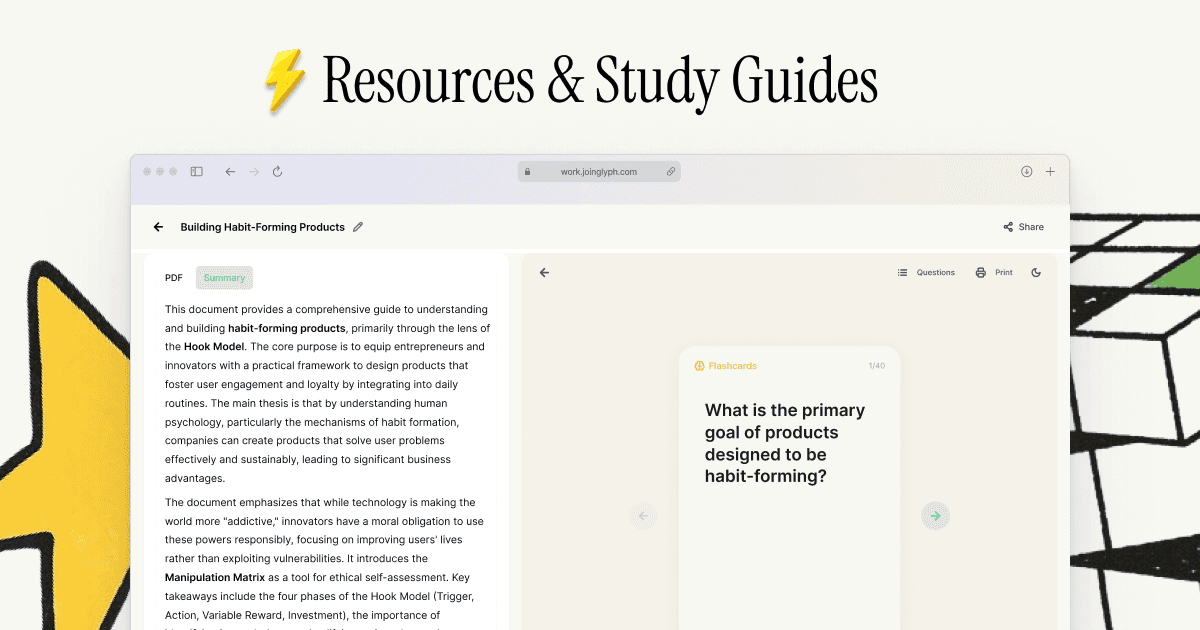
Duetoday is an AI-powered learning OS that turns your study materials into personalised, bite-sized study guides, cheat sheets, and active learning flows.
More Chatgpt Prompts
GET STARTED
Most Powerful Study Tool
for Students and Educators
Try Out Free. No Credit Card Required.
