
Chatgpt prompts for 7-Day Study Sprint [Free Guide]
Master your exams with these ChatGPT prompts for a 7-day study sprint. Learn how to structure your week, create practice questions, and boost retention.
Use Study AI Free
ChatGPT Prompts for Creating a 7-Day Study Sprint
When finals or certifications loom just a week away, most students succumb to panic-induced cramming that leads to poor retention and high stress. These ChatGPT prompts unlock a structured, high-intensity learning framework that transforms a chaotic week into a focused, 7-day mastery sprint for faster understanding and long-term recall. Simply copy and paste the prompts below to build your ultimate study plan.
The Quick Start Guide to Study Sprints
The most effective way to use this guide is to treat ChatGPT as your personal academic strategist. To get the best results, follow this simple setup:
Define your source: Paste your syllabus, lecture notes, or textbook summaries directly into the chat.
Set the deadline: Tell ChatGPT exactly which day your exam is (7 days from today).
Identify the gaps: Highlight which topics you find hardest so the AI can prioritize them in the early days of your sprint.
The Golden Rule: Always provide your specific course materials so ChatGPT doesn't hallucinate generic information or irrelevant topics.
How to Use These Prompts Effectively
Input Your Context: Start by uploading your PDF notes or pasting your course outline. The more context you provide, the more tailored your sprint will be.
Refine the Schedule: If you have work or classes, tell the AI your available hours each day to ensure the 7-day plan is realistic.
Active Recall Only: Don't just ask for summaries; ask for quizzes and "teach-me" sessions.
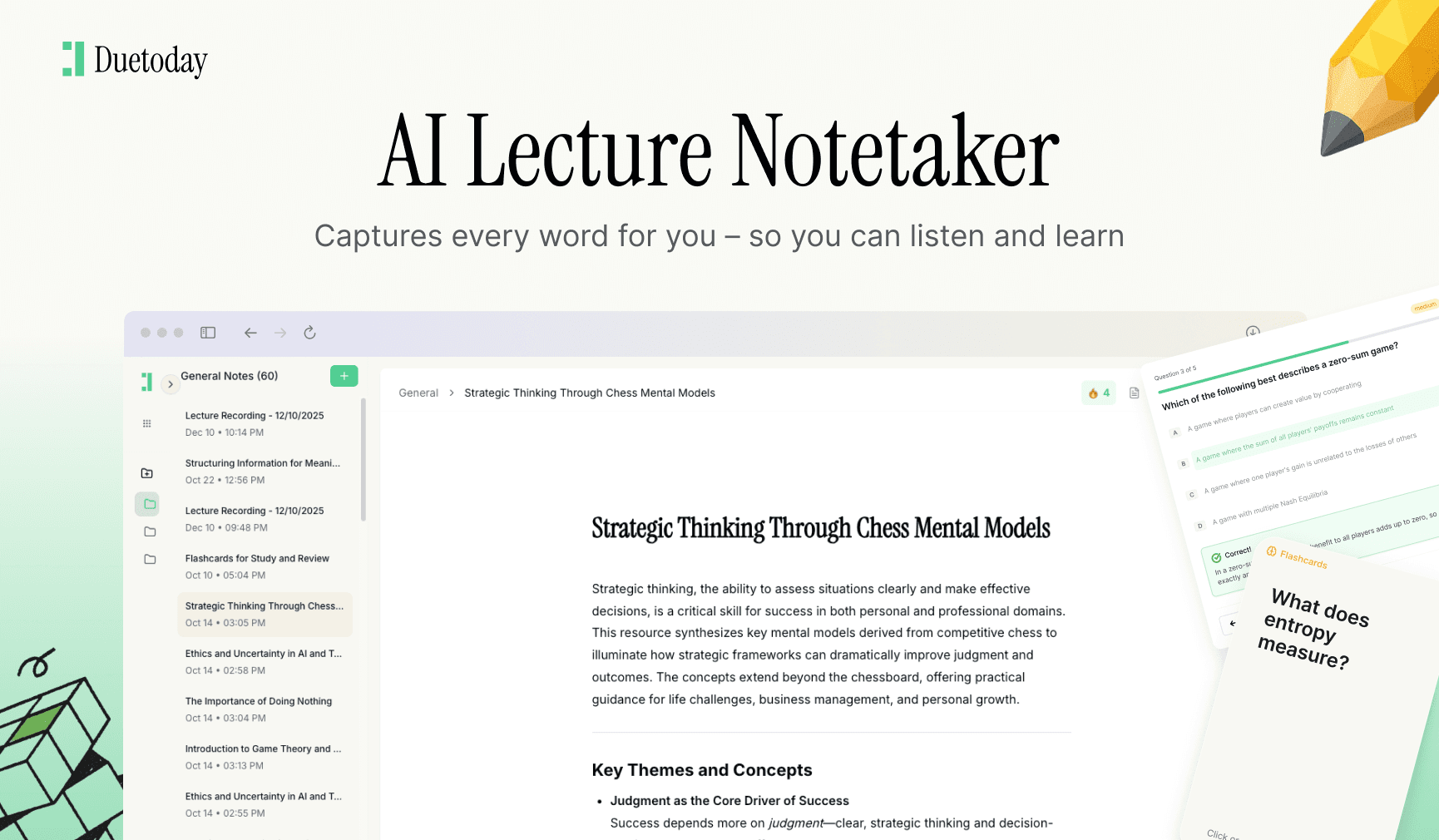
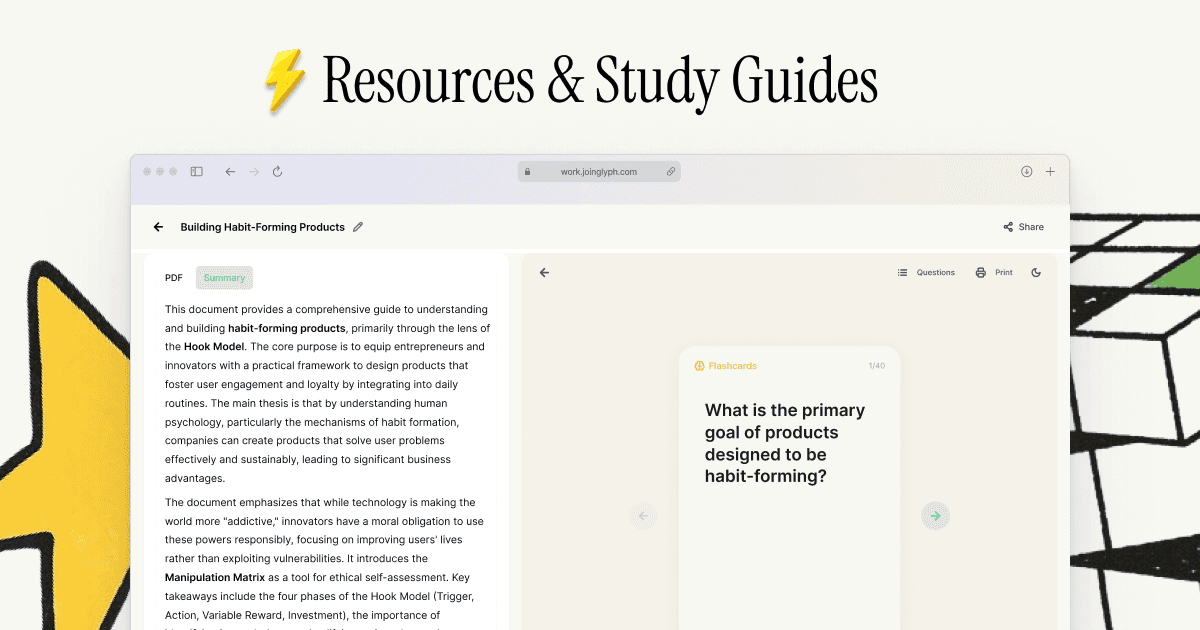
Sync with Duetoday: Once you have your prompt outputs, move them into a workspace like Duetoday to turn them into permanent flashcards and scheduled action items.
Bucket A: Understand & Map (Days 1–2)
The 80/20 Curriculum Maker
Use this prompt to identify the 20% of the material that will likely account for 80% of the exam marks.
A good answer will provide a breakdown of high-yield topics vs. low-priority details, helping you focus your energy where it matters.
The Socratic Simplifier
Use this to break down complex concepts you've been avoiding because they seem too hard.
A good answer starts with a simple metaphor and ends with the technical terminology required for your level.
Chronological Sprint Architect
This prompt builds the actual 7-day skeleton of your study week.
A good answer provides a day-by-day itinerary that balances new learning with consistent review of previous days.
Bucket B: Remember & Retain (Days 3–5)
Flashcard Generator (CSV Format)
Use this to instantly turn your notes into active recall tools.
A good answer provides clear pairs of information that challenge your memory rather than just asking for one-word facts.
The Mnemonics Master
When you have a list of terms or a process to memorize, use this to make it stick.
A good answer gives you a variety of mental hooks that make the information much harder to forget under exam pressure.
Bucket C: Practice & Perfect (Days 6–7)
The Blindspot Detector
Use this to find what you don't know before the exam does.
A good answer will point out missing links in your logic and challenge you with questions that go beyond surface-level facts.
The Mock Exam Simulator
This is the final boss of your 7-day sprint.
A good answer simulates a real testing environment and provides a feedback loop that corrects mistakes in real-time.
Common Mistakes to Avoid
Asking without source text: Generic AI answers often miss the specific nuances your professor wants.
Not defining difficulty: If you don't specify your level, ChatGPT might give you middle-school level explanations for a university-level course.
Ignoring hallucinations: Always double-check formulas or dates against your primary source materials.
Passive reading: Do not just ask for a 'summary.' Use the prompts above to ensure you are actively recalling information.
Automate Your Sprint with Duetoday
Managing an intense 7-day sprint is hard when you have to copy-paste between five different tools. Duetoday is a retention-first workspace that handles the heavy lifting for you. Simply upload your lectures or PDFs, and Duetoday will instantly generate your study guides, flashcards, and a structured action list in one place. No more jumping between tabs—just pure learning and instant recall.
Final Thoughts
The key to a 7-day sprint is structure. Pick 2 of the prompts above—start with the 80/20 Curriculm Maker—and get to work. If you want the entire process automated so you can focus on the actual studying, give Duetoday AI a try.

Duetoday is an AI-powered learning OS that turns your study materials into personalised, bite-sized study guides, cheat sheets, and active learning flows.
More Chatgpt Prompts
GET STARTED
Most Powerful Study Tool
for Students and Educators
Try Out Free. No Credit Card Required.