
>

>

ChatGPT prompts for Cornell Notes that actually work.

Chatgpt prompts for Cornell Notes [Free Guide]

Discover the best ChatGPT prompts for Cornell Notes. Learn how to transform lectures, PDFs, and videos into structured study systems for better retention.

Use Study AI Free
ChatGPT Prompts for Cornell Notes

Students often struggle with the manual labor of organizing messy lecture notes into the structured Cornell format, leading to wasted hours and cognitive overload. These prompts unlock a faster way to synthesize complex information, ensuring you spend less time formatting and more time practicing for exams. Simply copy and paste the prompts below to turn any source material into a high-retention study system.

The Quick Start Guide

To get the best results, paste your transcript or reading material into ChatGPT along with the prompts below. For the highest quality output, replace [Topic] with your specific subject and [Academic Level] with your current grade. The golden rule for Cornell Notes is to always provide the raw text yourself; otherwise, ChatGPT may hallucinate facts that weren't in your original lecture.

How to Use These Prompts Effectively

  • Step 1: Provide your source material (pasted text from slides, transcripts, or PDF exports).

  • Step 2: Set specific constraints like 'keep it at a medical student level' or 'focus on key dates.'

  • Step 3: Request the specific Cornell output (Keywords on the left, Notes in the middle, Summary at the bottom).

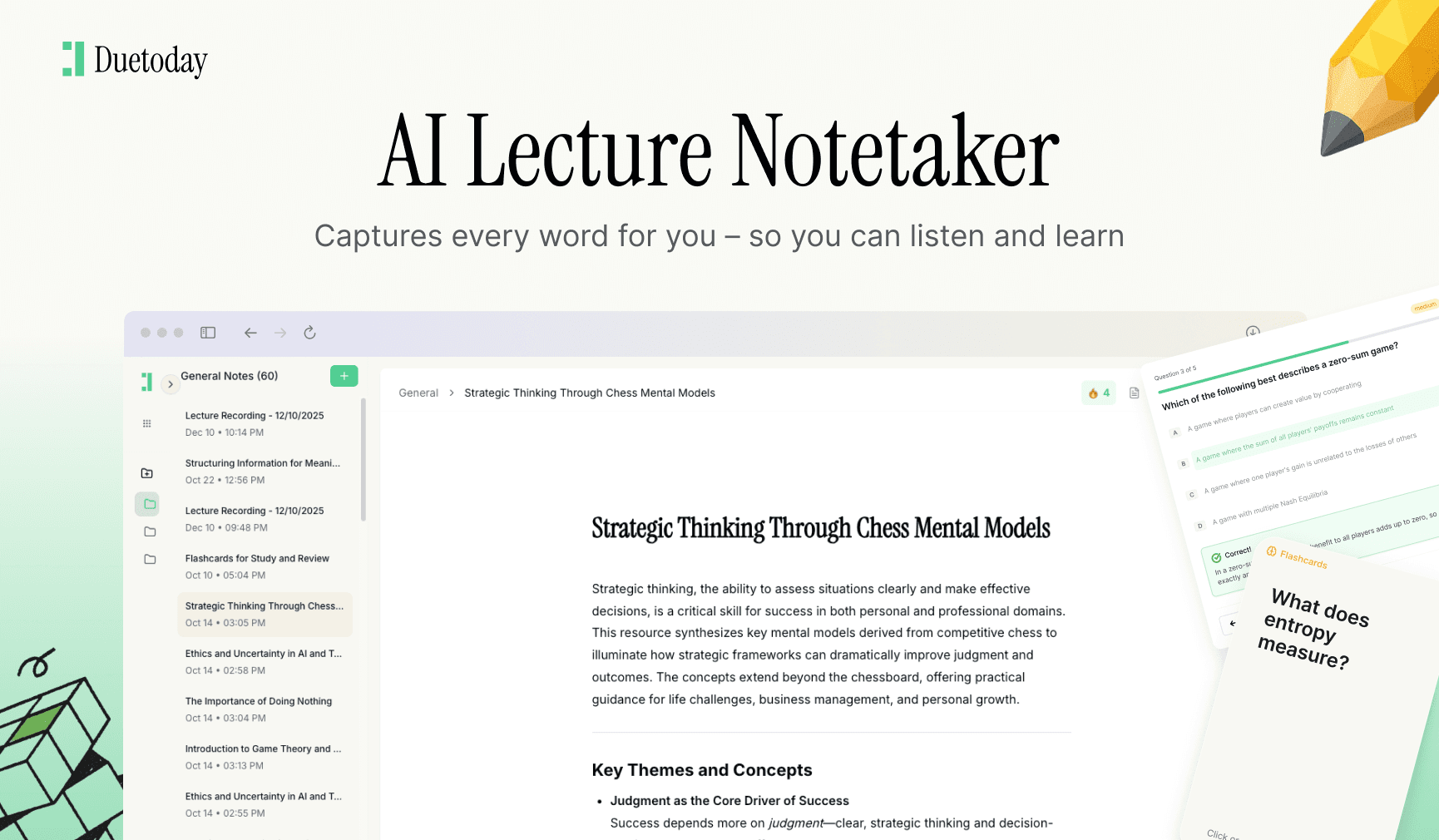
  • Step 4: Transition these notes into an active recall system like Duetoday for long-term retention.

Bucket A: Structure and Analysis

The Foundational Cornell Layout

Use this when you have a long transcript and need a standard, page-ready Cornell structure.

Act as an expert academic assistant. Organize the following text into a Cornell Note-taking format. Create a 'Cues/Keywords' column for main ideas, a 'Note-taking' column for detailed explanations, and a 3-sentence 'Summary' at the bottom. Source text: [Paste Text]

A good answer will clearly separate definitions from examples and provide a high-level overview at the end.

The Concept Mapper

Perfect for heavy theoretical subjects where relationships between ideas matter most.

Analyze the attached text for core concepts and hierarchies. Create Cornell Notes that focus specifically on the 'Why' and 'How' behind each point in the Notes column, with challenging recall questions in the Cues column. [Paste Text]

This prompt results in deep-dive notes that prioritize understanding over simple transcript copying.

The Socratic Bridge

Use this to turn your notes into a dialogue that forces you to think critically about the material.

Transform these notes into a Cornell format, but in the 'Cues' column, write only questions that I must answer to prove I understand the 'Notes' column. If I can't answer the question, I haven't learned it yet. [Paste Text]

A good response will feature provocative questions that target the 'meat' of the lecture content.
Bucket B: Retention and Mastery

The Spaced Repetition Blueprint

Use this to plan when you should actually review your new Cornell Notes.

Based on the complexity of these Cornell Notes, suggest a 2-3-5-7 day review schedule. For each review session, provide one specific 'Active Recall' task based on the summary provided. [Paste Summary]

This provides a tactical roadmap for moving information from short-term to long-term memory.

The Flashcard Generator

Turn the 'Cues' column of your Cornell notes into digital-ready study bits.

Take the 'Cues' and 'Notes' sections from our Cornell layout and convert them into a list of Front/Back flashcards. Make the front a question and the back a concise answer. [Paste Cornell Notes]

A good output provides clear, bite-sized Q&A pairs ready for an app like Duetoday.

The 'Teach It Back' Drill

Use this to test your mastery of the summary section of your notes.

I will provide a summary of my Cornell Notes. Act as a professor and point out any logical gaps or missing pieces of critical info based on the full text provided earlier. [Paste Summary]

This helps you identify exactly where your understanding is fuzzy before the exam.

Common Mistakes to Avoid

  • Ignoring the Summary: Don't let ChatGPT just list facts; ensure the summary connects the dots.

  • Too Much Text: If your 'Notes' column is a wall of text, it’s not a Cornell note; ask for bullet points.

  • Forgetting the Cues: The left column is for keywords and questions—don't let the AI fill it with sentences.

  • Zero Verification: AI can misinterpret technical diagrams; always cross-reference with your original slides.

By using these prompts, you transform your study sessions from passive reading into active processing. Pick two prompts from this list and start organizing your next lecture today. For those who want a seamless experience, Duetoday can automate this entire workflow, turning your PDFs and YouTube links into Cornell-style mastery tools in seconds.

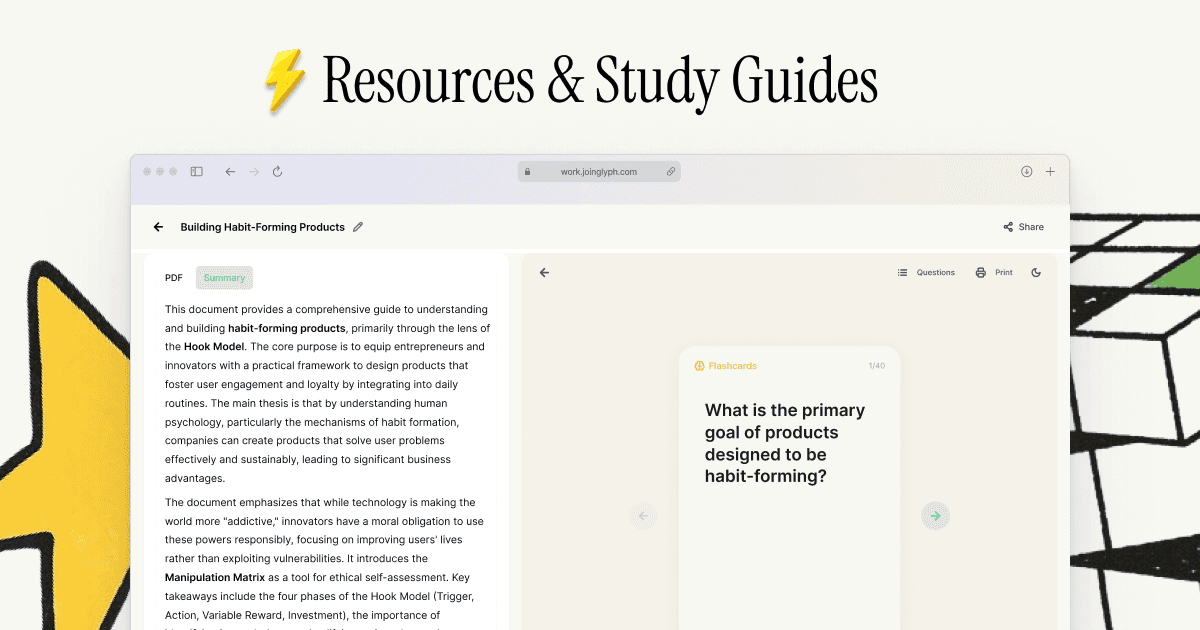
Duetoday is an AI-powered learning OS that turns your study materials into personalised, bite-sized study guides, cheat sheets, and active learning flows.

More Chatgpt Prompts
GET STARTED

Most Powerful Study Tool
for Students and Educators

Try Out Free. No Credit Card Required.
