
Chatgpt prompts for condensing notes [Free Guide]
Discover the best ChatGPT prompts for condensing notes. Learn how to turn long lectures and messy PDFs into structured, high-retention study guides and summaries.
Use Study AI Free
ChatGPT Prompts for Condensing Notes
Students often struggle with 'information overload,' where hours of lecture recordings and hundreds of PDF pages become impossible to review before an exam. These ChatGPT prompts unlock a faster way to extract core concepts, ensuring you spend less time reading fluff and more time mastering the material. Copy and paste the prompts below to transform your messy notes into streamlined study assets.
Quick Answer: The Best Way to Condense Notes
To get the most out of ChatGPT, don't just ask it to 'summarize.' Instead, paste your full text and specify the output format you need. The Golden Rule: Always provide your specific source material (transcripts, slides, or PDFs) rather than asking the AI to pull from its general knowledge. This prevents hallucinations and ensures the condensed version matches your actual curriculum.
How to Use These Prompts
Step 1: Paste your raw material—whether it is a lecture transcript, textbook chapter, or messy handwritten notes.
Step 2: Set your constraints, such as the target length (e.g., '1 page') or the academic level (e.g., 'Medical Student').
Step 3: Ask for specific outputs like bulleted summaries or key-term definitions to check for gaps.
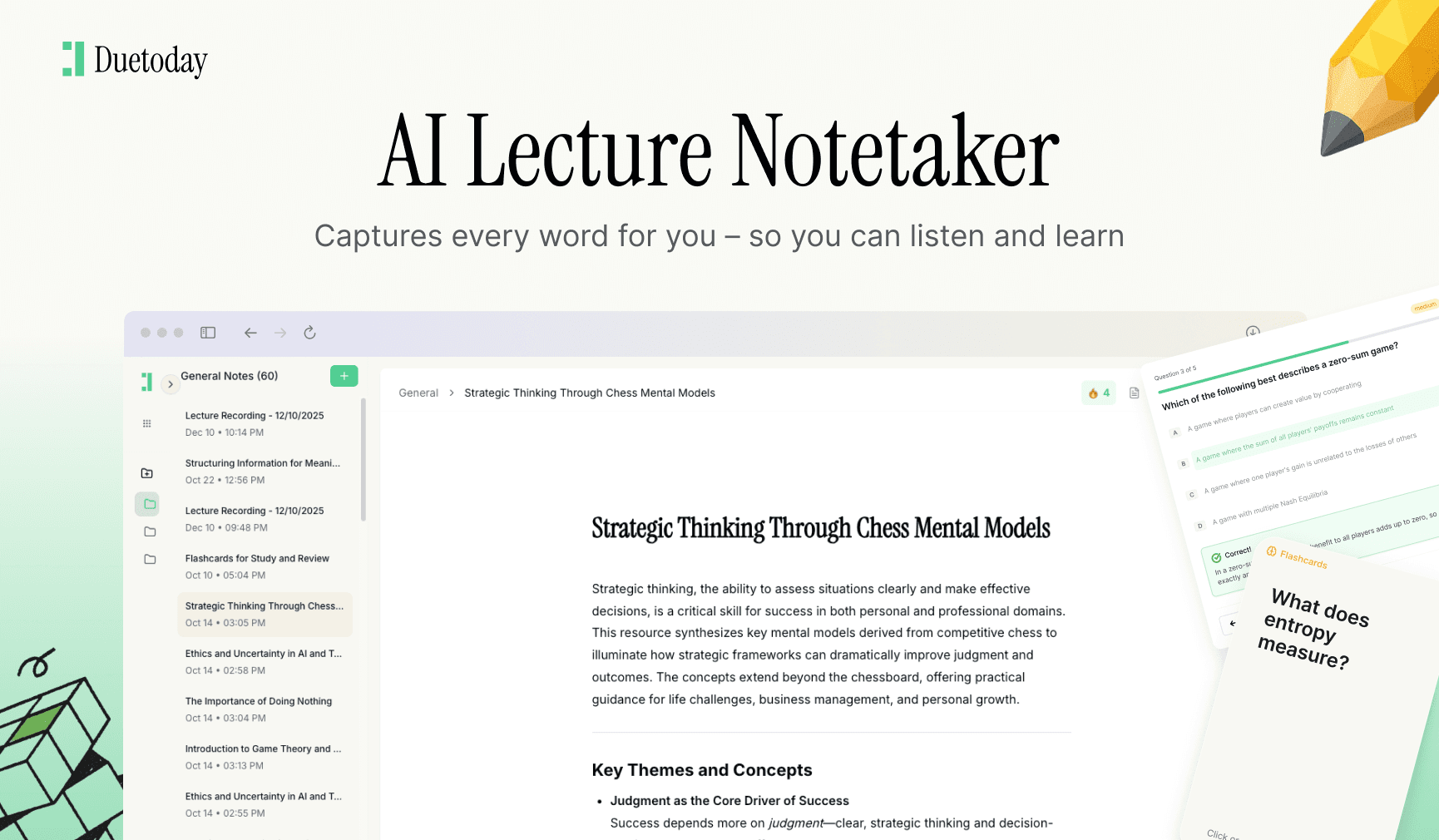
Step 4: Move the output into a retention system, like Duetoday, to turn those condensed notes into active recall flashcards.
Bucket A: Understand the Core Concepts
The Executive Summary Prompt
Use this when you have a massive amount of text and need to know the "big picture" in under two minutes.
A good answer provides a high-level narrative that connects the dots without losing technical accuracy.
The 'Explain Like I\'m 5' Refinement
Use this for complex technical subjects where the jargon is making the notes harder to read.
A good answer replaces complex phrasing with clear analogies while preserving the essential vocabulary.
Bucket B: Remember and Organize
The Hierarchical Outline Prompt
Use this to turn a rambling transcript into a structured, logical document.
A good answer looks like a professionally organized study guide that is easy to skim.
The Table of Comparisons
Use this when your notes cover multiple theories, periods, or biological processes that need to be compared.
A good answer provides a side-by-side view that makes differences immediately obvious.
Bucket C: Practice and Recall
The 'Gap Analysis' Prompt
Use this to find what's missing in your notes after you've condensed them.
A good answer identifies missing nuances or edge cases you might have trimmed too aggressively.
The 20/80 Rule Compression
Use this for last-minute cramming when you only have time for the most impactful information.
A good answer is ruthless, stripping away everything but the high-yield material.
Common Mistakes When Condensing Notes
Asking without source text: ChatGPT will guess based on general knowledge, which might contradict your professor.
Ignoring formatting: Without asking for bullets or tables, you often get another long, dense paragraph.
Neglecting citations: Always double-check that the AI hasn't swapped dates or names during the shortening process.
Passive reading: Simply reading a condensed summary isn't enough; you must turn it into a quiz or flashcards.
Master Your Material Instantly
Pick two of the prompts above and start simplifying your study load today. If you want to skip the manual prompting and have your notes, PDFs, and YouTube videos automatically turned into a connected learning brain, Duetoday is the workspace you need.

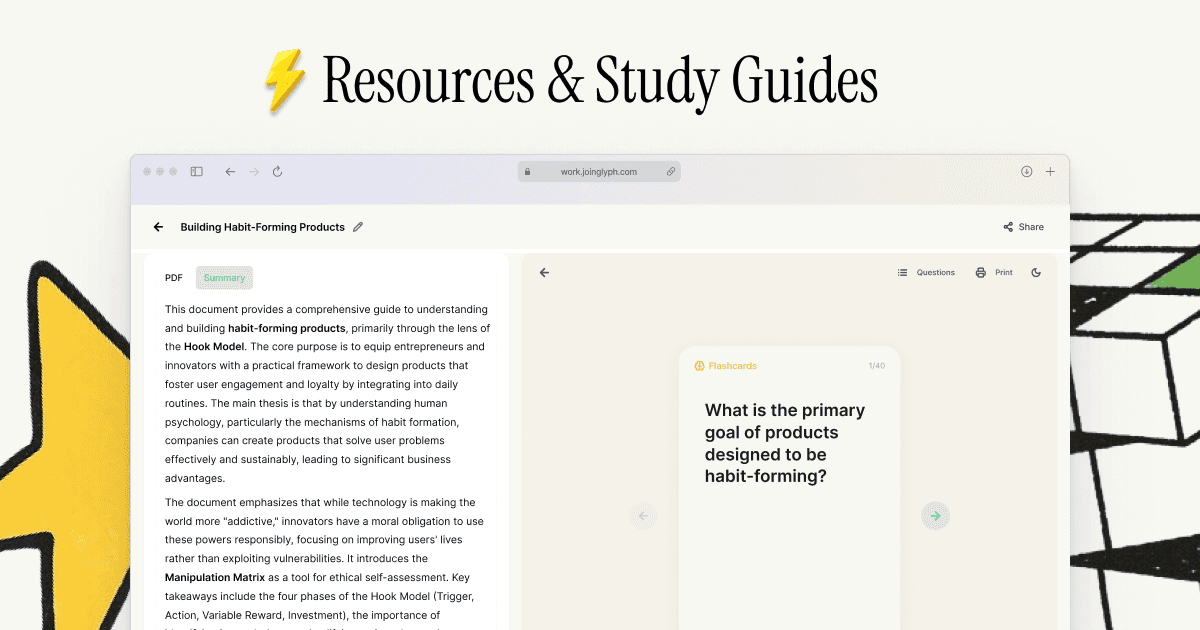
Duetoday is an AI-powered learning OS that turns your study materials into personalised, bite-sized study guides, cheat sheets, and active learning flows.
More Chatgpt Prompts
GET STARTED
Most Powerful Study Tool
for Students and Educators
Try Out Free. No Credit Card Required.
