>

>

ChatGPT prompts for Citations: Get accurate sources fast.

Chatgpt prompts for Citations [Free Guide}

Learn how to use ChatGPT for citations without hallucinations. Use our proven prompts to generate APA, MLA, and Chicago styles accurately.

Use Study AI Free
ChatGPT Prompts for Citations (Without Making Stuff Up)

Students and researchers often struggle with the tedious manual labor of formatting bibliographies and the constant fear that AI will hallucinate fake sources. These prompts unlock a world where you can generate accurate, perfectly formatted citations and cross-reference your claims in seconds. Copy/paste the prompts below to streamline your research workflow while ensuring academic integrity.

Quick Answer: The Best Way to Cite with AI

To get accurate citations from ChatGPT, never ask it to 'find' sources from its own memory; it will likely hallucinate authors or titles. Instead, paste the specific text, DOI, or URL into the chat and ask it to format those details. Always tell ChatGPT: 'Only use the provided text' and 'If the information is missing, state it.' This ensures your bibliography matches your actual research materials rather than a generated guess.

How to Use These Prompts

  • Step 1: Provide the Source: Copy the text, title, author, and publication date (or the link) into the prompt.

  • Step 2: Set Your Style: Explicitly state if you need APA 7th Edition, MLA 9th, Chicago, or Harvard style.

  • Step 3: Define Output: Ask for both the in-text citation and the full reference list entry.

  • Step 4: Verify & Store: Double-check the DOI or URL and save the entry into a tool like Duetoday for long-term recall.

Bucket A: Understand & Map Your Sources

Source Credibility Scan

Use this when you aren't sure if a source is worth citing in your academic paper.

Analyze the following text and identify the author's credentials, the publication date, and the primary argument. Determine if this is a peer-reviewed or credible source for a [Level, e.g., Undergraduate] paper. [Paste Text]

A good answer identifies specific markers of credibility and warns you of potential biases.

In-Text Parenthetical Mapper

Use this to find exactly where an idea should be cited within your drafted paragraph.

I am going to paste a paragraph and a source. Please insert the correct [APA/MLA] in-text citations into my paragraph where the source's ideas are mentioned. Use this source: [Source Details]. Paragraph: [Paste Paragraph].

A good answer returns your text with the citations placed precisely after the relevant claims.

Source Comparison Summary

Use this to synthesize two different sources for a literature review.

Compare Source A and Source B. Identify one area where they agree and one area where they conflict regarding [Topic]. Provide a summary with [Style] citations for both. Source A: [Details] Source B: [Details]

A good answer provides a nuanced comparison that is ready to be inserted into your 'Methods' or 'Discussion' section.
Bucket B: Remember & Organize

The Citation Style Converter

Use this when you have a bibliography in one style but need it in another.

Convert the following list of [Current Style] citations into [Target Style, e.g., Vancouver]. Ensure all punctuation and italics follow the official manual of style. [List Citations]

A good answer provides a perfectly re-formatted list that adheres to the strict rules of the new style.

Annotated Bibliography Generator

Use this to create a brief summary and evaluation of your sources for a research proposal.

Write a 150-word annotation for the following source. Include a summary of the thesis, an evaluation of its research methods, and how it fits into a study about [Topic]. Source: [Paste Text/Link]

A good answer balances summary with critical evaluation, formatted under the citation.

Bucket C: Practice & Verify

The Hallucination Check

Use this to verify if a citation you previously generated actually exists.

I have this citation: [Paste Citation]. Please check if the DOI or URL is valid and confirm the author exists. Note: Do not guess; if you cannot find it in your training data up to 2023, let me

A good answer acts as a safety net, flagging potentially 'fake' titles or broken links.

Direct Quote Formatter

Use this for long block quotes that require special formatting rules.

I want to include this quote from [Author] in my paper. It is over 40 words. Show me how to format this as a block quote in [Style], including the correct page number citation. Quote: [Paste Quote]

A good answer shows the exact indentation and placement of the period according to the style guide.

Common Mistakes to Avoid

  • Asking for 'Relevant Sources': ChatGPT often invents convincing-sounding paper titles that don't exist.

  • Ignoring Edition Updates: AI might use APA 6th instead of 7th unless you specify the edition.

  • Blind Trust: Failing to click the DOI link to see if it actually leads to the paper mentioned.

  • No Source Context: Asking for a citation without providing the page number or specific chapter.

Master Your Research with Duetoday

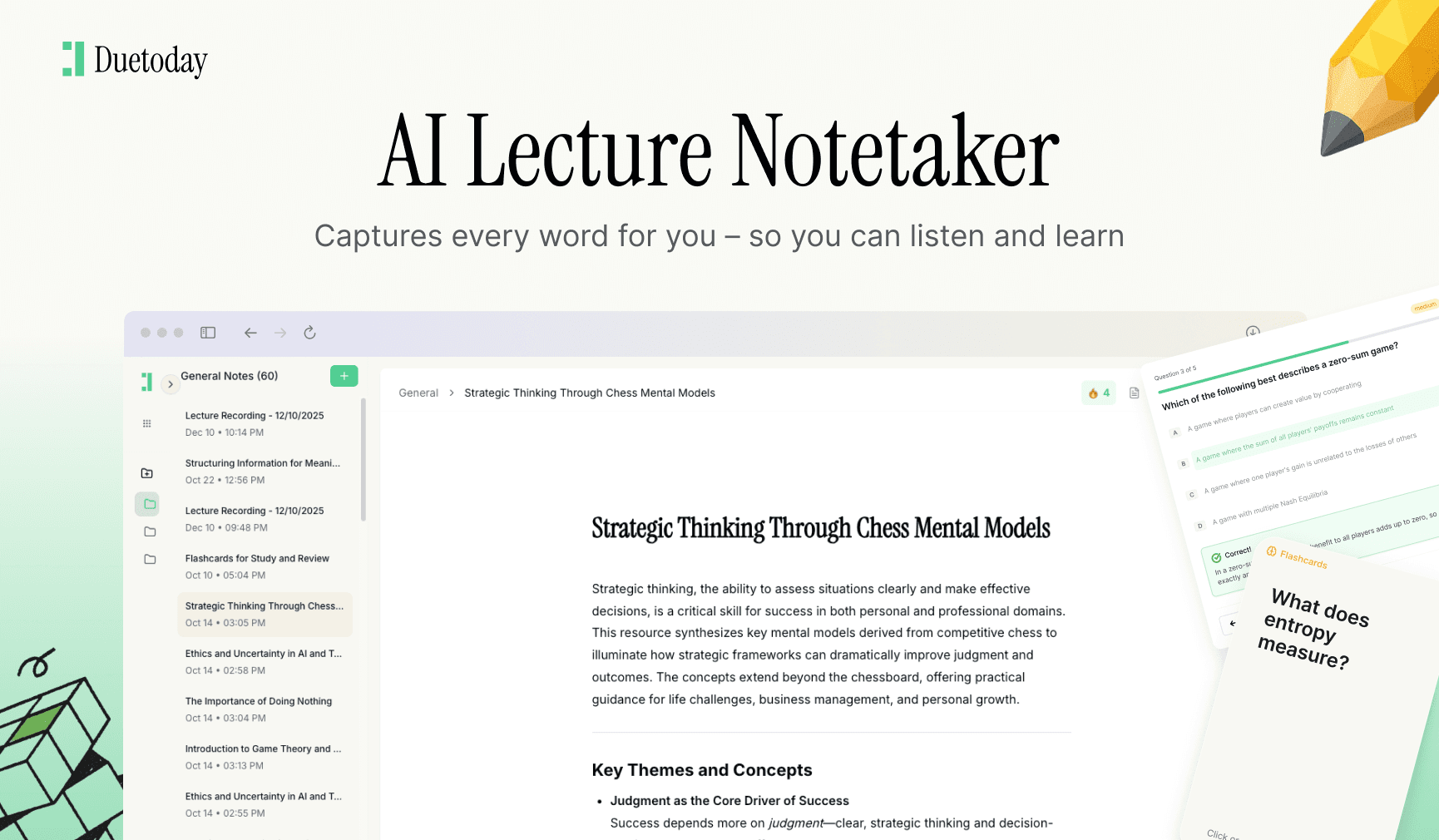
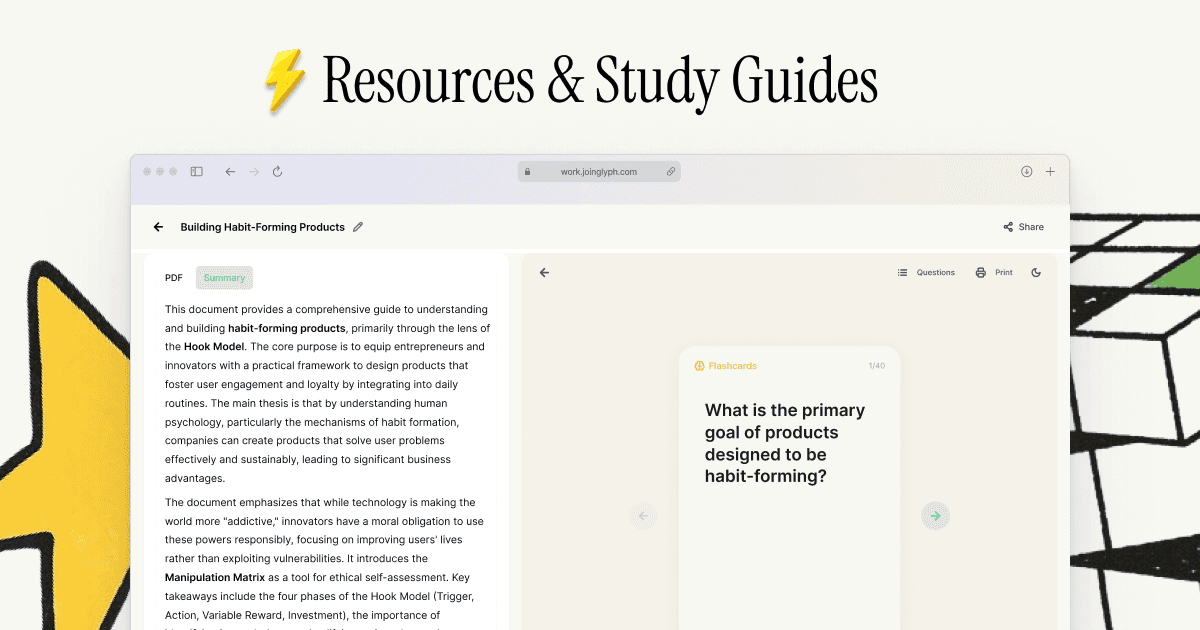
If you want this automated without the manual prompting, Duetoday is your solution. Upload your research papers, PDFs, and links directly into your AI workspace. Duetoday’s 'AI Brain' identifies your materials, connects the dots between sources, and helps you generate citations and study guides without the risk of hallucination. It’s a unified place to study where your notes, calendar, and sources live together.

Ready to spend less time formatting and more time learning? Start using Duetoday to organize your research today.

Duetoday is an AI-powered learning OS that turns your study materials into personalised, bite-sized study guides, cheat sheets, and active learning flows.

More Chatgpt Prompts
GET STARTED

Most Powerful Study Tool
for Students and Educators

Try Out Free. No Credit Card Required.