
Chatgpt prompts for case study analysis [Free Guide]
Master business and academic case studies with these ChatGPT prompts. Learn how to extract insights, identify problems, and generate solutions quickly.
Use Study AI Free
ChatGPT Prompts for Case Study Analysis
Analyzing complex case studies often feels like drowning in a sea of data, where identifying the core problem and relevant frameworks takes hours of manual effort. These ChatGPT prompts unlock a systematic way to dissect business scenarios, identify strategic bottlenecks, and generate evidence-based recommendations in minutes. Simply copy and paste the prompts below to transform raw case data into structured, high-level analysis.
Quick Answer: The Best Way to Analyze Case Studies with AI
The most effective way to use ChatGPT for case study analysis is to provide the full text of the case first to prevent the AI from hallucinating details. Use a structured template that asks for: 1) Executive Summary, 2) Root Cause Identification, 3) Framework Analysis (SWOT/PESTEL), and 4) Actionable Recommendations. Always replace [Topic/Level] and [Company Name] with your specific details. The golden rule: Never ask for a solution without first asking the AI to summarize the key constraints and stakeholders mentioned in your provided text.
How to Use These Prompts Effectively
Step 1: Paste your material: Provide the full text of the case study, lecture notes, or financial statements to the AI.
Step 2: Set constraints: Define your perspective (e.g., "Analyze this as a McKinsey consultant") and the academic level (MBA, Undergraduate).
Step 3: Ask for output + self-check: Use the prompts to generate a draft, then ask the AI to find evidence in the text that contradicts its own conclusion to ensure a balanced view.
Step 4: Convert into Spaced Repetition: Export the key takeaways into flashcards or a study guide for exam preparation.
Bucket A: Understand and Dissect
The Stakeholder Mapper
Use this when you need to understand who is involved and what their motivations are.
A good answer will clearly distinguish between internal and external stakeholders and highlight conflicting interests.
The Root Cause Investigator
Use this to move beyond symptoms and find the actual source of the business failure.
A good answer avoids surface-level observations and identifies systemic or structural issues.
The Framework Specialist
Use this to apply classic business models like SWOT, PESTEL, or Porter’s Five Forces.
A good answer provides specific examples from the case for every quadrant of the framework.
Bucket B: Remember and Internalize
The Concept Simplifier
Use this to understand the complex economic or management theories mentioned in the case.
A good answer uses simple analogies followed by direct, evidence-based applications.
Technical Terminology Flashcards
Use this to prepare for the vocabulary and jargon used throughout the case.
A good answer focuses on terms crucial to the financial or operational analysis of the case.
Bucket C: Practice and Execute
The Socratic Tutor
Use this to prepare for cold-calling or classroom discussions.
A good answer provides constructive criticism and pushes you to think deeper about the implications of your choices.
The Counter-Argument Generator
Use this to prepare for debates or to strengthen your final recommendation.
A good answer will point out risks, financial constraints, or market realities you might have missed.
The Executive Mastermind
Use this to create a final action plan or executive summary.
A good answer is realistic, time-bound, and directly addresses the core issues identified earlier.
Common Mistakes to Avoid
Asking without providing source text: ChatGPT may use outdated or general information about a company rather than the specific details in your assigned case.
Not defining the format: If you need a memo, ask for a memo. Otherwise, the output may be too conversational for academic or professional use.
Letting it hallucinate citations: Always double-check page numbers or specific quotes. AI can sometimes 'hallucinate' the location of information.
Ignoring the 'Why': Don't just ask for the answer; ask for the reasoning so you can defend it in class.
Mastering case studies is about more than just finding the 'right' answer—it's about developing the analytical framework to handle any business problem. Pick two of the prompts above and start your analysis now. If you want to automate this entire workflow and keep your notes organized, Duetoday can help you turn these insights into long-term knowledge.

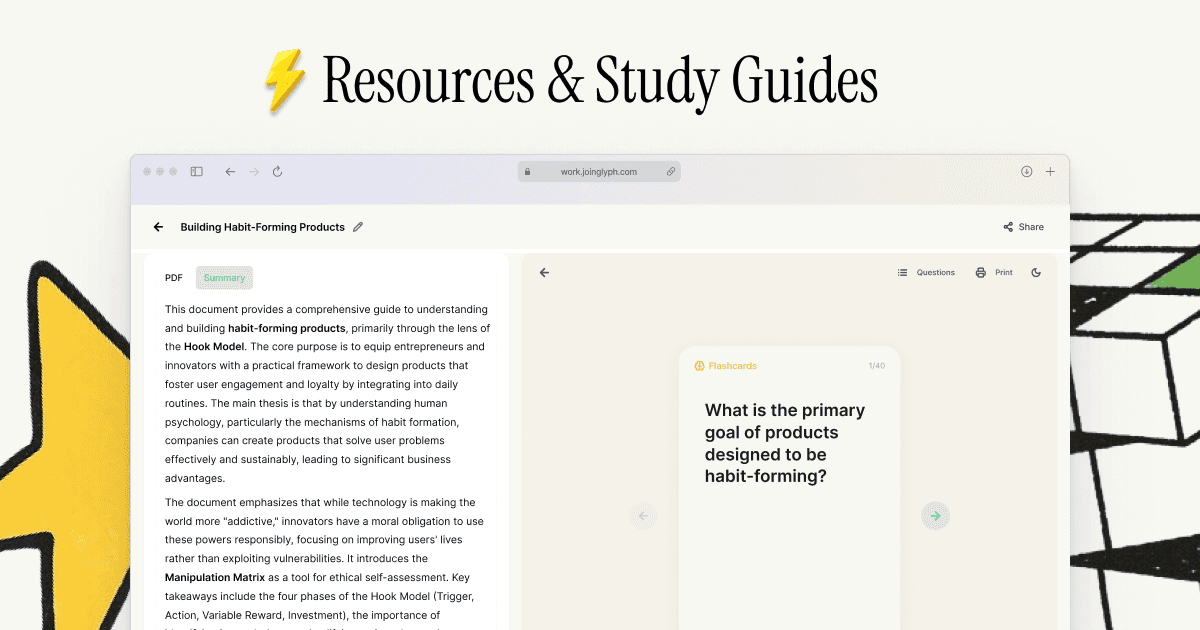
Duetoday is an AI-powered learning OS that turns your study materials into personalised, bite-sized study guides, cheat sheets, and active learning flows.
More Chatgpt Prompts
GET STARTED
Most Powerful Study Tool
for Students and Educators
Try Out Free. No Credit Card Required.
