
Chatgpt prompts for Building Concept Maps [Free Guide]
Master complex subjects with these expert ChatGPT prompts for building concept maps. Learn how to visualize relationships and boost retention instantly.
Use Study AI Free
ChatGPT Prompts for Building Concept Maps
Students often struggle to see the 'big picture' when drowning in hundreds of pages of lecture notes and disconnected facts. These ChatGPT prompts unlock a deeper level of understanding by forcing the AI to map out the hidden relationships between ideas, boosting your long-term retention and mental clarity. Just copy and paste the prompts below to transform your messy notes into a structured visual framework.
Quick Start: How to Map with AI
To get the best results, don't just ask for a map; provide your specific source material. Copy your text into the chat and use this framing: 'Based on the notes provided below, create a hierarchical concept map for [Topic] at a [Undergraduate/Pro] level. Use [Mermaid.js] format.' Replace the brackets with your details. Remember: AI works best when you feed it your own notes so it doesn't hallucinate irrelevant information.
How to Use These Prompts Effectively
Step 1: Feed the Brain: Paste your lecture slides, PDF transcripts, or YouTube notes first.
Step 2: Set Hierarchy: Define the central node (the main topic) and the depth level (how many sub-branches).
Step 3: Define Output: Ask for a nested list, a table of relationships, or code for a diagramming tool like Mermaid.js.
Step 4: Execute Recall: Once mapped, ask ChatGPT to quiz you on the connections between the nodes to ensure spaced repetition.
Bucket A: Understand the Structure
The Core Pillar Map
Use this when you have a massive new topic and need to see the primary branches before diving into details.
A good answer provides a clear hierarchy where the most important concepts are at the top, branching down into specifics.
The Socratic Relationship Builder
Use this to understand the 'why' behind the connections in your map.
A good answer doesn't just give the answer but guides your logic to help the connections stick in your memory.
Bucket B: Remember and Connect
The Analogy Bridge
Use this when a concept feels too abstract to visualize.
A good answer creates a vivid mental image that makes the structural relationships impossible to forget.
The 'Compare and Contrast' Node
Use this to clarify the boundaries between two similar or confusing ideas.
A good answer sharpens your focus on the nuances that often appear in exam questions.
Bucket C: Practice and Refine
The 'Missing Link' Challenge
Use this to test if you actually understand the map you just built.
A good answer facilitates an active recall session that forces you to retrieve information from memory.
The Expert Summary Drill
Use this to ensure your map isn't just a collection of words, but a functional tool.
A good answer demonstrates that the structure of the map is sound across different levels of complexity.
Common Mistakes to Avoid
Information Overload: Don't try to map 50 concepts at once. Stick to 10-15 per map for better cognitive load management.
Vague Verbs: Ensure your 'links' (the lines between nodes) use descriptive verbs like 'causes', 'inhibits', or 'consists of' rather than just 'is related to'.
Ignoring Hierarchy: A map without a clear 'top-down' or 'center-out' flow becomes a confusing web that is hard for the brain to scan.
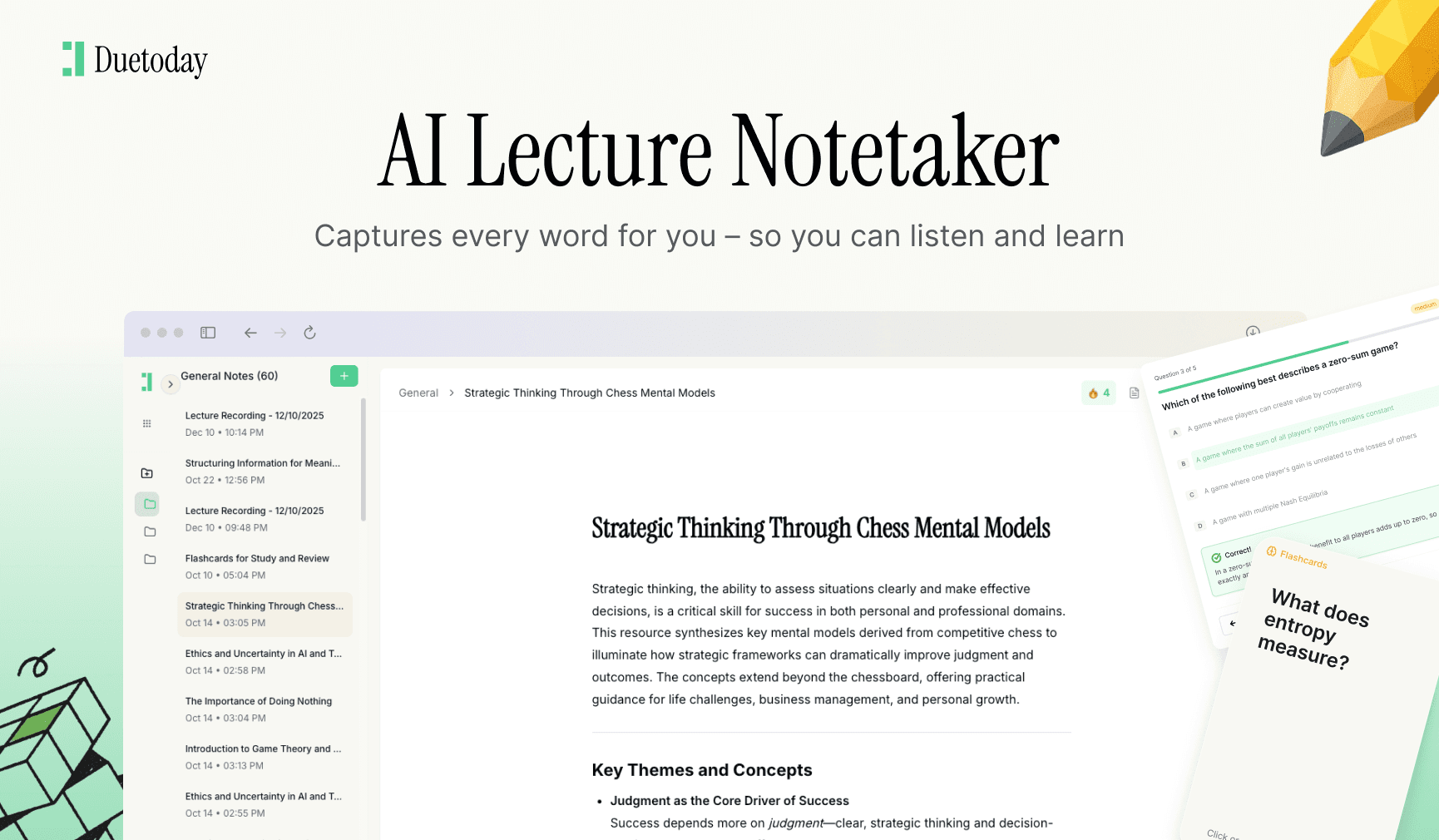
Pick two prompts from above and start mapping your current chapter. If you're tired of manual prompting, Duetoday can handle the organization for you.

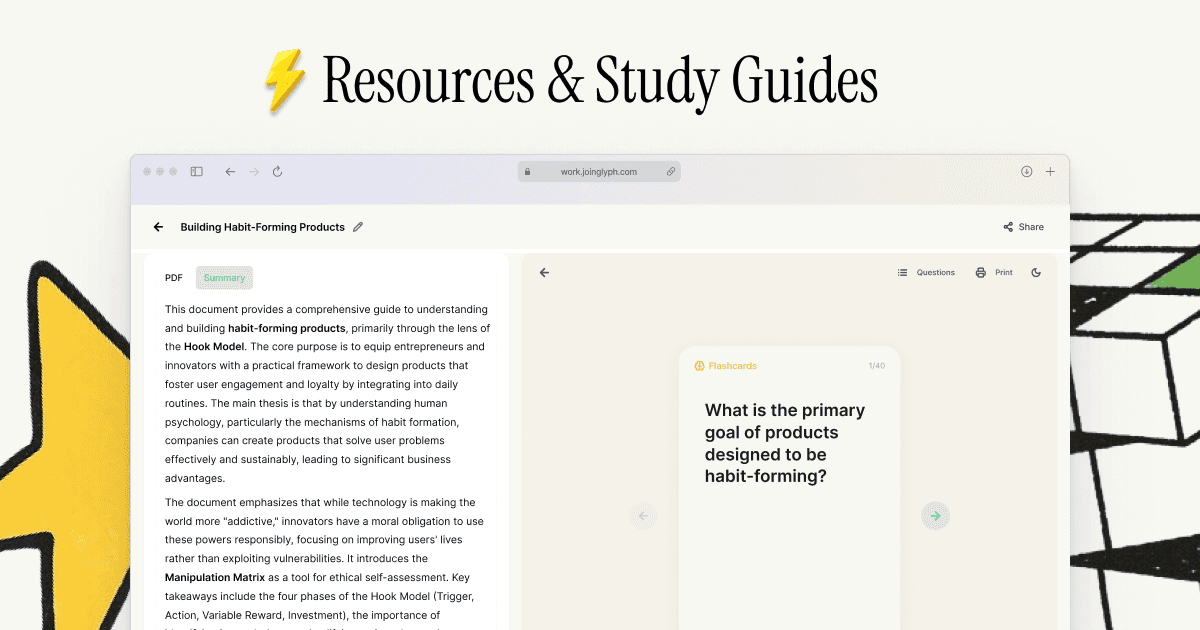
Duetoday is an AI-powered learning OS that turns your study materials into personalised, bite-sized study guides, cheat sheets, and active learning flows.
More Chatgpt Prompts
GET STARTED
Most Powerful Study Tool
for Students and Educators
Try Out Free. No Credit Card Required.
