
Chatgpt prompts for Biology Studying [Free Guide]
Discover the best ChatGPT prompts for biology studying. Learn how to simplify complex biological systems, generate practice quizzes, and boost retention.
Use Study AI Free
ChatGPT Prompts for Biology Studying
Students often struggle with the sheer volume of memorization and the complexity of interconnected systems required for biology. These prompts unlock a faster way to deconstruct cellular processes, metabolic pathways, and ecological cycles for better long-term retention. Use the copy/paste prompts below to transform your notes into a personalized biology tutor.
Quick Start Guide
To get the most out of these biology prompts, follow this layout: [Paste your lecture notes/textbook snippet] + [Insert Prompt]. Always specify your level (e.g., AP Biology, Undergraduate, or Medical School) and ask the AI to cite specific processes from your provided text to ensure accuracy and prevent hallucinations.
How to Use These Prompts
Step 1: Feed the Context: Paste your specific biology materials, such as slide transcripts or textbook chapters, so ChatGPT doesn't rely on generic (and potentially outdated) data.
Step 2: Define the Constraints: Tell the AI your academic level and the specific format you need, like a table, a list, or a narrative explanation.
Step 3: Verification: Ask the AI to identify potential gaps in your understanding or to quiz you on the "why" behind a biological mechanism.
Step 4: Active Recall: Convert the output into a structured format for spaced repetition tools.
Bucket A: Understand Complex Systems
The "Explain Like I'm Five" Bio-Analogy
Use this when a concept like Oxidative Phosphorylation or Action Potentials feels too abstract.
"Explain [Complex Biology Concept] using a simple real-world analogy. Start with a high-level overview, then break down the 3 most important steps in chronological order. Avoid jargon in the first paragraph."
A good answer provides a relatable metaphor (like a factory or a post office) that clarifies the underlying logic of the biological process.
The Interaction Mapper
Perfect for understanding how different systems or molecules interact within a larger pathway.
"Based on my notes, create a summary table showing how [Molecule/System A] affects [Molecule/System B]. Include columns for 'Trigger', 'Action', and 'Resulting Biological Change'."
A good answer uses a structured table to visualize cause-and-effect relationships in physiology or biochemistry.
Socratic Bio-Tutor
Use this to test your conceptual depth rather than just rote memorization.
"I want to learn [Topic]. Don't give me the answers immediately. Ask me three progressive questions that guide me through the logic of this concept, one by one. Evaluate my answers before moving to the next."
A good answer mimics a tutor’s dialogue, pushing you to derive the biological principles yourself.
Bucket B: Remember and Organize
Structure-Function Linker
Use this to memorize anatomy or organelle functions by linking them to their physical traits.
"List the physical structures of [Biological Entity] and for each, explain how its specific shape or composition allows it to perform its function. Use a bulleted list."
A good answer connects the 'what' with the 'how', making it easier to remember the purpose of biological features.
Spaced Repetition Generator
Use this to prepare for long-term retention during finals week.
"From the provided text, extract 5 high-yield facts and turn them into a Q&A format suitable for flashcards. Focus on the concepts most likely to appear on an exam."
A good answer provides concise, clear questions and answers that test one specific fact at a time.
Bucket C: Practice for Exams
The Mutation/Error Predictor
Great for genetics or molecular biology to see if you really understand a pathway.
"In the biological process of [Process], what would happen if [Enzyme/Component] was missing or inhibited? Explain the immediate cascade effect and the ultimate impact on the organism."
A good answer demonstrates the importance of each step in a system by exploring the consequences of failure.
Biology MCQ Generator
Use this to simulate exam conditions once you've finished a chapter.
"Generate 4 multiple-choice questions about [Topic] based on the attached notes. Include one 'trick' question that addresses a common misconception. Provide an answer key with explanations at the very end."
A good answer challenges your application of the material, not just your ability to recognize terms.
The "Teach it Back" Drill
Use this to identify your own blind spots.
"I will explain [Biology Concept] to you. Please act as a professor. Identify any inaccuracies in my explanation, point out what I missed, and ask me one follow-up question to test my understanding."
A good answer provides constructive feedback and ensures you can articulate the material in your own words.
Common Mistakes to Avoid
Ignoring Sources: Don't ask "Explain Photosynthesis" without context; your professor might emphasize different steps than the AI's generic training data.
Surface-Level Learning: Only asking for summaries prevents you from practicing the "Active Recall" needed for biology exams.
Hallucination Risks: Biology involves specific names and numbers; always cross-verify AI-generated dates or chemical formulas with your textbook.
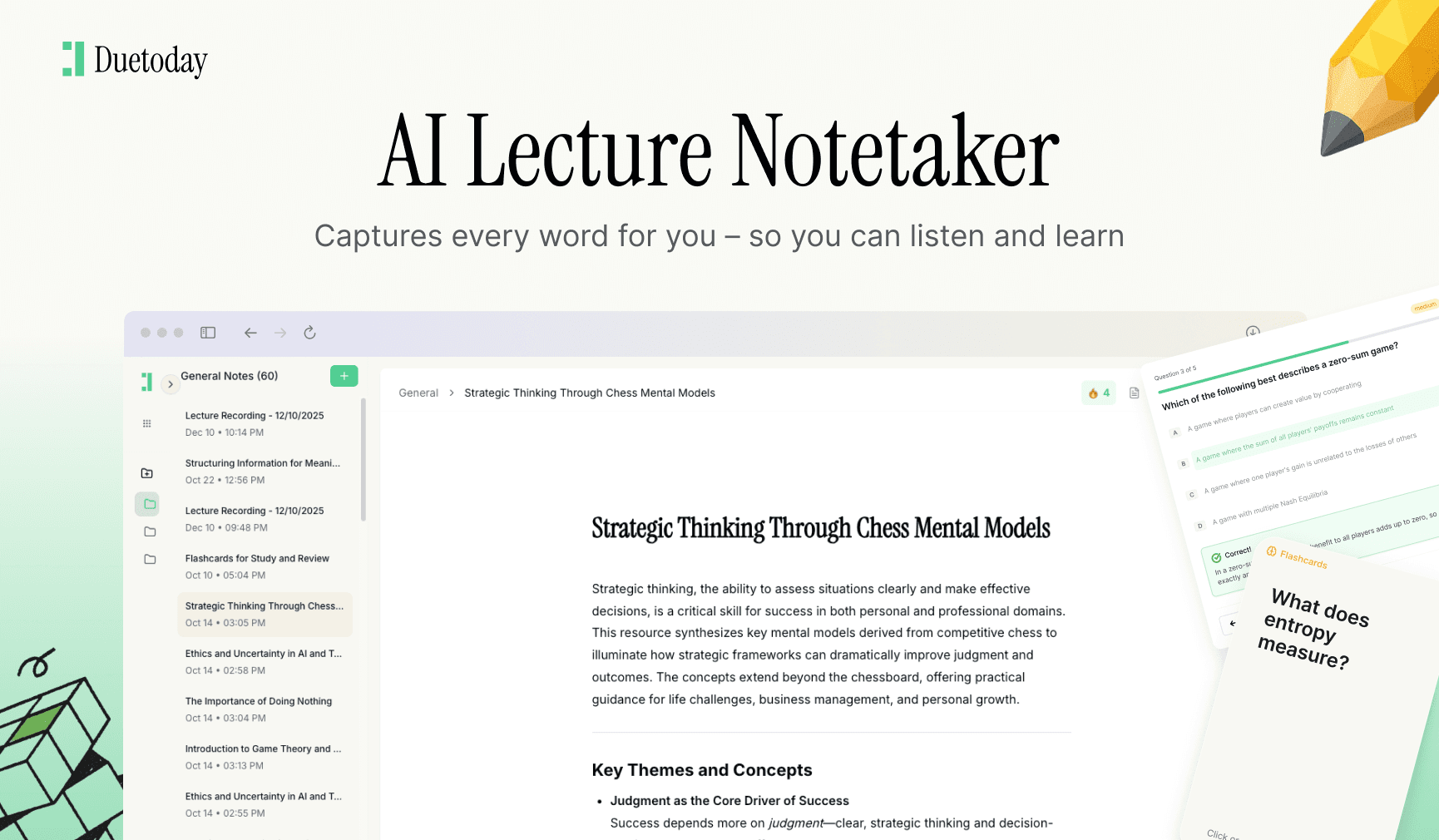
Pick two prompts from the Understand bucket and start today. If you want this entire process automated—where your notes are instantly converted into study tools—give Duetoday a try.

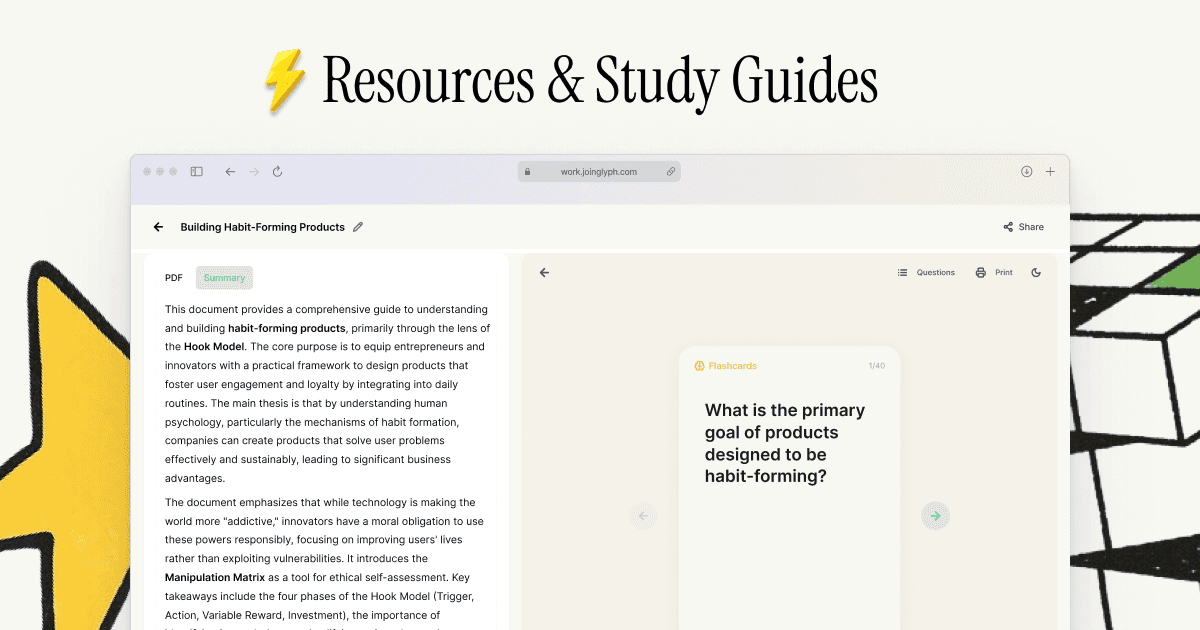
Duetoday is an AI-powered learning OS that turns your study materials into personalised, bite-sized study guides, cheat sheets, and active learning flows.
More Chatgpt Prompts
GET STARTED
Most Powerful Study Tool
for Students and Educators
Try Out Free. No Credit Card Required.
