
>

>

ChatGPT prompts for answer explanations that help you learn why, not just what.

Chatgpt prompts for Answer Explanations [Free Guide]

Discover the best ChatGPT prompts for answer explanations. Move beyond the correct answer and understand the logic, reasoning, and core concepts with these prompts.

Use Study AI Free
ChatGPT Prompts for Answer Explanations

Many students struggle to understand why an answer is correct, often getting stuck memorizing solutions rather than mastering underlying principles. These prompts unlock deeper conceptual clarity, allowing you to bridge the gap between getting a question right and actually understanding the logic behind it. Simply copy and paste the prompts below to turn ChatGPT into your personal academic tutor.

How to Get the Best Explanations

To get a high-quality explanation from ChatGPT, don't just paste a question; provide context. Follow this quick blueprint:

  • Input: Paste the question and the correct answer (if known).

  • Variable: Specify your current level (e.g., High School, Undergrad, Professional).

  • The Rule: Always provide your source material or textbook excerpts to ensure the AI doesn't hallucinate definitions.

How to Use These Prompts

Using these prompts effectively requires a systematic approach to active learning. Follow these steps for the best results:

  • Step 1: Paste your study material, lecture notes, or the specific practice problem.

  • Step 2: Set constraints such as 'explain in 3 steps' or 'use an analogy for a beginner.'

  • Step 3: Ask ChatGPT to explain the logic and then ask it to spot potential pitfalls or common mistakes.

  • Step 4: Convert the final explanation into a summary or a flashcard for future retrieval.

Bucket A: Understand the Logic

The 'First Principles' Breakdown

Use this when you understand the answer but have no idea how the logic connects from start to finish.

"Explain the logic behind this answer using first principles. Break it down into the most basic building blocks of the concept before showing how they combine to reach the final conclusion. [Paste Question & Answer here]"

A good answer will start with definitions and build a logical ladder to the solution.

The Analogy Bridge

Use this when a concept feels too abstract or technical to grasp visually.

"Explain why this is the correct answer using a simple real-world analogy. Avoid technical jargon in the first half of your explanation, then map the analogy back to the technical terms. [Paste Question]"

A good answer makes you go 'Aha!' by relating the problem to a common daily experience.

The 'Why Not' Eliminator

Use this when you are stuck between two choices and need to know why the distractors are wrong.

"Explain why [Answer A] is correct, but specifically detail why [Answer B] and [Answer C] are incorrect. What is the fundamental misunderstanding that would lead someone to pick the wrong options?"

A good answer clarifies the 'distractors' and strengthens your test-taking intuition.
Bucket B: Remember and Connect

The Socratic Tutor

Use this when you want to be guided to the answer rather than being given it immediately.

"Act as a Socratic tutor. Don't give me the explanation directly. Instead, ask me 3 leading questions that will help me derive the correct answer logic myself based on [My Notes]."

A good answer will challenge your thinking and lead to better long-term retention.

The Concept Map Summary

Use this to see how this specific answer fits into the larger subject context.

"Explain this answer and then list 3 related concepts I need to understand to fully master this topic. Show how they are all interconnected in a simple list."

A good answer provides a 'big picture' view of your curriculum.

Bucket C: Practice and Recall

The 'Teach It Back' Drill

Use this to test if you actually understood the explanation you just read.

"I will now explain this concept back to you. Please critique my explanation, highlight what I missed, and tell me if my logic is sound or if I have any blind spots."

A good answer will be a constructive critique of your own words.

The Variable Swap

Use this to ensure you didn't just memorize one specific problem.

"Now that you've explained this answer, generate a new practice question that uses the same logic but with different variables and a slightly different scenario. Provide the answer in a hidden spoiler tag."

A good answer provides a fresh challenge to test your application skills.

The 'Common Pitfalls' Warning

Use this to avoid making the same mistake twice on an exam.

"List the 3 most common mistakes students make when answering this type of question. Explain the logic shift required to avoid these specific errors."

A good answer acts as a shield against common exam 'traps.'

Common Mistakes to Avoid

  • No Source Material: Asking for explanations without providing the context leads to hallucinations.

  • Oversimplification: Not defining your academic level may result in an explanation that is too childish or too advanced.

  • Passive Reading: Simply reading the explanation without asking ChatGPT to 'quiz' you on it later.

  • Blind Trust: Not double-checking technical citations or specific dates provided by the AI.

Automate Your Learning with Duetoday

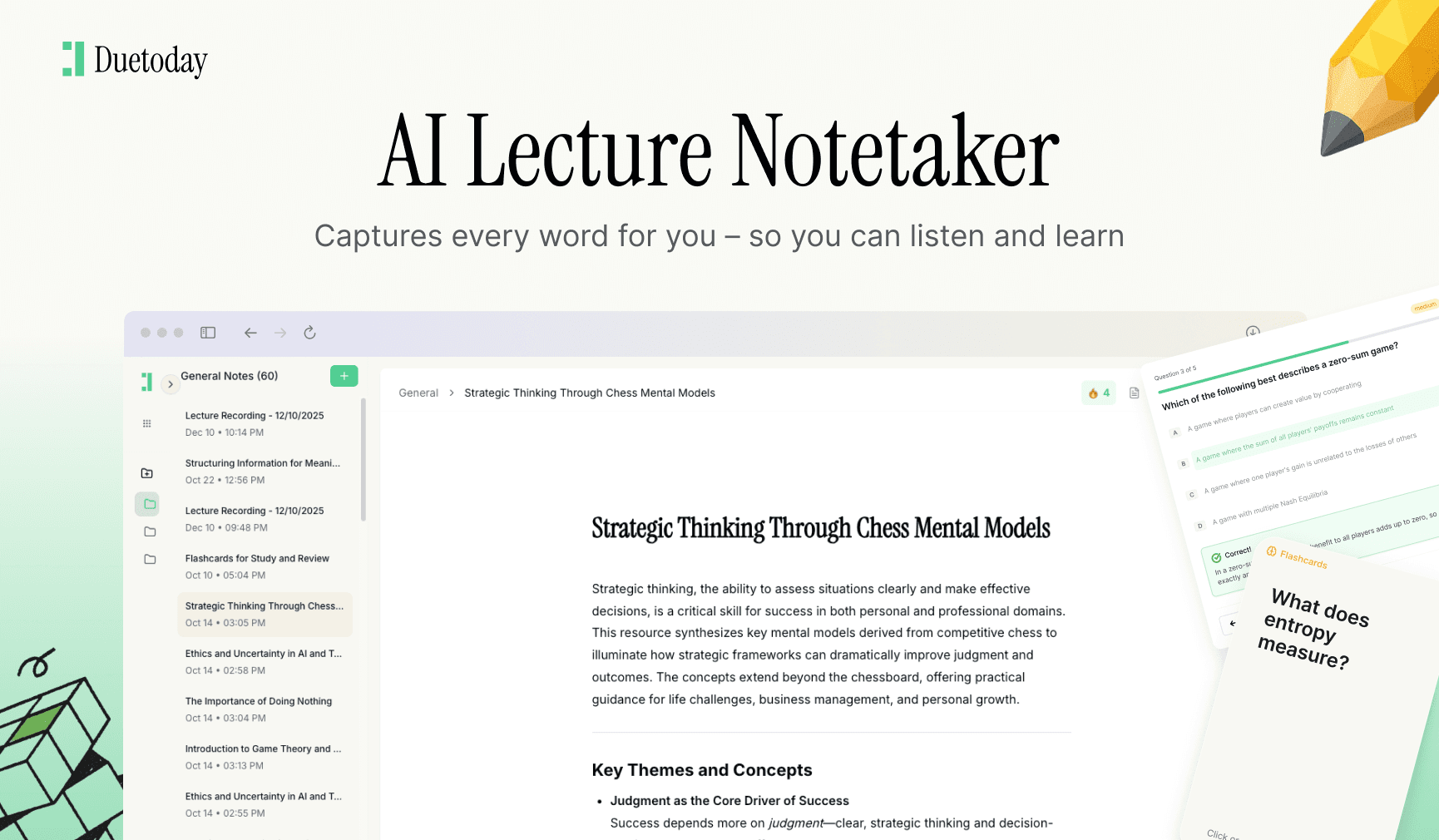
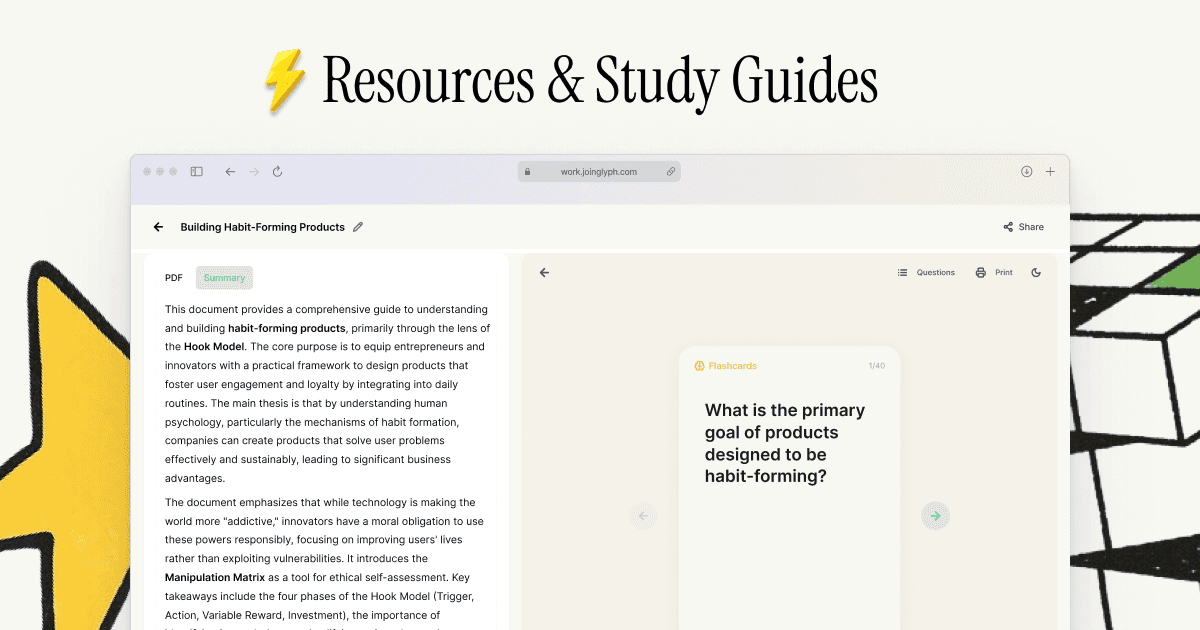
If you want this process automated without the constant copy-pasting, Duetoday is your solution. Simply upload your PDFs, lecture recordings, or Notion notes, and our retention-first workspace does the heavy lifting. Duetoday connects your materials, generates instant summaries, and creates Q&A sets that explain the 'why' behind every concept. Stop jumping between tools and start building your AI learning brain.

Pick two prompts from this list and start improving your understanding right now. Want it done automatically? Let Duetoday handle the logic for you.

Duetoday is an AI-powered learning OS that turns your study materials into personalised, bite-sized study guides, cheat sheets, and active learning flows.

More Chatgpt Prompts
GET STARTED

Most Powerful Study Tool
for Students and Educators

Try Out Free. No Credit Card Required.
