Top 6 Time Management Tips for Students

Time management is one of the biggest challenges students face. It shows up everywhere—on Reddit threads where students vent about procrastinating until 3 a.m., in dorm conversations about falling behind on readings, and in the quiet moments when you ask yourself why your days feel shorter than everyone else’s. Balancing classes, assignments, exams, part-time jobs, sports, social life, health and sleep often feels impossible. Yet the students who do well academically and still have time for their personal life usually aren’t smarter or working harder; they’re simply managing their time better.
The good news is that time management is not some rare talent. It’s a skill set, and students who learn it early in college tend to outperform, stress less, and enjoy their academic life more. This guide breaks down practical, evidence-based time management tips so you can get more done in less time, feel in control of your schedule, and stop living in “constant catch-up mode.”
Why Students Struggle with Time Management
Most students know what they should do: start early, avoid distractions, keep a schedule. But knowing isn’t doing. The real struggle comes from invisible habits. Students often underestimate how long tasks take, switch between too many responsibilities, or think their energy levels stay constant throughout the day. College also comes with unstructured time unlike high school, so suddenly, you have freedom—and that freedom can quickly turn into chaos when assignments pile up.
Another huge challenge is digital overload. With constant notifications, endless content, and group chats buzzing all day, your attention is constantly under attack. If time management is about how you structure your hours, attention management is about how you protect your brain from slipping into passive scrolling. Combine the two and you unlock a whole new level of academic performance.
Plan Your Week Before It Begins
Students who plan weekly instead of daily tend to stay ahead of deadlines. Weekly planning gives you a wide snapshot of what’s due, what events are happening, and when you have pockets of free time. Instead of waking up each day wondering what to do first, you start the week with intention.
A great approach is sitting down every Sunday evening and mapping out all major deadlines, readings, labs, quizzes, and work hours. Once everything is visible, you spread tasks evenly across the week so nothing is left for the final moment. This reduces anxiety because your brain no longer needs to store every date and reminder. Instead, you outsource your thinking to a plan that’s clear and stable.
Weekly planning also helps prevent the classic “Monday overload” where students try to do everything at the start of the week and burn out by Wednesday. A balanced layout keeps your energy sustainable.
Use the Pomodoro Technique to Stay Focused
Although it’s been around for decades, the Pomodoro method is still one of the most effective focus strategies for students. The idea is simple: you work for a short burst of time—usually twenty five minutes—then take a short break. After several cycles, you take a longer break.
This structure prevents long, messy study hours where you accidentally study for five hours but absorb nothing. Short bursts train your brain to focus intensely, and the built-in breaks stop you from mentally crashing. If you struggle with procrastination or find it hard to start studying, Pomodoro is especially useful because it lowers the barrier. You don’t need to commit to studying all night; you just need to commit to the next twenty five minutes.
If your attention drops easily, experiment with shorter cycles like twenty minutes on, five minutes off. Over time, you’ll find a rhythm that fits your energy patterns.
Create Time Blocks for Deep Study
Time blocking is one of the most powerful yet underrated student strategies. It means assigning specific hours of the day to specific tasks. Instead of hoping you’ll “find time” to do readings or assignments, you intentionally carve out space for deep work.
For example, you may decide that every morning from nine to eleven is dedicated to lectures or homework. Afternoons can be for labs, errands, extracurriculars, or work. Evenings can be lighter tasks like reviewing notes. The goal isn’t rigidity—it’s clarity. When you know what each block is for, decision-fatigue disappears.
Time blocking also helps students who feel they “don’t have enough time.” The truth is that most students have the time; it’s just scattered into tiny pieces across the day. Blocks consolidate your schedule so tasks take less energy and less mental switching.
Learn to Prioritize Instead of Doing Everything at Once
Doing more doesn’t mean doing better. The real secret to time management is prioritization. Every task has a different level of urgency and importance. Some assignments are worth more of your grade. Some readings help build foundational knowledge. Some tasks feel busy but don’t contribute much to your actual success.
A simple prioritization framework is the “Important vs Urgent” method. Urgent tasks need immediate attention, while important tasks contribute to long-term success. Many students only respond to urgency—for example, last-minute assignments. But the highest-performing students focus first on important tasks because they prevent emergencies from happening in the first place.
Before starting your day, pick three key tasks that must be completed. Everything else is optional. Focusing on fewer tasks improves the quality of your work and helps you finish earlier.
Reduce Distractions to Protect Your Attention
Time management collapses the moment distractions take over. It doesn’t matter how perfect your schedule is—if you check your phone every few minutes, you’ve already lost. Attention switching destroys productivity and makes tasks take longer.
A few useful habits include putting your phone on airplane mode while studying, using website blockers during homework sessions, and studying in locations where you won’t be interrupted. You can also try the “two-device method,” where your phone stays far away while your laptop is only used for academic tasks.
If your mind wanders easily, try a technique called “attention anchoring.” It means setting a clear intention before each study session, such as “I will finish this chapter summary” or “I will complete questions one to five.” Anchoring gives your brain a target so you’re less likely to drift.
How Duetoday AI Can Help Students Stay Organised
Modern time management goes beyond planners and calendars. Students today deal with overwhelming amounts of information—lectures, slides, PDFs, group projects, YouTube explainers, and handwritten notes.
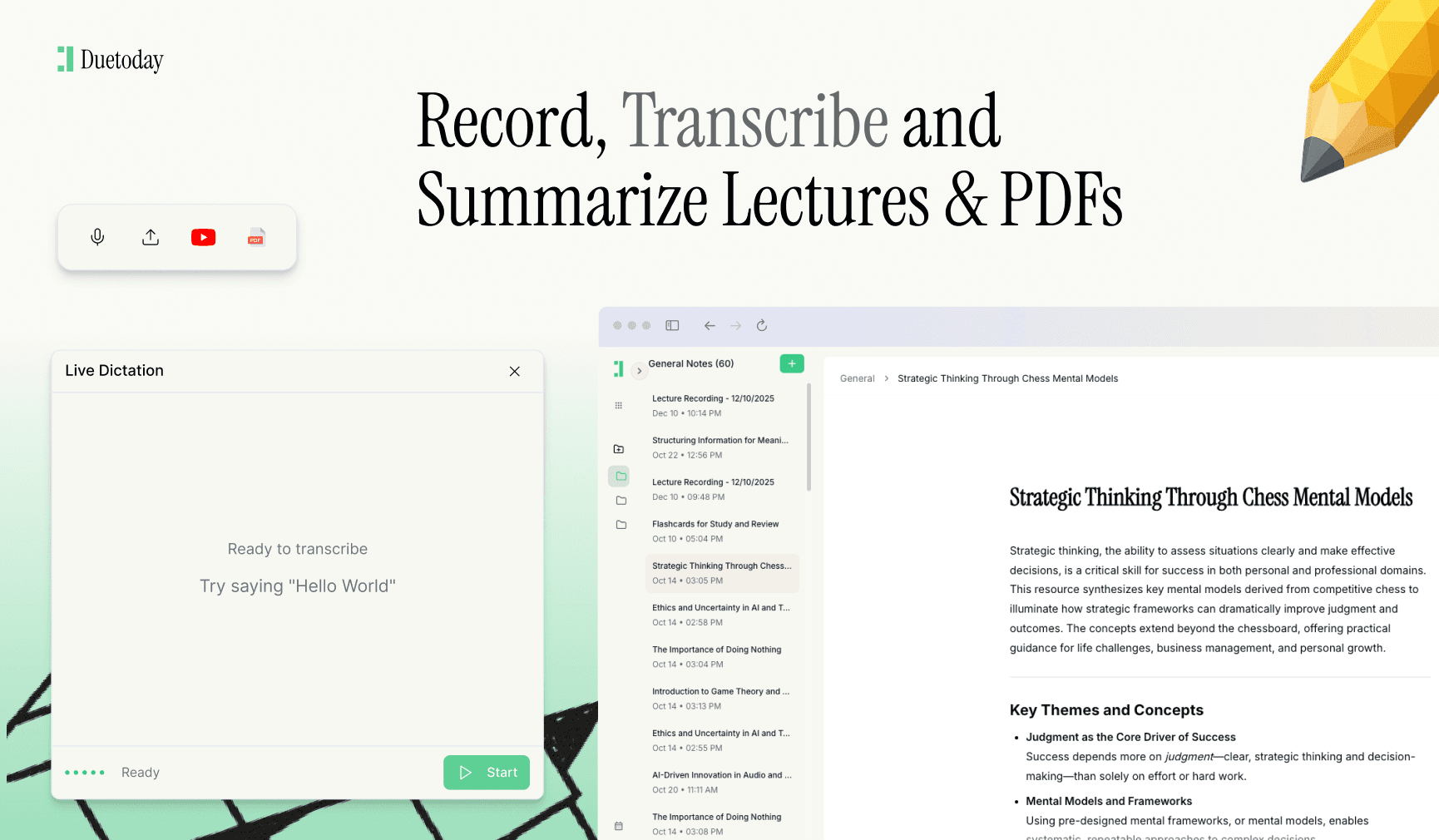
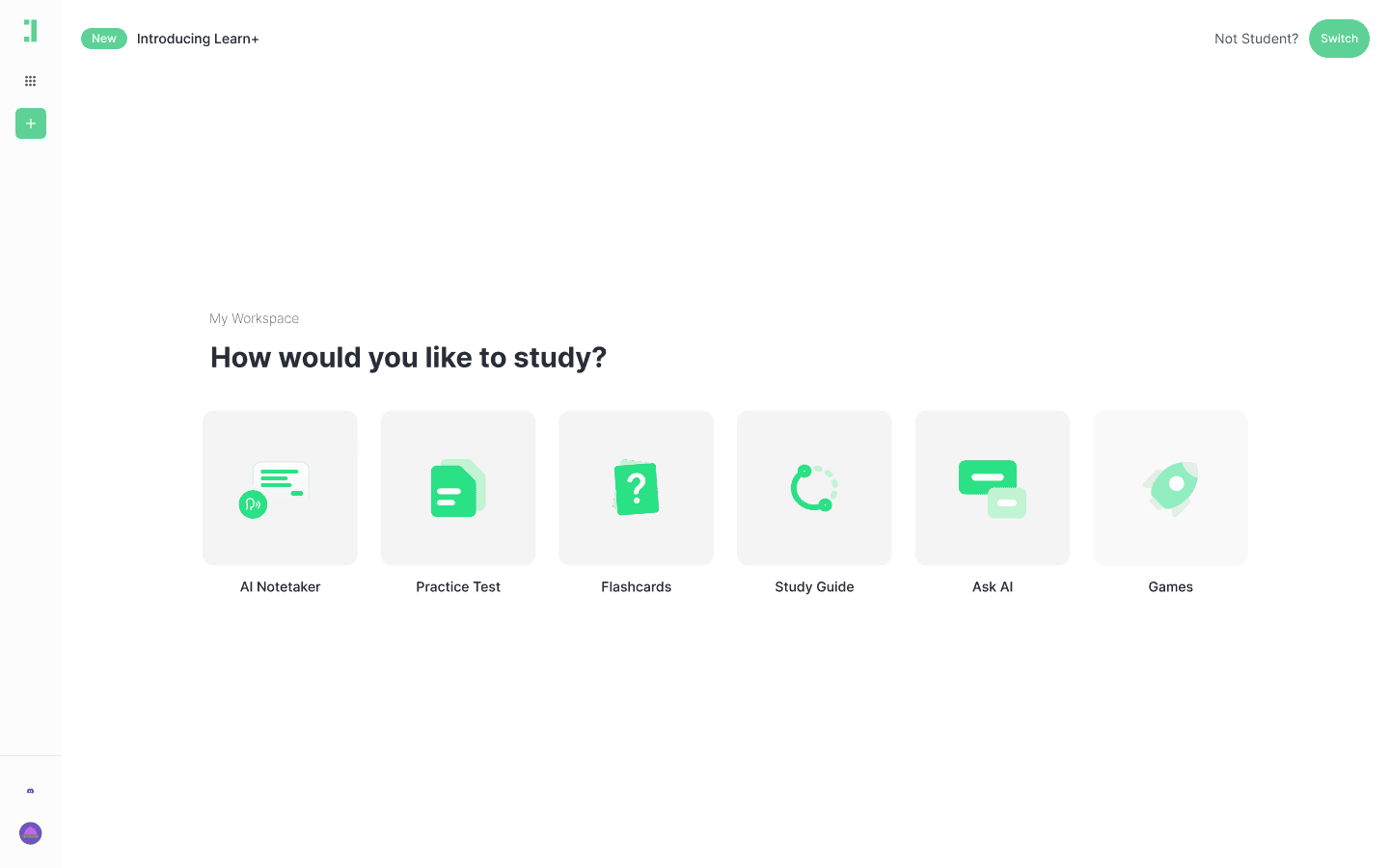
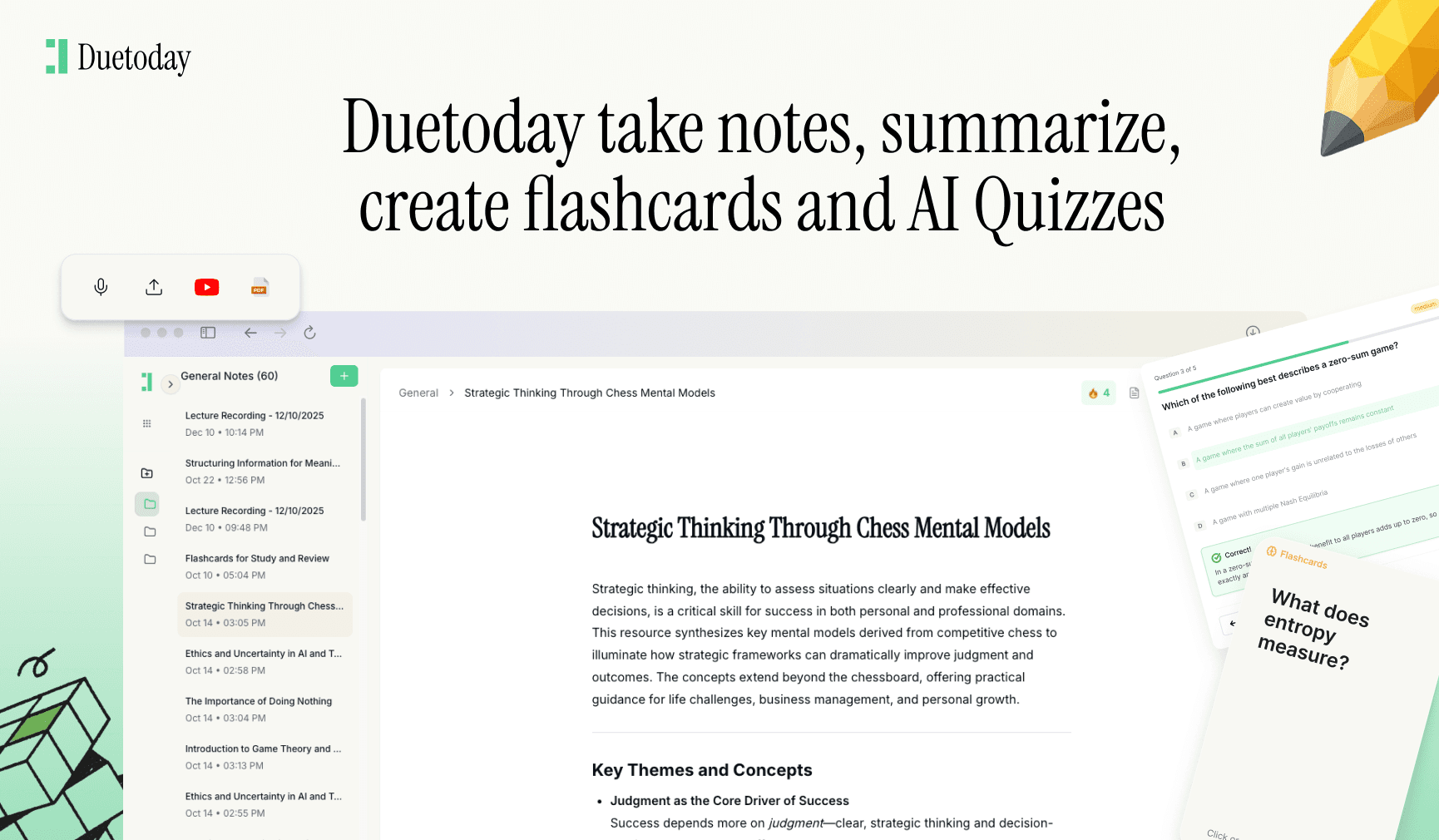
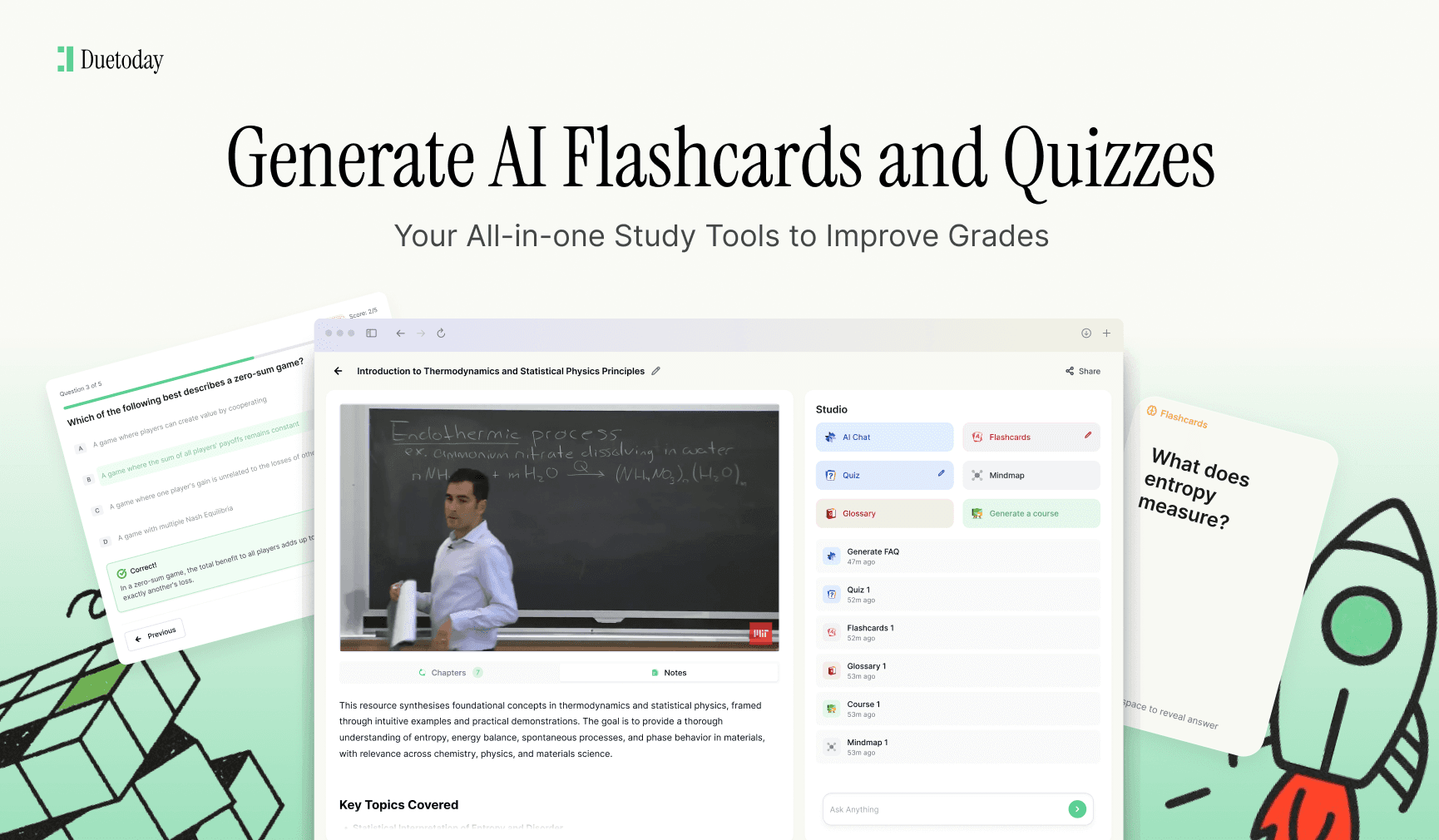
This is where Duetoday AI becomes a powerful support system. It functions as an AI notepad that records your lectures, transcribes them, and instantly turns them into clean notes, summaries, study guides, flashcards, and quizzes.
It can even generate bite sized courses from your lectures or YouTube videos. Instead of spending precious hours rewriting material or trying to understand complex topics on your own, Duetoday helps you learn faster and frees up time.
You can also chat with your lectures using the built-in AI tutor, allowing you to ask questions and clarify concepts without waiting for office hours. This kind of automation gives you more control over your time while still boosting your academic performance.
Break Big Tasks Into Smaller, More Manageable Steps
One of the biggest reasons students procrastinate is because tasks feel too big or intimidating. Starting a ten-page essay or studying six chapters for an exam feels overwhelming. But when you break large tasks into smaller steps, they become manageable.
Instead of thinking “I need to start my essay,” break it into steps: choose a topic, find five sources, write an outline, draft one paragraph, revise, finalize. Suddenly, the assignment feels like a list of small actions rather than a mental monster. This reduces anxiety and makes progress visible.
Small steps also create momentum. When you complete one small piece, you're more motivated to keep going.
Use Your High-Energy Hours Wisely
Not all hours are equal. Some students work best early in the morning, while others are sharpest at night. Knowing your energy pattern is a huge advantage. You should schedule your hardest tasks during your peak hours because that’s when your brain is naturally more focused.
Low-energy hours should be used for simpler tasks such as rewriting notes, watching lecture recordings, organising your files, or doing housekeeping tasks. Matching energy to task difficulty is one of the most efficient ways to get more done without burning out.
Avoid Multitasking
The myth of multitasking is one of the biggest traps students fall into. Doing multiple things at once makes you feel productive, but research shows it slows you down and increases mistakes. When you jump between tasks—like studying while texting—you’re not actually doing two things simultaneously. You’re switching your attention back and forth, which drains mental energy and reduces comprehension.
Single-tasking may feel slower, but it creates deeper focus and better results. When you're studying, study fully. When you're relaxing, relax fully. Separating the two prevents burnout and improves quality.
Build Consistency Through Routines
Time management becomes effortless when you have routines in place. Instead of relying on motivation—which is unstable—you rely on structure. Morning routines help students start the day with clarity, and study routines help you build a habit of learning at the same time daily.
Consistency doesn’t mean rigidity. It means you have a general pattern that helps you stay productive. Over time, routines become automatic. Your brain recognises that “this is study time,” making it easier to get into a focused state.
Set Realistic Limits and Protect Your Time
Students often take on too much. Clubs, sports, part-time work, social events, and side projects can easily overload your schedule. Learning to say no is an important part of time management. If an activity doesn’t align with your goals or makes your week chaotic, it’s okay to step back.
Protecting your time also includes rest. Productivity isn’t about working nonstop—it’s about working smart and recovering well. Rest restores your brain and improves memory, making every study hour more effective.
Final Thoughts
Time management isn’t about squeezing more tasks into your day. It’s about creating structure, protecting your attention, prioritising what matters, and building routines that support your goals. The earlier you build these habits in college, the easier your academic life becomes. With the right systems—especially digital tools like Duetoday AI to handle the heavy work of organising and turning your study materials into usable notes—you can stay ahead, reduce stress, and create a healthier balance between learning and living.
What is the most effective time management method for college students?
There isn’t one universal method that works for every student, but the Pomodoro technique and time blocking are two of the most reliable. Pomodoro helps you stay focused in short bursts, while time blocking gives structure to your day. Many students combine both to stay consistent and avoid burnout.
How many hours should a student study per day?
Most students do well with two to four hours of focused studying on weekdays, with additional review on weekends. What matters more than the number of hours is the quality of your concentration. Students who study with fewer distractions often achieve better results in less time.
Why do I still feel overwhelmed even when I plan my week?
Feeling overwhelmed usually comes from underestimating how long tasks take or filling your schedule too tightly. Try leaving buffer zones between tasks and avoid planning every minute of your day. Overscheduling builds pressure, while flexible planning allows you to adapt without stress.
How do I manage time better if I procrastinate a lot?
Start by breaking your tasks into smaller steps. This removes the emotional barrier that makes tasks feel too big or intimidating. You can also use short timers, like a five-minute start timer, to push yourself into motion. Once you begin, it becomes much easier to continue.
Does multitasking help save time for students?
Multitasking almost always slows you down. It divides your attention and reduces the quality of your work. Single-tasking produces faster, deeper results because your mind stays focused on one thing at a time. Students who switch to single-task study routines notice immediate improvements in clarity and retention.
How can I balance school, part-time work, and personal life?
The key is prioritisation and setting limits. Identify which tasks matter most for your academic success and schedule them first. Use evenings or low-energy hours for easier tasks. You should also protect certain hours of your week for rest or personal time to avoid mental fatigue.
What tools help students save time when studying?
Digital organisation tools and AI study assistants are becoming essential. Apps that organise notes, generate study guides, or support active recall can significantly reduce study time. Tools like Duetoday AI help students turn lectures and PDFs into summaries, notes, flashcards, and quizzes automatically, which frees up hours normally spent writing or revising manually.
How can I avoid burnout during busy weeks?
Burnout happens when you push continuously without rest. Build small breaks into your study sessions, rotate subjects to give your mind variety, and avoid pulling consecutive late nights. Even short periods of rest, like a midday walk or a quick nap, can reset your focus and prevent exhaustion.
Should I study daily or only before exams?
Daily studying in short sessions is far more effective than last-minute cramming. Small, consistent review sessions strengthen memory and reduce stress. Exam-week studying then becomes revision, not learning from scratch, making your workload lighter and more manageable.