
How to Reset After Failing an Exam

The Initial Shock: It is Not the End of the World
Walking out of an exam hall or opening an online portal to find a grade you didn't expect is a heavy feeling. It is that sinking sensation in your stomach that makes you feel like your hard work was for nothing. But here is the truth: failing an exam is a common part of the university experience. Almost every successful student has faced a setback at some point. The difference between those who stay down and those who rise back up is their mindset and their strategy for the next round.
First, give yourself a moment to breathe. It is okay to feel frustrated, sad, or even angry. You invested time and energy, and it didn't pay off this time. However, do not let this one grade define your intelligence or your future career. University is a marathon, not a sprint. One bad lap does not mean you have lost the race. The goal now is to move from the emotional reaction to a logical assessment of what happened so you can ensure it does not happen again.
The 24-Hour Rule
Before you dive back into your textbooks or start emailing your professors in a panic, implement the 24-hour rule. Give yourself exactly one day to process the news. Avoid making any drastic decisions like dropping out or changing your major during this window. Use this time to step away from your desk, talk to a friend, or just get some sleep. Once the clock resets, you will find that the situation feels slightly more manageable and you can approach your academic recovery with a clearer head.
When you are ready to face the music, the first step is to look at the numbers objectively. Was it a total failure, or did you just miss the mark? Does this exam carry 10% of your grade or 50%? Understanding the weight of the loss helps you prioritize your next moves. Many courses allow for resits or have weighted averages where a strong performance in the next assessment can pull your overall grade back up into the safe zone.
Analyzing What Went Wrong
To fix the problem, you have to diagnose it. Most exam failures stem from one of three areas: preparation, technique, or external factors. Were you studying the wrong material? Did you understand the concepts but hit a wall when it came to the actual exam questions? Or did personal issues like lack of sleep or anxiety ruin your focus on the day? Be brutally honest with yourself during this phase because it is the only way to build a better foundation for next time.
Check your study habits. Many students fall into the trap of passive learning—re-reading notes or highlighting text until the whole page is yellow. This feels like work, but it doesn't actually help your brain retain information. If you found the exam questions confusing, it might be because you didn't practice active recall or spaced repetition. This is where modern tools can make a massive difference in your workflow.
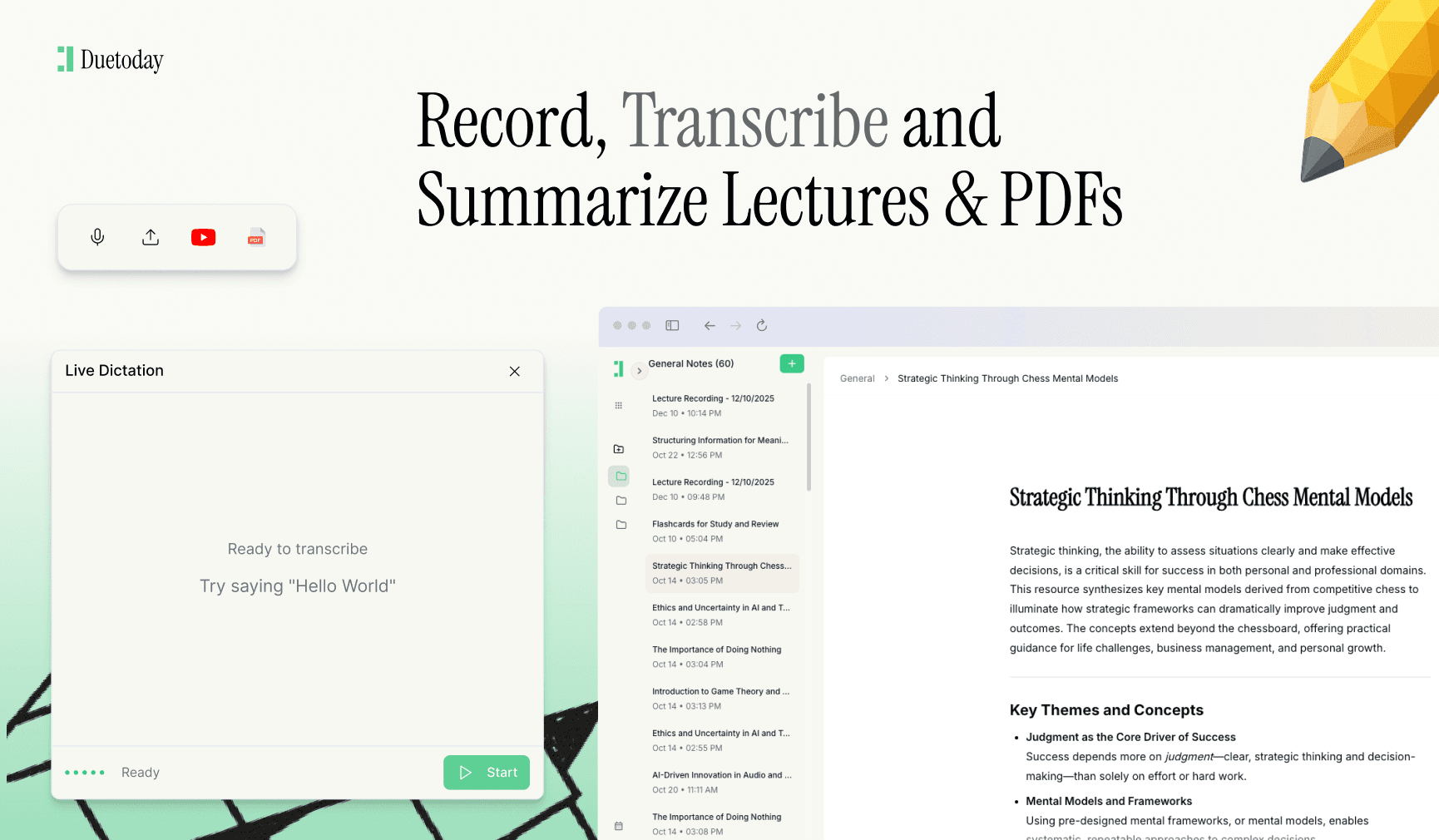
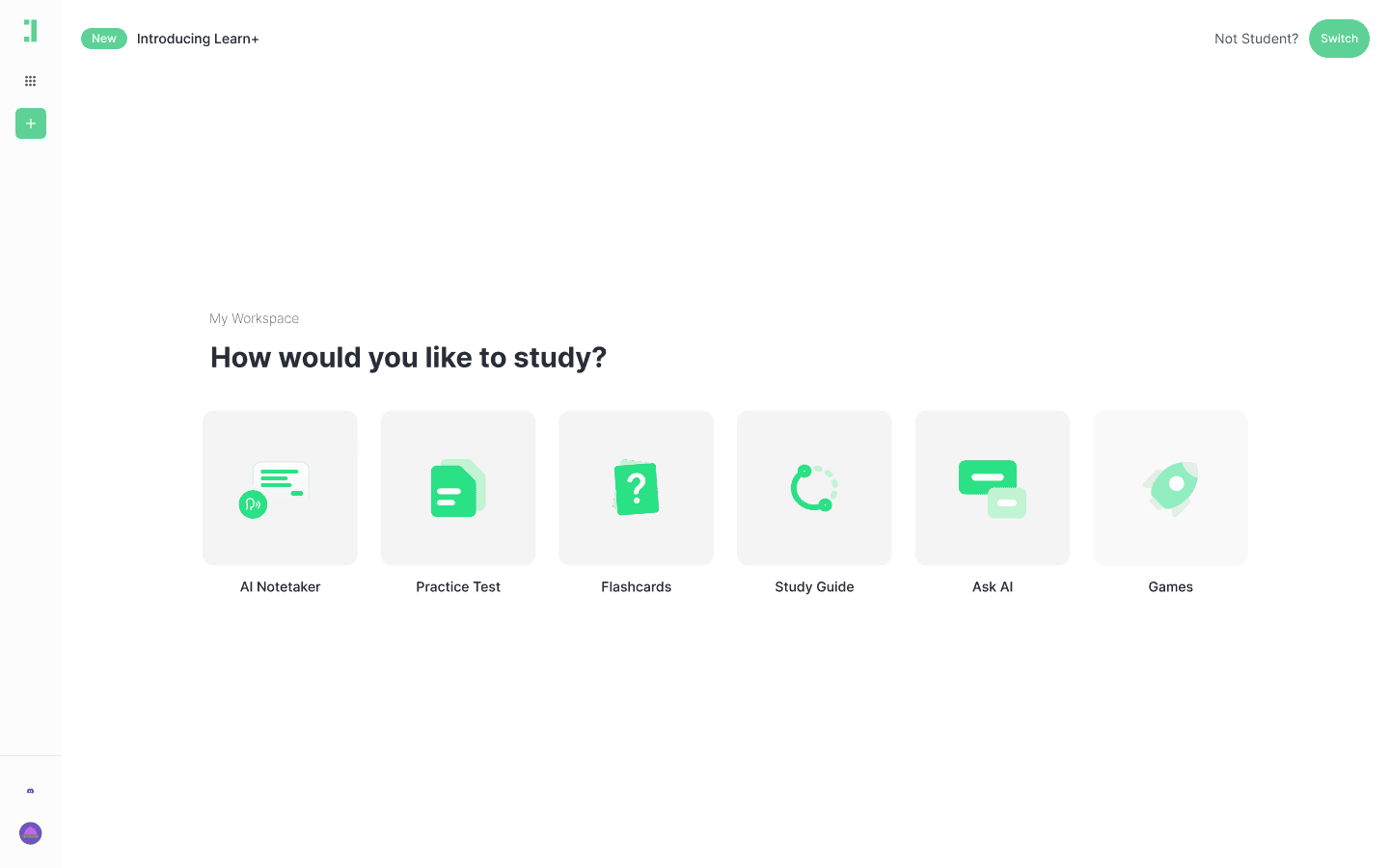
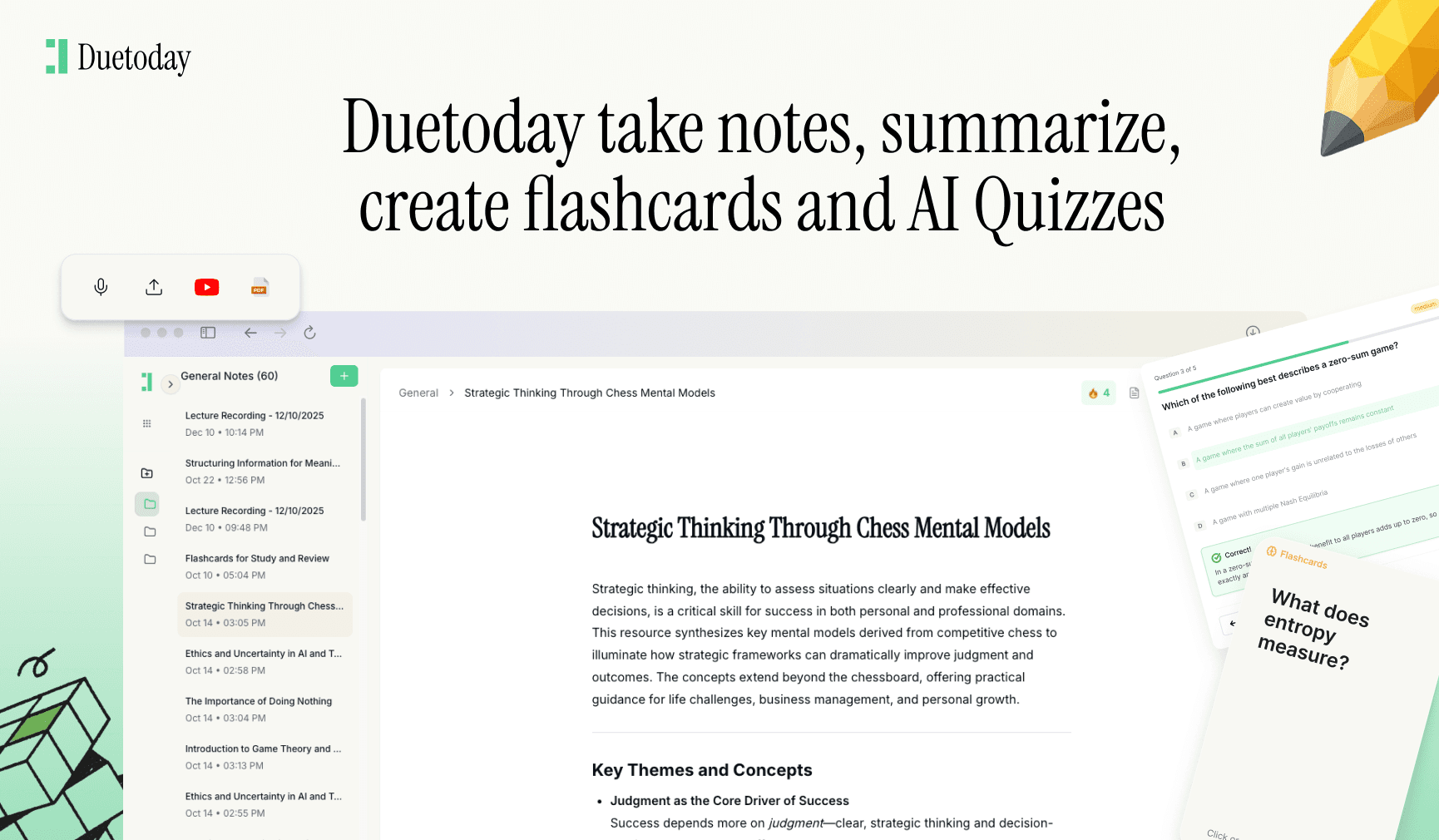
One of the most effective ways to bridge this gap is by using Duetoday AI. This platform is designed specifically for students who need to turn their messy lecture notes and long PDFs into something they can actually study. Duetoday AI automatically generates summaries, flashcards, and quizzes from your course materials. Instead of spending hours just trying to organize your thoughts, you can let the AI act as your personal tutor, helping you identify the most important concepts and testing your knowledge before the real exam arrives.
Building a Step-by-Step Recovery Plan
Once you have identified your weak spots, it is time to build a concrete plan. Start by visiting your professor or teaching assistant during their office hours. This can be intimidating, but it is one of the most productive things you can do. Ask to see your exam paper and go through the mistakes together. Professors appreciate students who take initiative, and they might provide insights into what they are looking for in high-scoring answers that you simply can't find in a textbook.
Next, rework your schedule. If you failed because you crammed at the last minute, you need to start your revision much earlier. Break your syllabus down into small, digestible chunks. Instead of saying you will study for five hours on Saturday, commit to studying for 45 minutes every single day. Consistency beats intensity every time when it comes to university-level subjects. Use a digital calendar to block out specific times for your toughest subjects when your energy levels are highest.
Mastering Active Learning Techniques
To ensure the next exam is a success, shift your focus to active learning. Instead of just looking at your notes, try to teach the concept to someone else. If you can explain a complex theory to a friend in simple terms, you truly understand it. Another great method is to do as many past papers as possible under timed conditions. This reduces exam-day anxiety because the format and timing become second nature to you.
Don't be afraid to change your environment too. If the library makes you feel stressed, try a quiet cafe or a different floor. Sometimes a change of scenery is enough to break a cycle of academic burnout. Also, remember to take care of your physical health. Your brain needs fuel and rest to function. Skipping meals and losing sleep might give you more hours to study, but it significantly lowers the quality of that study time.
The Power of a Support System
You don't have to go through university alone. Reach out to classmates who did well and ask them how they approached the material. They might have a perspective or a shortcut that you hadn't considered. Join a study group where you can quiz each other and hold each other accountable. Often, hearing a peer explain a topic makes it click in a way a lecturer's explanation didn't.
Most importantly, maintain a positive outlook. A single failed exam is a chapter in your story, not the whole book. Use this experience as fuel to prove to yourself that you are capable of overcoming challenges. High-achieving students are not those who never fail; they are those who refuse to let failure stop them. Take the lessons you learned, apply your new study strategies, and walk into your next exam with the confidence of someone who has prepared thoroughly and intelligently.

Can I still graduate if I fail one exam?
Yes, in most cases, you can resit the exam or make up the credits in a future semester. Check your university handbook for specific policies on academic standing.
How do I tell my parents I failed?
Be honest and proactive. Explain what went wrong and, more importantly, share your plan for how you are going to fix it. Showing that you have a strategy helps ease their concerns.
Is it common for university students to fail exams?
Absolutely. University coursework is significantly harder than high school. Many students struggle with the transition but go on to have very successful academic careers after adjusting their habits.
Should I change my major if I fail a core subject?
Not necessarily. Failing one subject might just mean you need a different approach to that specific topic. Only consider changing majors if you find that you genuinely dislike the subject matter and can't see yourself working in that field.